Are you dreaming of breathtaking landscapes, incredible wildlife encounters, and unforgettable adventures? Planning a trip to a national park can be an incredibly rewarding experience, but with so many amazing options, choosing the right park at the right time can feel overwhelming. When is the best time to witness the wildflowers in bloom, or when should you plan your visit to avoid the crowds and still enjoy pleasant weather?
This comprehensive guide is designed to help you navigate the best National Parks to visit by month. We’ll delve into the unique seasonal highlights, weather patterns, crowd levels, and specific activities that make each park shine during its prime time. Whether you’re a seasoned park enthusiast or a first-time visitor, get ready to discover your next great national park adventure!
Planning a National Park trip this year? Timing can make or break your experience.
👉Get the full When to Visit Every U.S. National Park guide (25% off preorder).
How to Choose the Best Month to Visit a National Park
- When is the best time to visit XXX National Park?
- Is XXX Month a good time to visit XXX National Park?
- Is XXX or XXX a better time to visit XXX National Park?
It seems like we get these kinds of questions a couple of times a day in the National Park Trip Planning Facebook group. Outside of a few National Parks, there isn’t a bad time to visit, but there are challenges you should be aware of. From road & trail closures to weather to the crowds, there are reasons to justify visiting or not visiting every National Park in any month.
If you manage your expectations, you can still have an amazing time no matter the month of your visit.
Start With Your Schedule First
Before worrying about weather charts, crowd levels, or the “perfect” season, start with the one factor that actually determines most trips: your schedule.
Many national park guides focus only on ideal conditions, but the reality is that most travelers have limited windows when they can take time off. The best month to visit a national park is often simply the month you’re able to travel. Once you know your available time frame, you can choose parks that perform well during that window.
Here are a few common schedule factors that shape when people visit national parks.
School Holidays
For many families, the travel calendar revolves around the school year. Spring break, summer vacation, and holiday breaks often become the natural windows for national park trips.
The downside is that these same periods are peak travel times in many parks. Summer brings the largest crowds to places like Yellowstone National Park and Yosemite National Park, while spring break can make parks like Arches National Park and Zion National Park extremely busy.
PTO Limitations
Odds are you get 10 vacation days a year, and your work might restrict when you can take off. So, sometimes you’re working with a few long weekends or a single week of PTO, the goal becomes choosing parks that are at their best during the time you can realistically travel.
For example, a week off in October might be perfect for visiting Great Smoky Mountains National Park during fall color season, while a February vacation week might be better spent exploring warmer parks like Death Valley National Park or Everglades National Park.
Rather than trying to force a specific park into a tight schedule, it’s often easier to match your available time to the parks that shine during that season.
Shoulder-Season Flexibility
If you have flexibility in your travel dates, you can often dramatically improve your experience.
Shoulder seasons (the periods just before or after peak season) frequently offer the best balance of good weather, fewer crowds, and better availability. Visiting Grand Canyon National Park in late April instead of mid-June, or exploring Rocky Mountain National Park in September instead of July, can mean cooler temperatures, easier reservations, and far less congestion on trails and viewpoints.
For many travelers, shifting a trip slightly earlier or later can make a surprisingly big difference.
Retirees vs. Families vs. Solo Travelers
Different types of travelers often have very different levels of flexibility.
Families typically travel during school breaks, which pushes many trips into summer and major holidays. Retirees often have the greatest flexibility and can take advantage of quieter months like May, September, or early October. Solo travelers and couples may fall somewhere in between, depending on work schedules and personal commitments.
Understanding your own level of flexibility helps narrow down the parks that will work best for you. A family planning a summer road trip may focus on parks that handle crowds well, while retirees might choose the same parks during quieter shoulder seasons.
Understand What “Best Time” Really Means
When people ask about the best time to visit a national park, they’re often expecting a simple answer. In reality, there usually isn’t one.
The “best time” depends on what kind of experience you want. A month that is perfect for one traveler might be frustrating for another. Weather, crowd levels, road access, and seasonal highlights can all shift dramatically throughout the year, and the right choice comes down to your priorities.
For example, summer is the most popular time to visit parks like Glacier National Park and Mount Rainier National Park because most roads, trails, and visitor services are open. But that same accessibility also brings heavy crowds and limited lodging availability.
On the other hand, visiting in the off-season can provide a completely different experience. Winter trips to parks like Yellowstone National Park offer incredible wildlife viewing and dramatic snowy landscapes, but many roads and services are closed, and temperatures can be extreme.
In other words, the best time to visit usually reflects a trade-off between several factors.
Weather
Weather is often the first thing travelers consider, but “good weather” varies depending on the park. Summer may be ideal in cooler mountain parks like Rocky Mountain National Park, while desert parks such as Death Valley National Park are far more comfortable during the winter months.
Crowds
The most pleasant weather usually overlaps with peak visitation. Parks like Zion National Park and Acadia National Park can feel dramatically different depending on the time of year, with busy summer days bringing long shuttle lines, full parking lots, and packed trails. Traveling during shoulder seasons often reduces crowds significantly while still providing good conditions.
Access and Seasonal Closures
Many parks have seasonal road closures or limited services during parts of the year. Snow can close high-elevation roads in parks like Yosemite National Park and North Cascades National Park, while hurricanes and storms can affect coastal parks. Checking which areas are accessible during your travel month can help avoid surprises.
Seasonal Highlights
Some of the best park experiences are tied to specific times of year. Waterfalls peak in late spring in Yosemite National Park, wildflower meadows explode with color in summer at Mount Rainier National Park, and fall foliage draws visitors to Shenandoah National Park each October.
If you’re trying to figure this out for your specific travel dates, the full guide breaks down the best parks for every month so you don’t have to guess.
Best National Parks by Month
Best National Parks to Visit in January
January is one of the most underrated months to visit U.S. national parks. While much of the country is in winter, this creates a unique opportunity. Desert parks offer their best weather, tropical parks are in peak season, and snowy parks provide a completely different kind of experience with far fewer crowds than summer.
If your schedule limits you to winter travel, or you are looking to escape colder climates, January can be one of the smartest months to plan a trip. The key is choosing parks where weather, access, and seasonal conditions work in your favor.
Why January Can Be a Great Time to Visit National Parks
- Lowest crowds of the year in many parks
- Ideal temperatures in desert parks like Death Valley and Joshua Tree
- Dry season conditions in Florida parks like Everglades and Biscayne
- Unique winter scenery in parks like Yellowstone
- Lower lodging prices in many gateway towns
What to Watch Out For in January
- Seasonal closures, especially in mountain parks
- Snow and ice could affect roads and trails
- Shorter daylight hours
- Limited services in some parks
January Planning Tips
- Book lodging early for warm weather parks
- Start hikes later in the morning to avoid cold temperatures
- Check road conditions before entering a park
- Dress in layers, even in desert parks
My Favorite National Parks to Visit in January
- Big Bend National Park
- Biscayne National Park
- Death Valley National Park
- Dry Tortugas National Park
- Everglades National Park
- Hawaiʻi Volcanoes National Park
- Joshua Tree National Park
- Saguaro National Park
- Virgin Islands National Park
- White Sands National Park
Best National Parks to Visit in February
February continues many of the same patterns as January, with excellent conditions in desert and tropical parks and winter conditions in the mountains. It is a great time to visit if you want to avoid crowds while still enjoying comfortable weather in the right locations.
February is also a sweet spot before spring break travel begins, making it a smart time for quieter trips.
Why February Can Be a Great Time to Visit National Parks
- Low crowds in most parks
- Comfortable temperatures in desert parks
- Dry season continues in Florida parks
- Great wildlife viewing in southern parks
- Slightly longer daylight hours than January
What to Watch Out For in February
- Winter conditions still impact mountain parks
- Snow and ice may affect travel
- Some roads and facilities remain closed
- Weather can still be unpredictable
February Planning Tips
- Take advantage of lower crowds before spring break
- Book warm weather destinations early
- Check for winter driving conditions
- Pack layers for temperature swings
My Favorite National Parks to Visit in February
- Big Bend National Park
- Biscayne National Park
- Death Valley National Park
- Dry Tortugas National Park
- Everglades National Park
- Hawaiʻi Volcanoes National Park
- Joshua Tree National Park
- Saguaro National Park
- Virgin Islands National Park
- White Sands National Park
Best National Parks to Visit in March
March marks the transition into spring, bringing warmer temperatures and the start of wildflower season in many parks. It is one of the most diverse months for travel options.
Spring break can increase crowds in popular parks, especially in warm-weather destinations.
Why March Can Be a Great Time to Visit National Parks
- Wildflowers begin blooming in desert parks
- Comfortable temperatures in many regions
- Waterfalls are often at their peak
- More parks begin reopening after winter
What to Watch Out For in March
- Spring break crowds in popular parks
- Unpredictable weather conditions
- Snow still impacts higher elevations
- Some roads may still be closed
March Planning Tips
- Plan around spring break timing
- Visit early in the day to avoid crowds
- Be flexible with weather conditions
- Check road openings in mountain parks
My Favorite National Parks to Visit in March
- Big Bend National Park
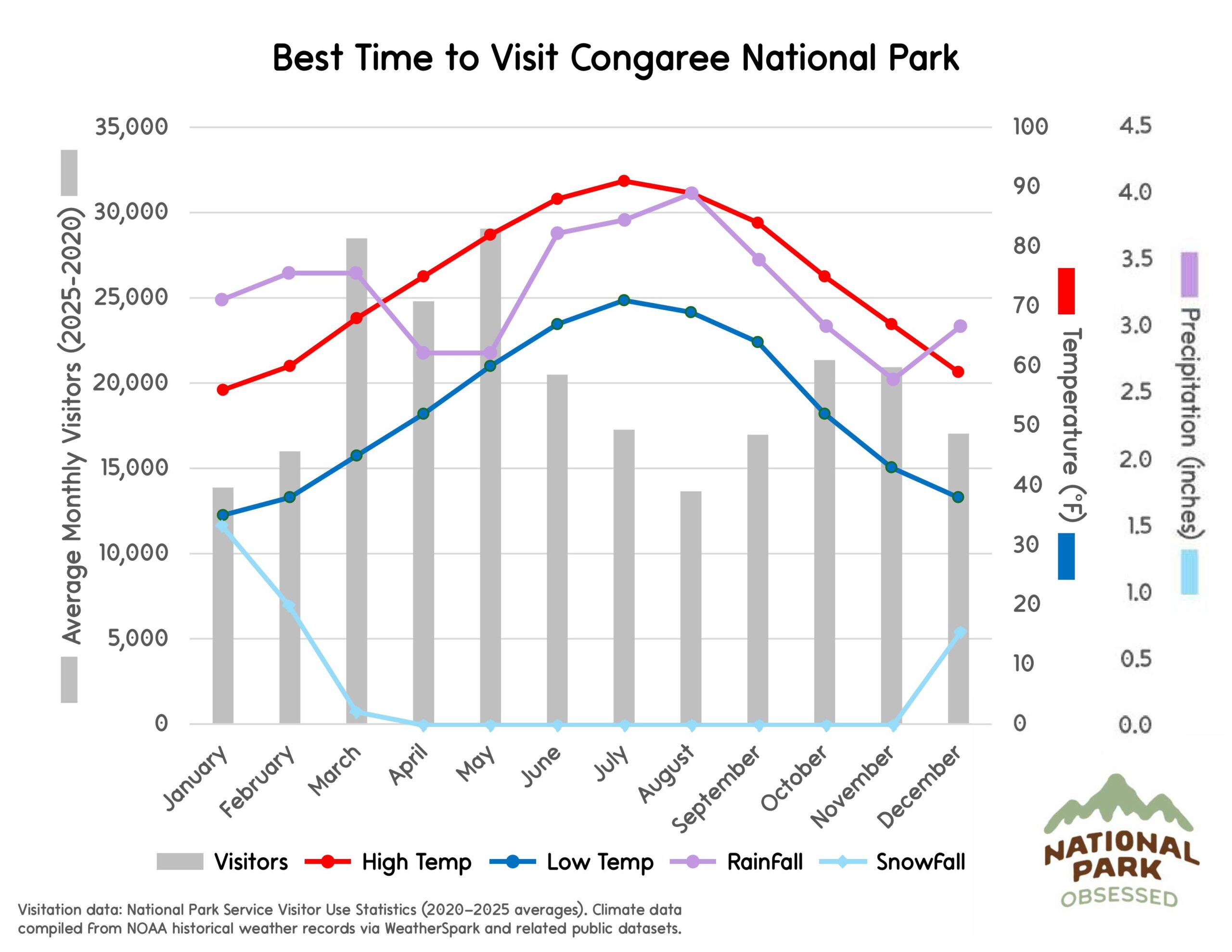
- Congaree National Park
- Death Valley National Park
- Guadalupe Mountains National Park
- Hot Springs National Park
- Joshua Tree National Park
- Petrified Forest National Park
- Pinnacles National Park
- Saguaro National Park
- White Sands National Park
Not sure where to go this month?
This guide shows you exactly which parks are at their best based on weather, crowds, and seasonal access.
Best National Parks to Visit in April
April is one of the best months for shoulder season travel. Many parks offer excellent weather, fewer crowds, and beautiful seasonal changes.
This is a great time to visit before peak summer crowds arrive.
Why April Can Be a Great Time to Visit National Parks
- Mild temperatures in many parks
- Spring wildflowers in bloom
- Lower crowds compared to summer
- Waterfalls and rivers are often flowing strongly
What to Watch Out For in April
- Spring break crowds in popular parks
- Some mountain roads remain closed
- Rain is more common in certain regions
- Snow may linger at higher elevations
- Limited services in some parks
April Planning Tips
- Some mountain roads remain closed
- Rain is more common in certain regions
- Snow may linger at higher elevations
- Limited services in some parks
My Favorite National Parks to Visit in April
- Arches National Park
- Canyonlands National Park
- Capitol Reef National Park
- Carlsbad Caverns National Park
- Gateway Arch National Park
- Great Smoky Mountains National Park
- Mammoth Cave National Park
- Petrified Forest National Park
- Pinnacles National Park
- Zion National Park
Best National Parks to Visit in May
May is one of the best overall months to visit national parks. Spring conditions are in full swing, and most parks are becoming fully accessible.
It offers a great balance of weather, crowds, and accessibility.
What to Watch Out For in May
- Warm but not extreme temperatures
- Wildflowers peak in many parks
- Most park services begin opening
- Lower crowds than summer
Why May Can Be a Great Time to Visit National Parks
- Late season snow in mountain parks
- Some high elevation roads may still be closed
- Increasing visitation toward Memorial Day
- Weather can vary widely by region
May Planning Tips
- Visit before Memorial Day for fewer crowds
- Check road openings in mountain parks
- Pack for varied weather conditions
- Book popular parks in advance
My Favorite National Parks to Visit in May
- Canyonlands National Park
- Capitol Reef National Park
- Grand Canyon National Park
- Great Sand Dunes National Park
- Great Smoky Mountains National Park
- Mesa Verde National Park
- Rocky Mountain National Park
- Shenandoah National Park
- Yosemite National Park
- Zion National Park
Best National Parks to Visit in June
June marks the start of the summer travel season, with longer days and more park access. Many high-elevation parks begin to fully open.
This is one of the best months for visiting mountain parks.
Why June Can Be a Great Time to Visit National Parks
- Long daylight hours
- High elevation parks begin opening
- Ideal hiking conditions in many regions
- Snow has melted from many trails
What to Watch Out For in June
- Increasing crowds
- Higher prices for lodging
- Snow may still linger in some areas
- Popular parks begin requiring reservations
June Planning Tips
- Book early for popular parks
- Start hikes early in the day
- Check snow conditions at higher elevations
- Plan around reservation systems
My Favorite National Parks to Visit in June
- Bryce Canyon National Park
- Grand Teton National Park
- Great Basin National Park
- Indiana Dunes National Park
- Kings Canyon National Park
- National Park of American Samoa
- Olympic National Park
- Sequoia National Park
- Wind Cave National Park
- Yellowstone National Park
Best National Parks to Visit in July
July is peak season for most national parks, offering full access and ideal conditions in many locations.
It is the best time to visit parks that are inaccessible during much of the year.
Why July Can Be a Great Time to Visit National Parks
- Full access to most parks
- Ideal weather in mountain parks
- All services and facilities are open
- Best time for alpine hiking
What to Watch Out For in July
- Peak crowds
- High temperatures in desert parks
- Higher travel costs
- Afternoon thunderstorms in some regions
July Planning Tips
- Start early to avoid crowds and heat
- Make reservations well in advance
- Avoid desert parks during peak heat
- Stay flexible with afternoon weather
My Favorite National Parks to Visit in July
- Denali National Park and Preserve
- Gates of the Arctic National Park and Preserve
- Glacier Bay National Park and Preserve
- Isle Royale National Park
- Katmai National Park and Preserve
- Kenai Fjords National Park
- Kobuk Valley National Park
- Lake Clark National Park and Preserve
- Voyageurs National Park
- Wrangell–St. Elias National Park and Preserve
Best National Parks to Visit in August
August continues peak summer conditions, with warm weather and full access across most parks.
It is a great time for high elevation destinations but can be challenging in hotter regions.
Why August Can Be a Great Time to Visit National Parks
- Full park access
- Warm weather for hiking and camping
- Great conditions in mountain parks
- Ideal for family travel
What to Watch Out For in August
- Continued peak crowds
- Extreme heat in desert parks
- Afternoon storms in some regions
- Wildfire smoke in western parks
August Planning Tips
- Prioritize higher elevation parks
- Avoid midday heat
- Monitor wildfire conditions
- Book accommodations early
My Favorite National Parks to Visit in August
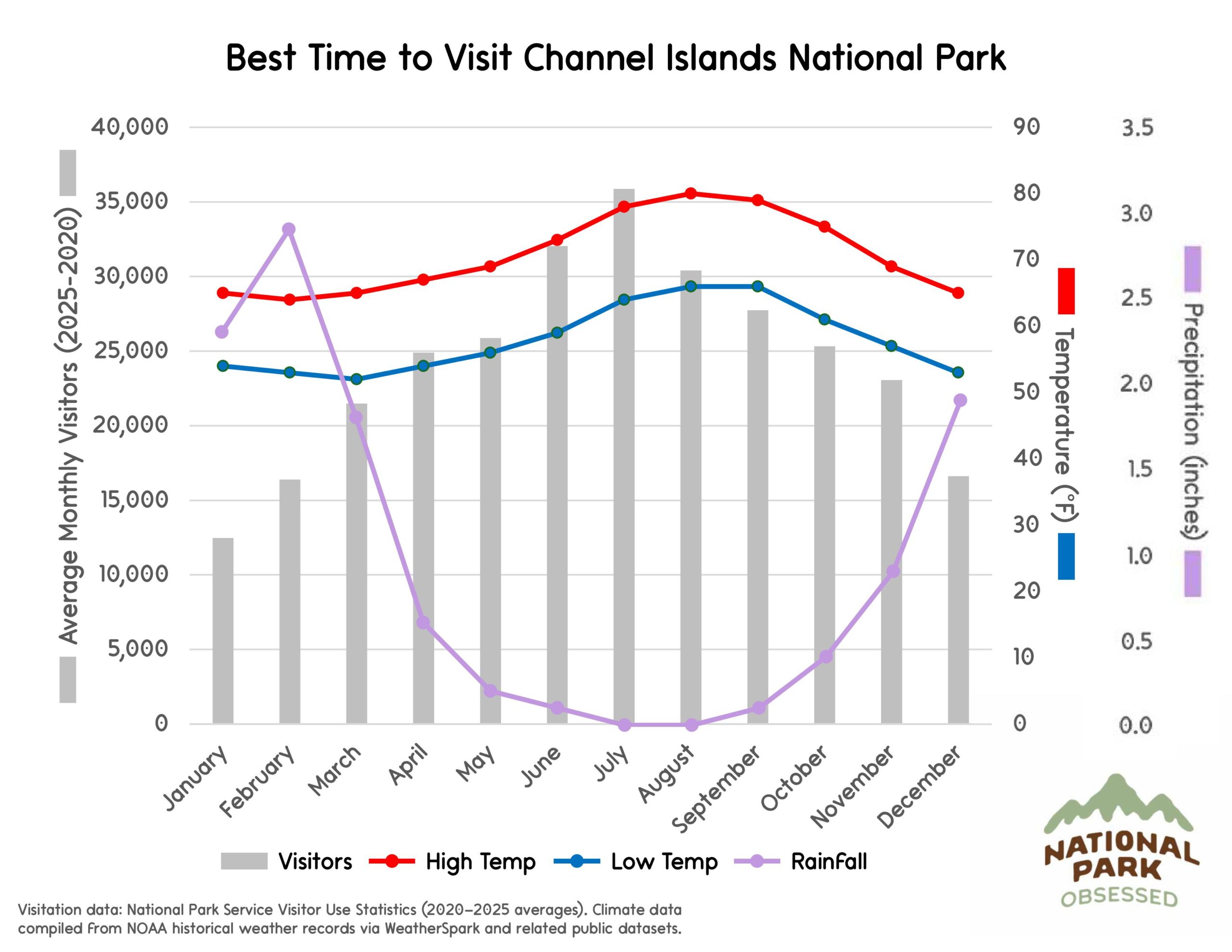
- Channel Islands National Park
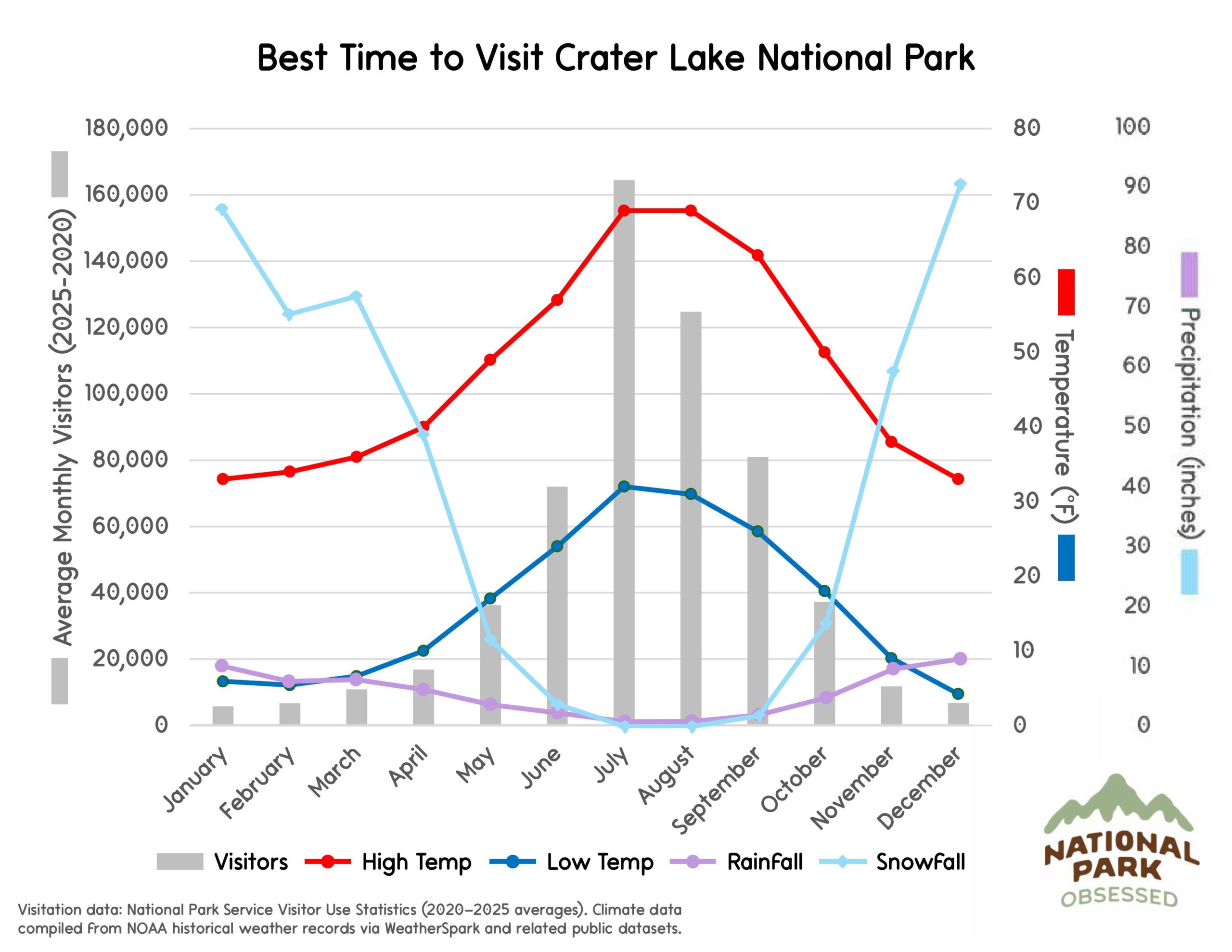
- Crater Lake National Park
- Glacier National Park
- Grand Teton National Park
- Lassen Volcanic National Park
- Mount Rainier National Park
- North Cascades National Park
- Olympic National Park
- Redwood National Park
- Yellowstone National Park
Best National Parks to Visit in September
September is one of the best months overall to visit national parks. Crowds begin to drop, but conditions remain excellent.
It offers a near perfect balance of weather, access, and fewer visitors.
Why September Can Be a Great Time to Visit National Parks
- Fewer crowds after Labor Day
- Comfortable temperatures
- Full park access
- Ideal hiking conditions
What to Watch Out For in September
- Wildfire risk in western parks
- Some services begin to reduce later in the month
- Hurricane season in coastal parks
- Shorter daylight hours
September Planning Tips
- Travel after Labor Day for fewer crowds
- Monitor wildfire conditions
- Book early for popular parks
- Take advantage of shoulder season
My Favorite National Parks to Visit in September
- Acadia National Park
- Badlands National Park
- Black Canyon of the Gunnison National Park
- Glacier National Park
- Grand Teton National Park
- Mount Rainier National Park
- Rocky Mountain National Park
- Theodore Roosevelt National Park
- Yellowstone National Park
- Yosemite National Park
Best National Parks to Visit in October
October brings fall colors, cooler temperatures, and fewer crowds. It is one of the most scenic months to visit many parks.
This is a favorite month for many travelers.
Why October Can Be a Great Time to Visit National Parks
- Fall foliage in many parks
- Cooler temperatures
- Lower crowds
- Great photography conditions
What to Watch Out For in October
- Early snow in mountain parks
- Some roads begin closing
- Shorter daylight hours
- Weather can change quickly
October Planning Tips
- Time your visit for peak fall color
- Check for early snow conditions
- Dress in layers
- Plan shorter days
My Favorite National Parks to Visit in October
- Acadia National Park
- Arches National Park
- Canyonlands National Park
- Capitol Reef National Park
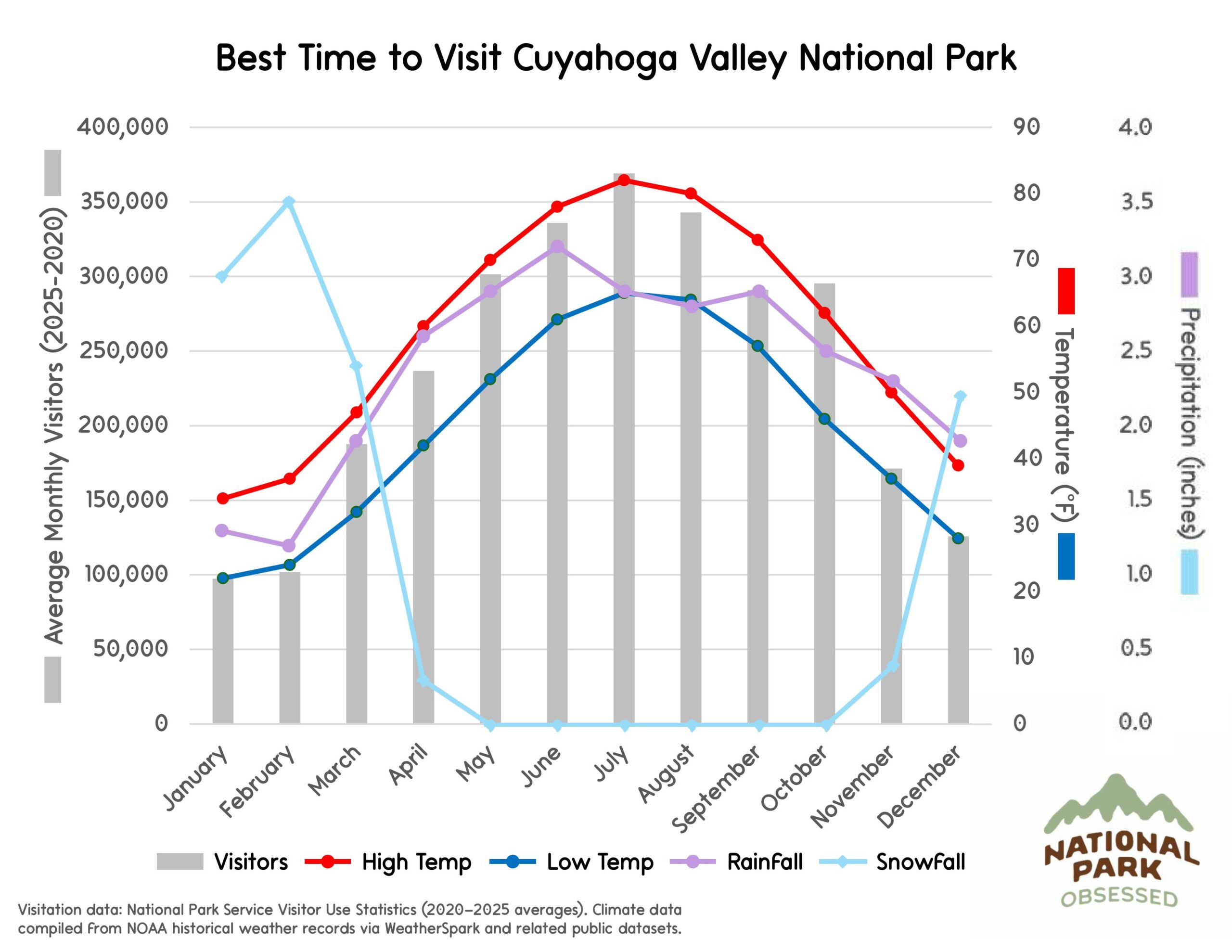
- Cuyahoga Valley National Park
- Grand Canyon National Park
- Great Smoky Mountains National Park
- New River Gorge National Park and Preserve
- Shenandoah National Park
- Zion National Park
Best National Parks to Visit in November
November marks the transition back into winter, with fewer crowds and quieter parks.
It is a great time for those looking for a peaceful experience.
Why November Can Be a Great Time to Visit National Parks
- Very low crowds
- Cooler temperatures in many parks
- Lower travel costs
- Unique seasonal atmosphere
What to Watch Out For in November
- Increasing closures
- Limited services
- Weather variability
- Short daylight hours
November Planning Tips
- Focus on southern parks
- Check park services in advance
- Be flexible with plans
- Pack for colder conditions
My Favorite National Parks to Visit in November
- Big Bend National Park
- Death Valley National Park
- Dry Tortugas National Park
- Everglades National Park
- Guadalupe Mountains National Park
- Haleakalā National Park
- Joshua Tree National Park
- Saguaro National Park
- White Sands National Park
- Zion National Park
Best National Parks to Visit in December
December offers a mix of winter experiences and warm-weather escapes. It is a unique time to visit depending on your travel goals.
Holiday travel can impact crowd levels in certain parks.
Why December Can Be a Great Time to Visit National Parks
- Festive atmosphere in some parks
- Excellent conditions in desert and tropical parks
- Snowy landscapes in northern parks
- Lower crowds outside of holiday weeks
What to Watch Out For in December
- Holiday crowds in popular destinations
- Winter weather impacts
- Limited services in some parks
- Short daylight hours
December Planning Tips
- Plan around holiday travel dates
- Choose parks based on weather preferences
- Book early for popular destinations
- Prepare for winter conditions
My Favorite National Parks to Visit in December
- National Park of American Samoa
- Big Bend National Park
- Biscayne National Park
- Death Valley National Park
- Dry Tortugas National Park
- Everglades National Park
- Joshua Tree National Park
- Saguaro National Park
- Virgin Islands National Park
- White Sands National Park
Not sure where to go this month?
This guide shows you exactly which parks are at their best based on weather, crowds, and seasonal access.
Best Time to Visit Each National Park: Monthly Weather, Crowds & Conditions
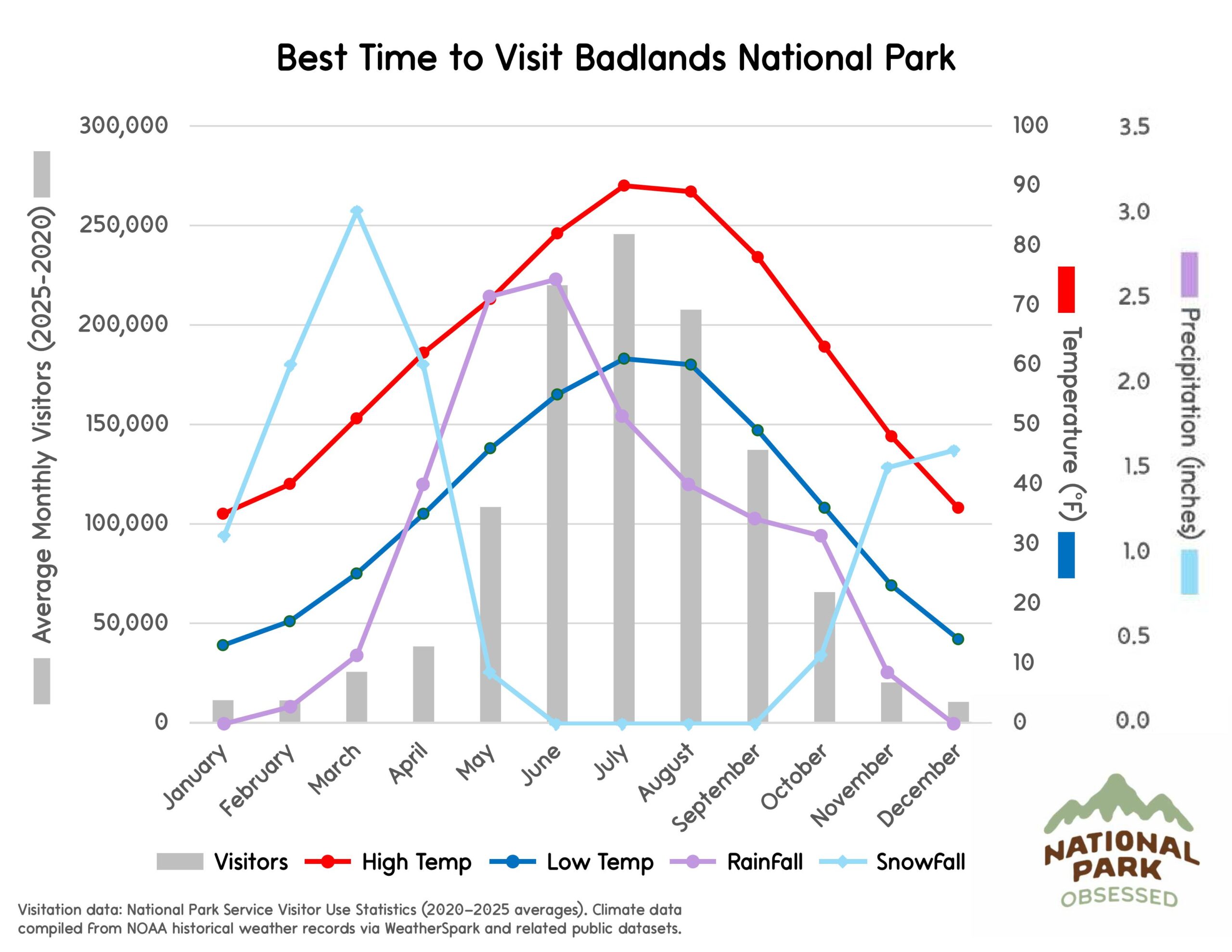
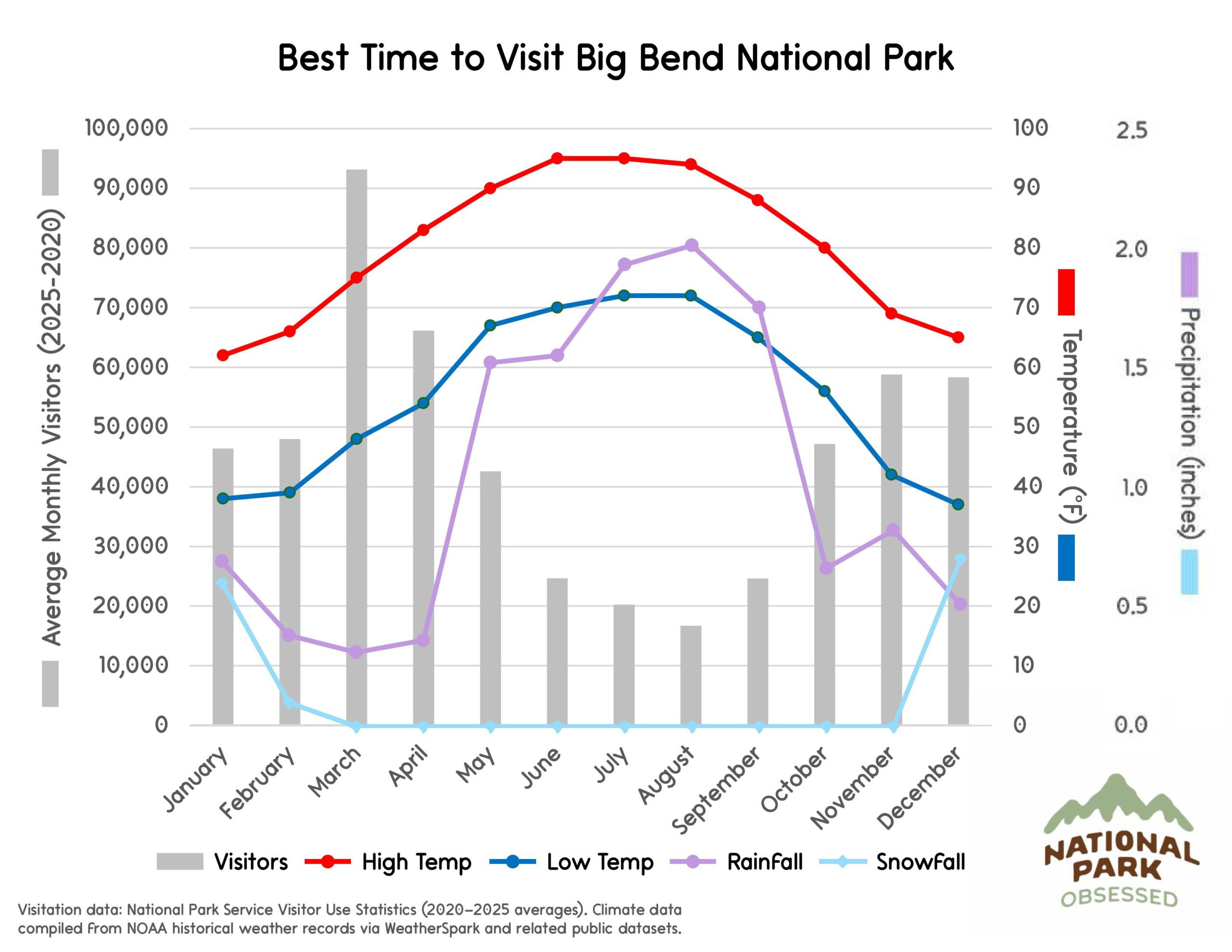
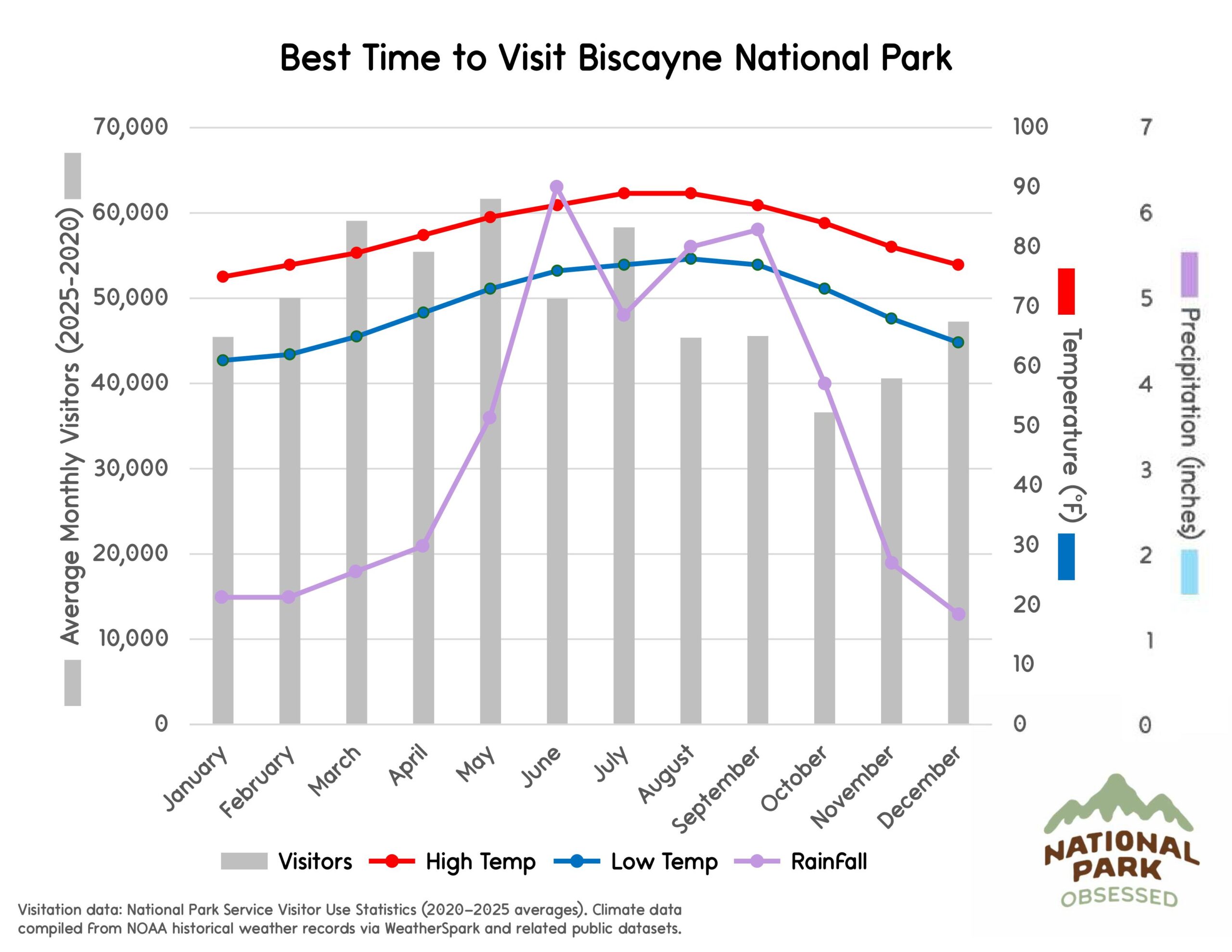
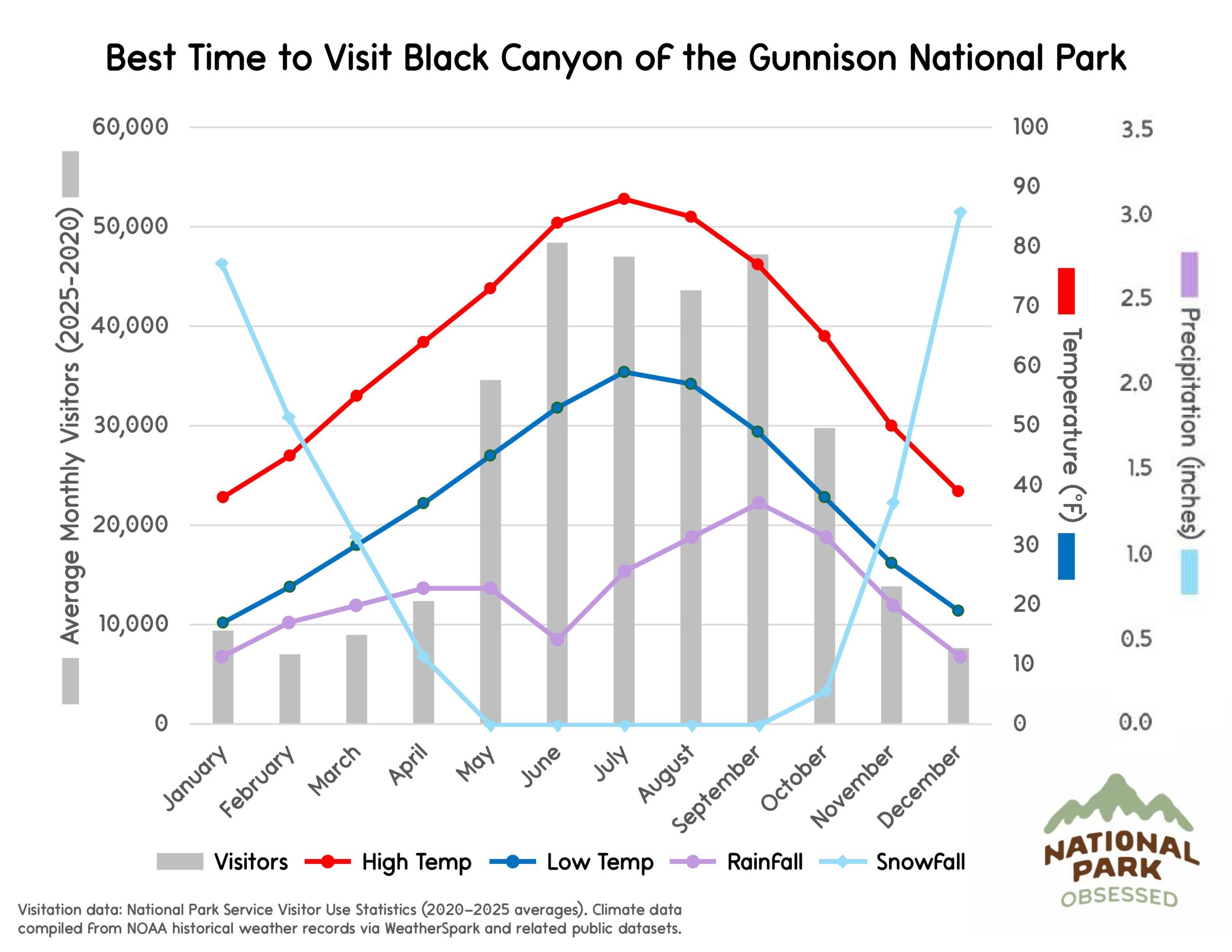
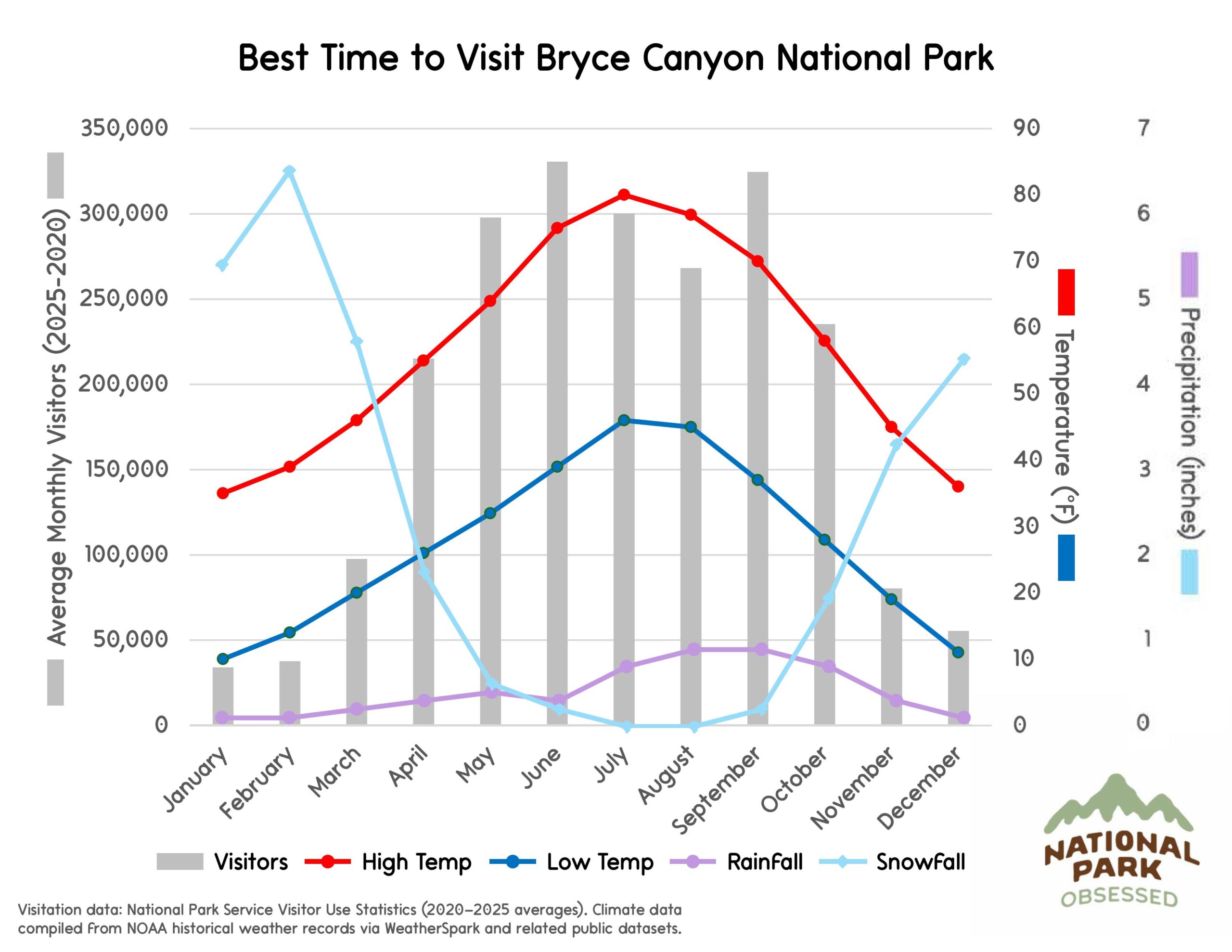
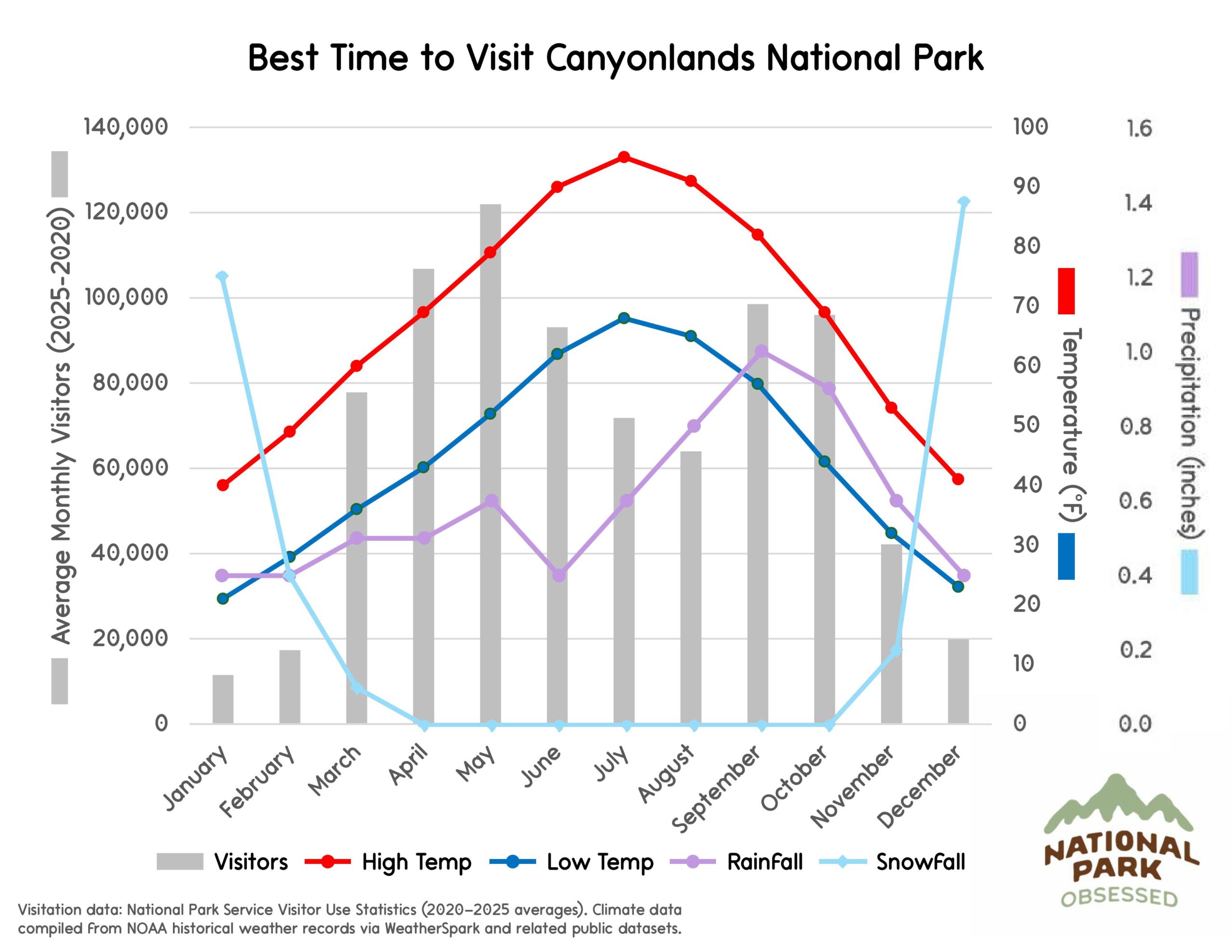
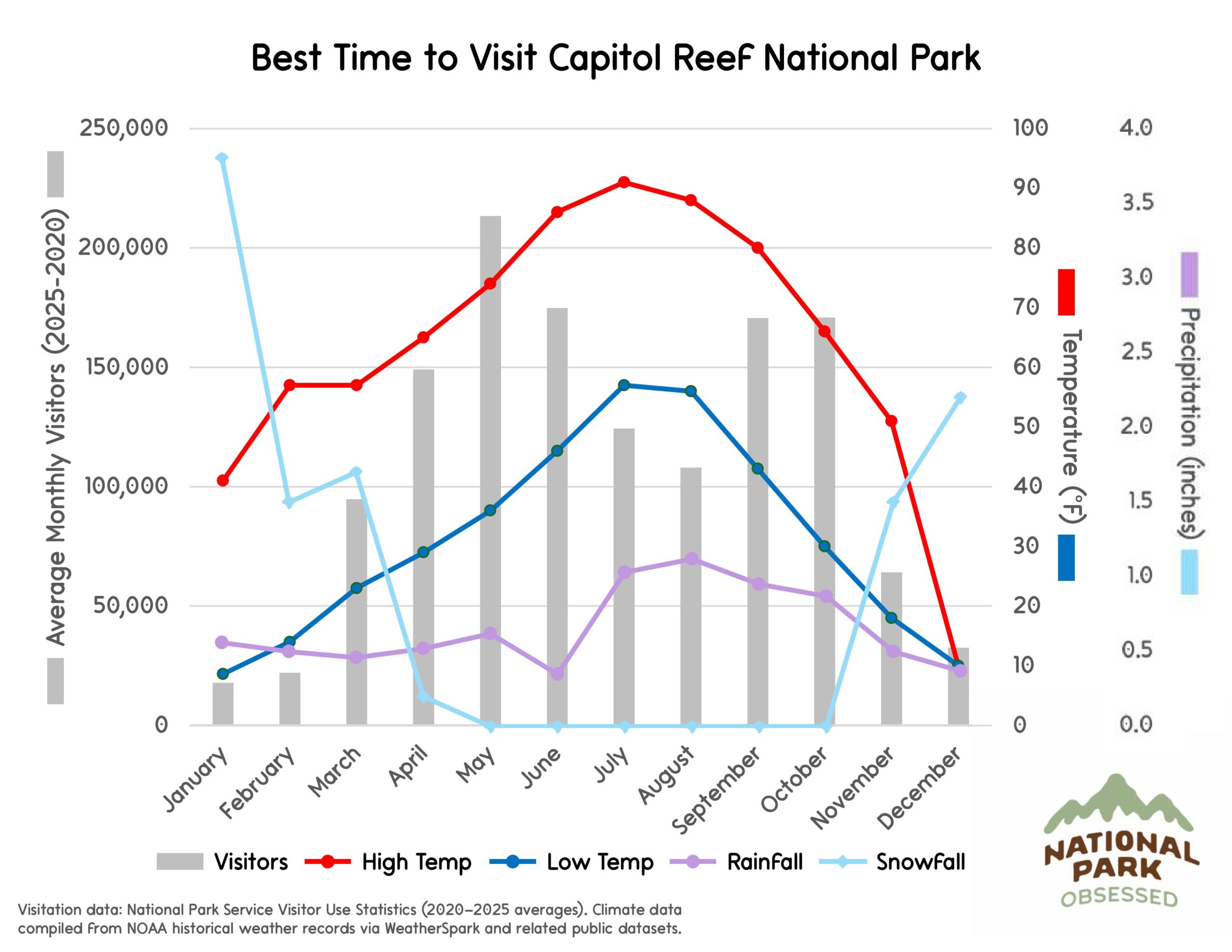
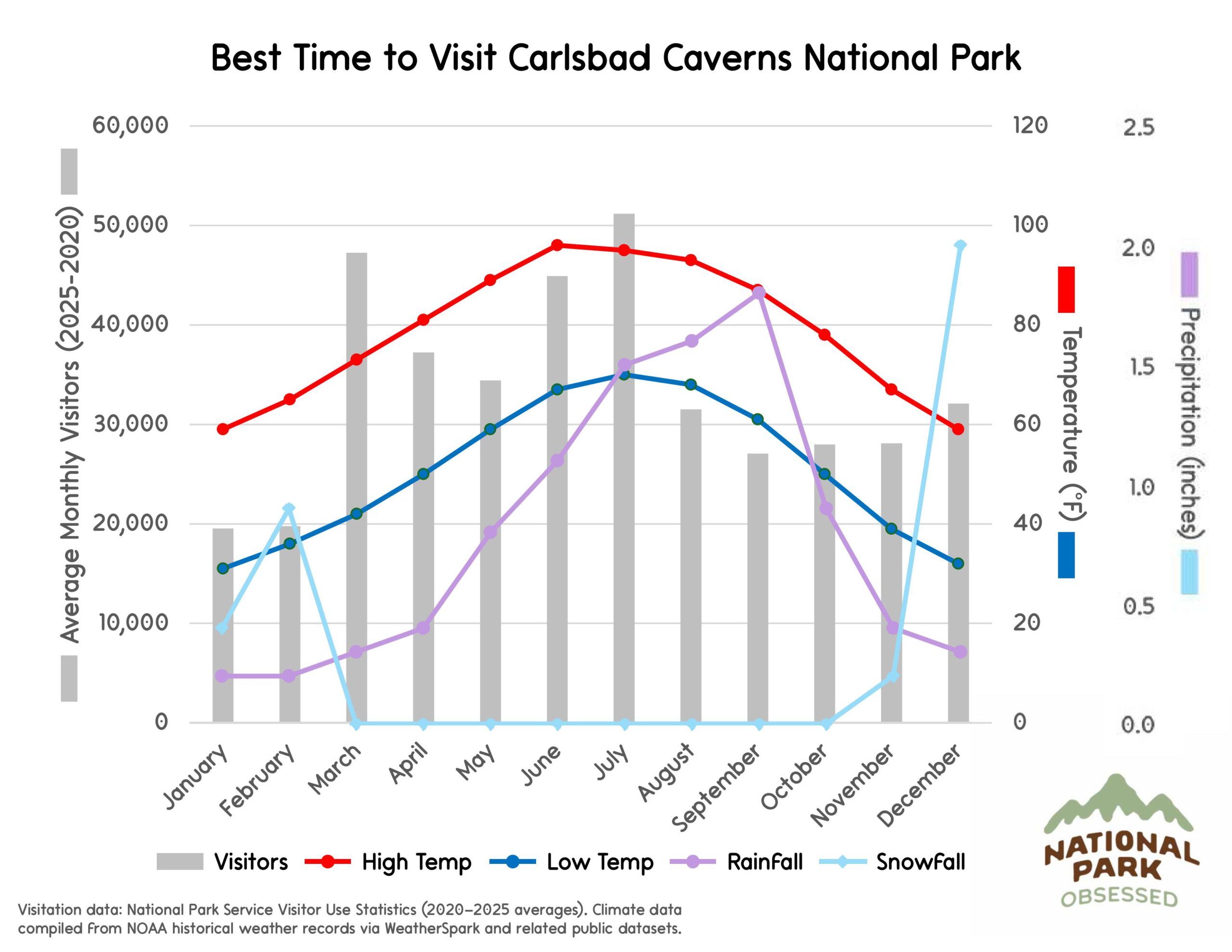
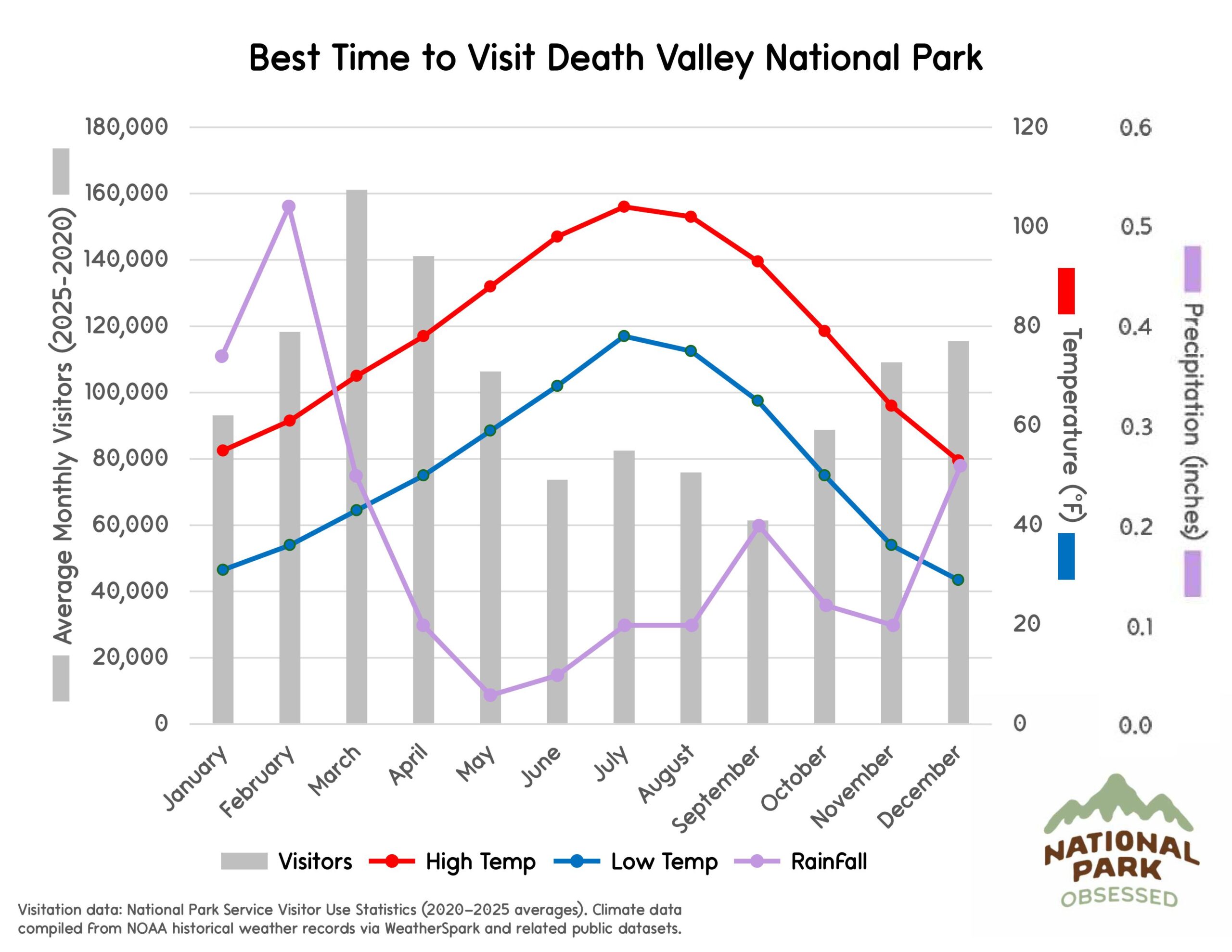
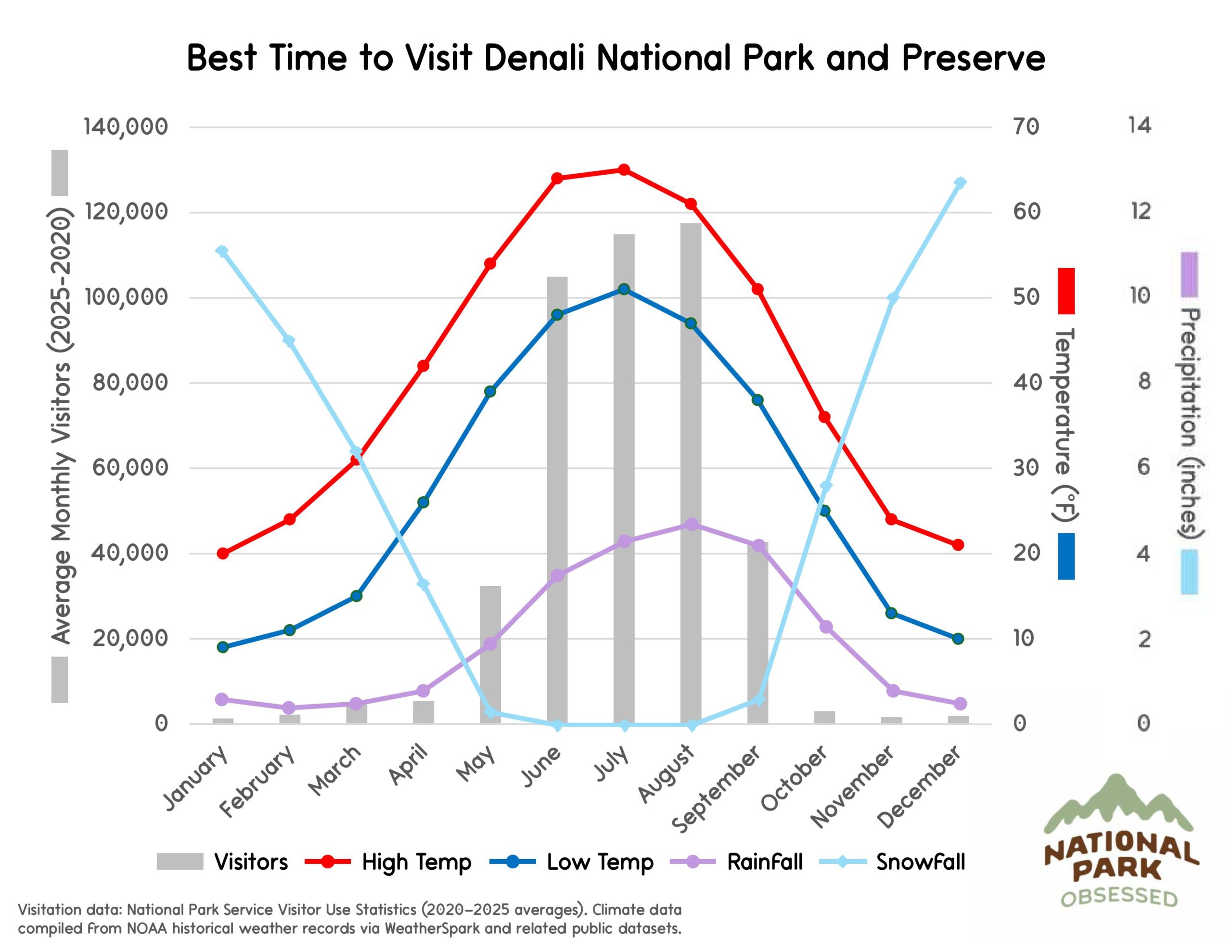
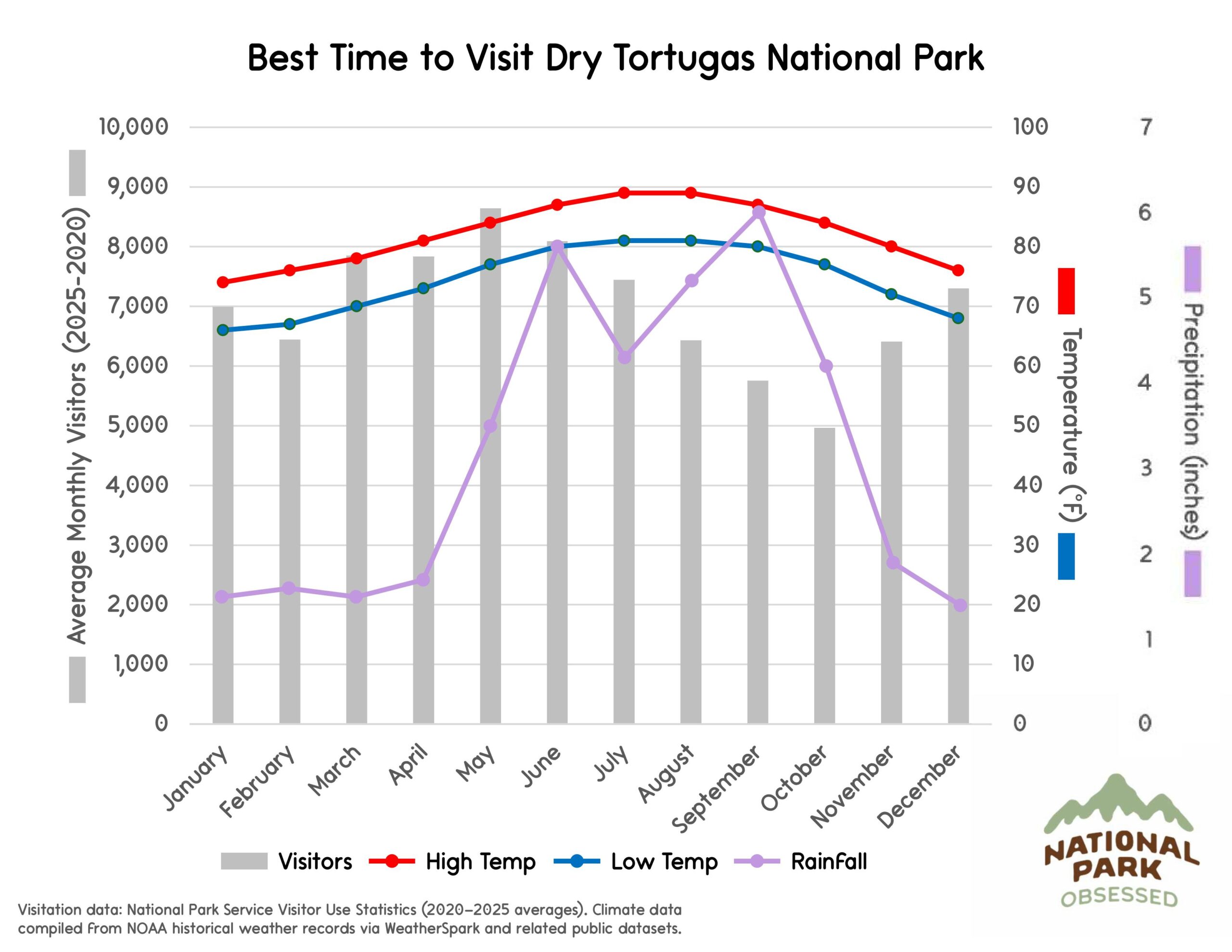
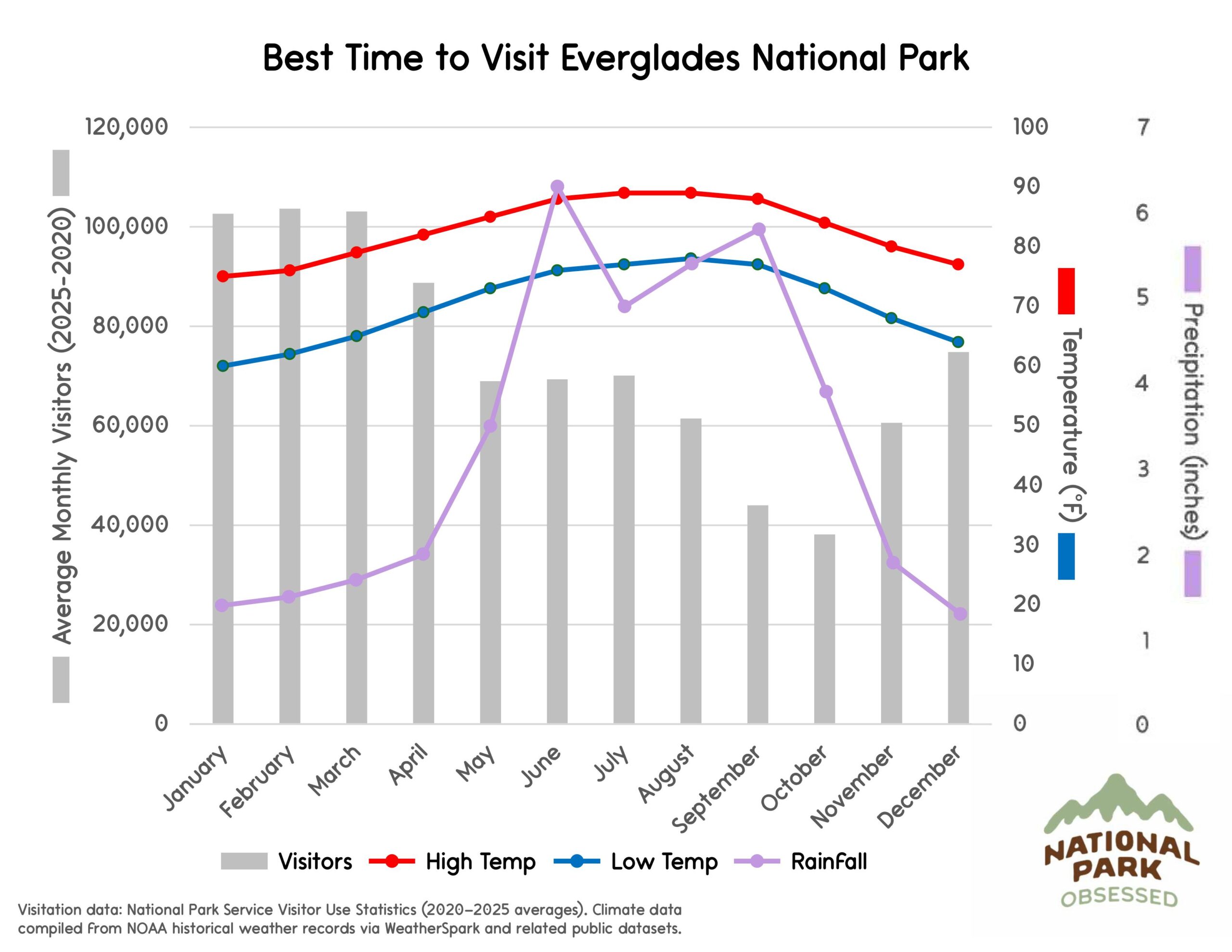
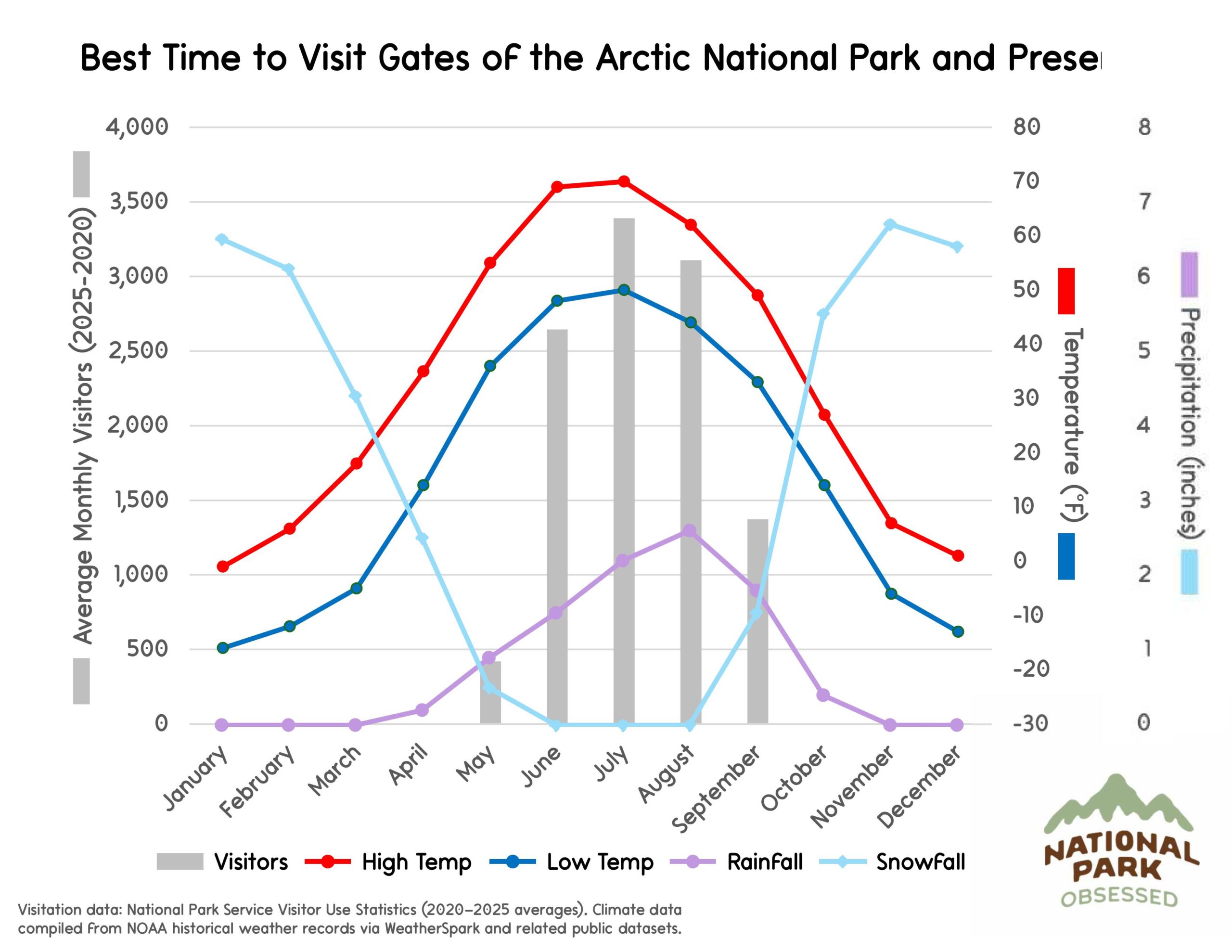
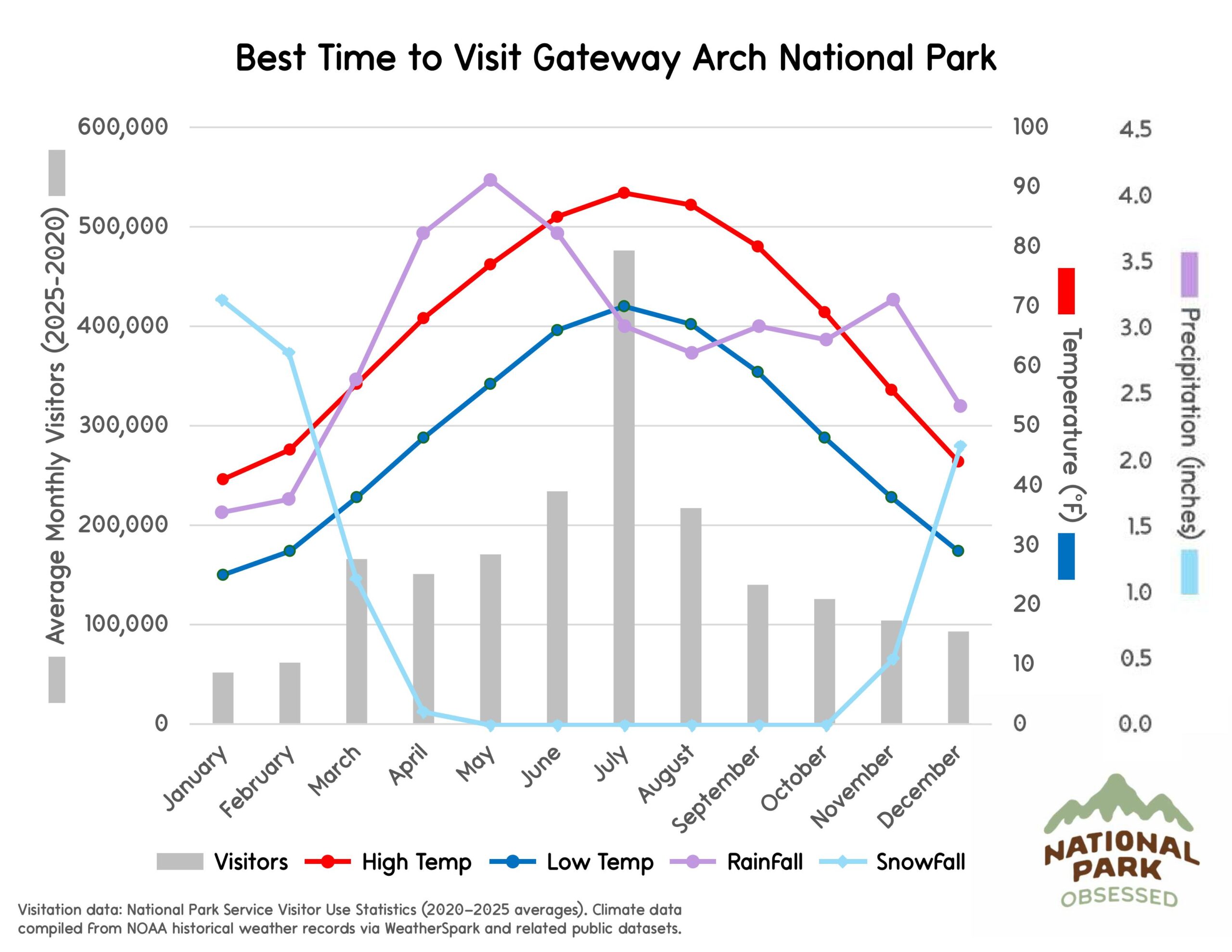
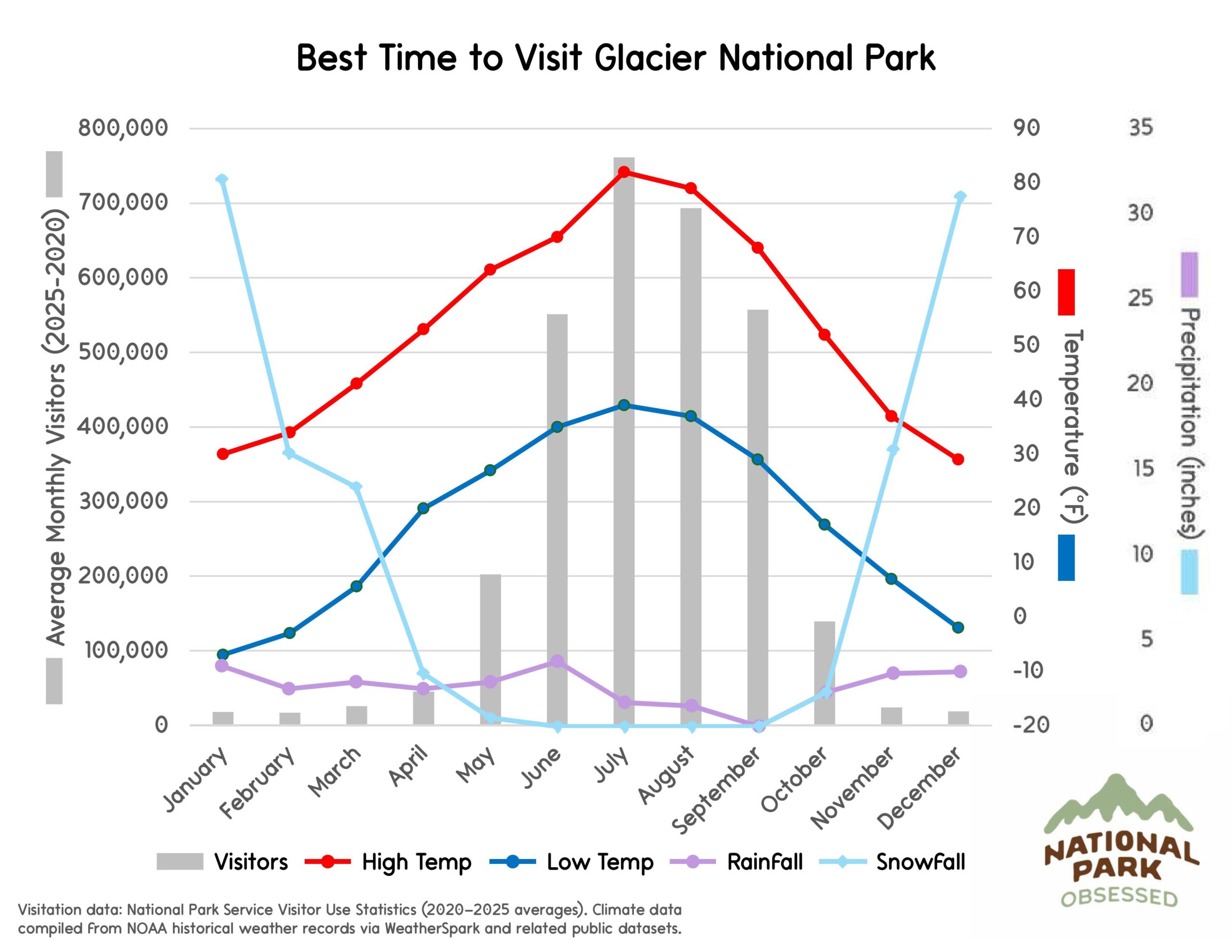
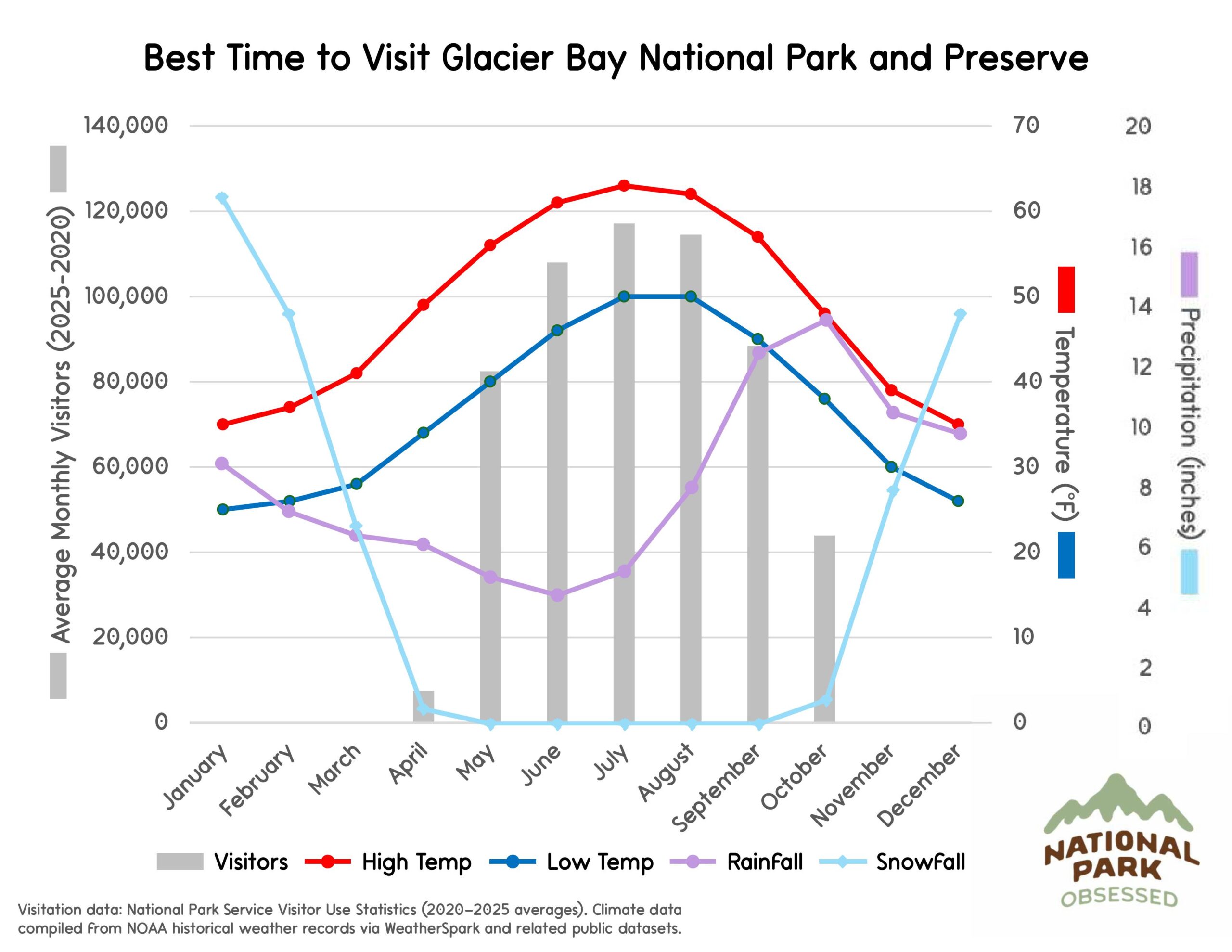
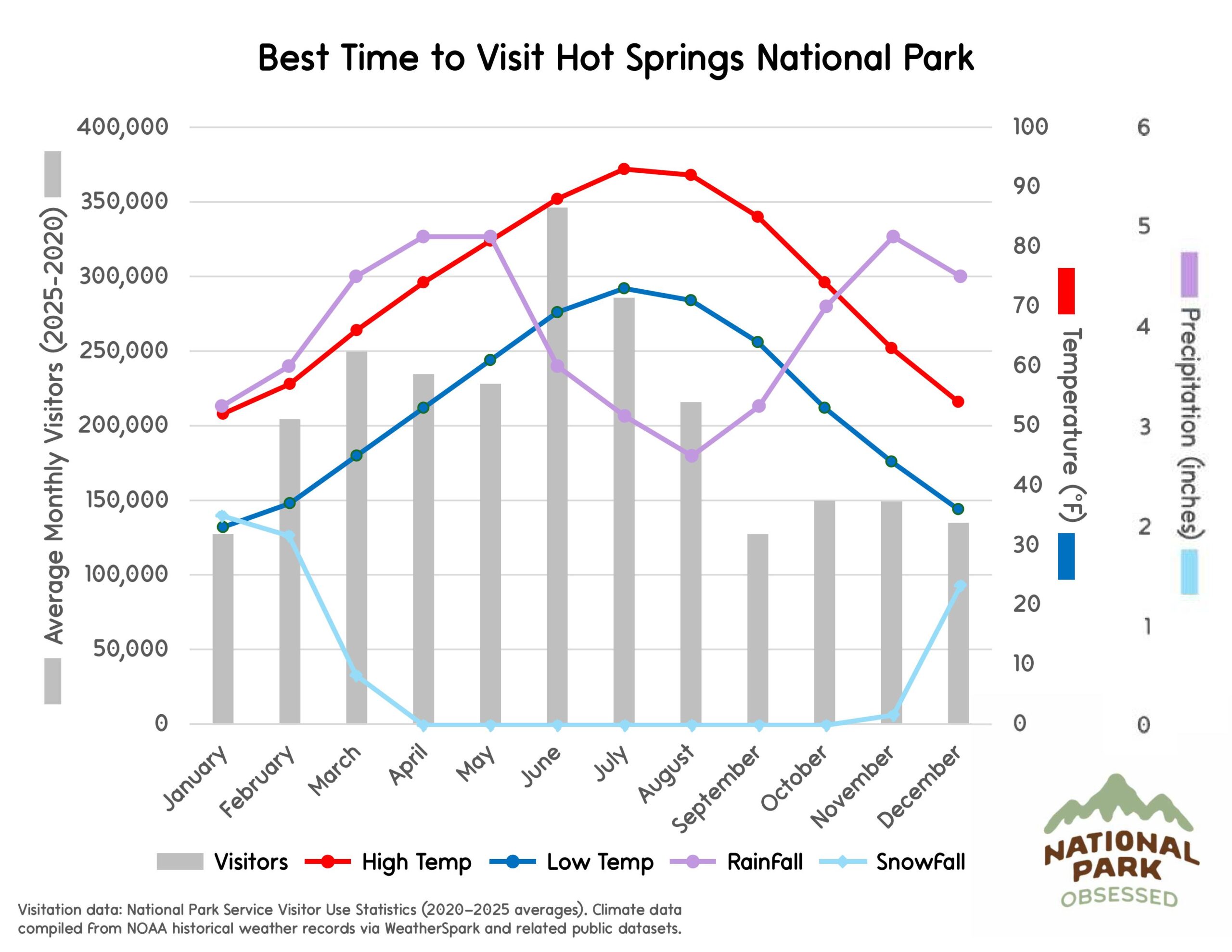
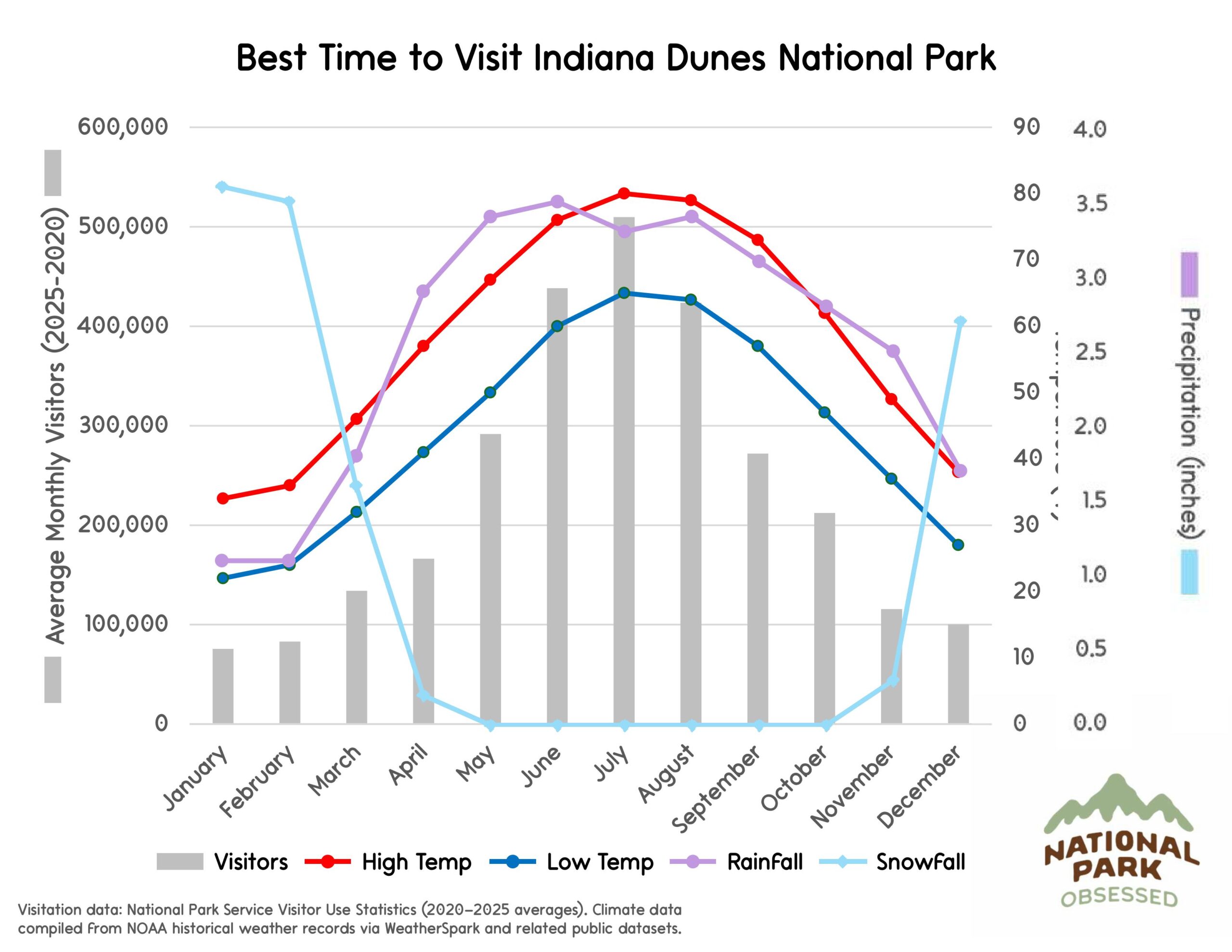
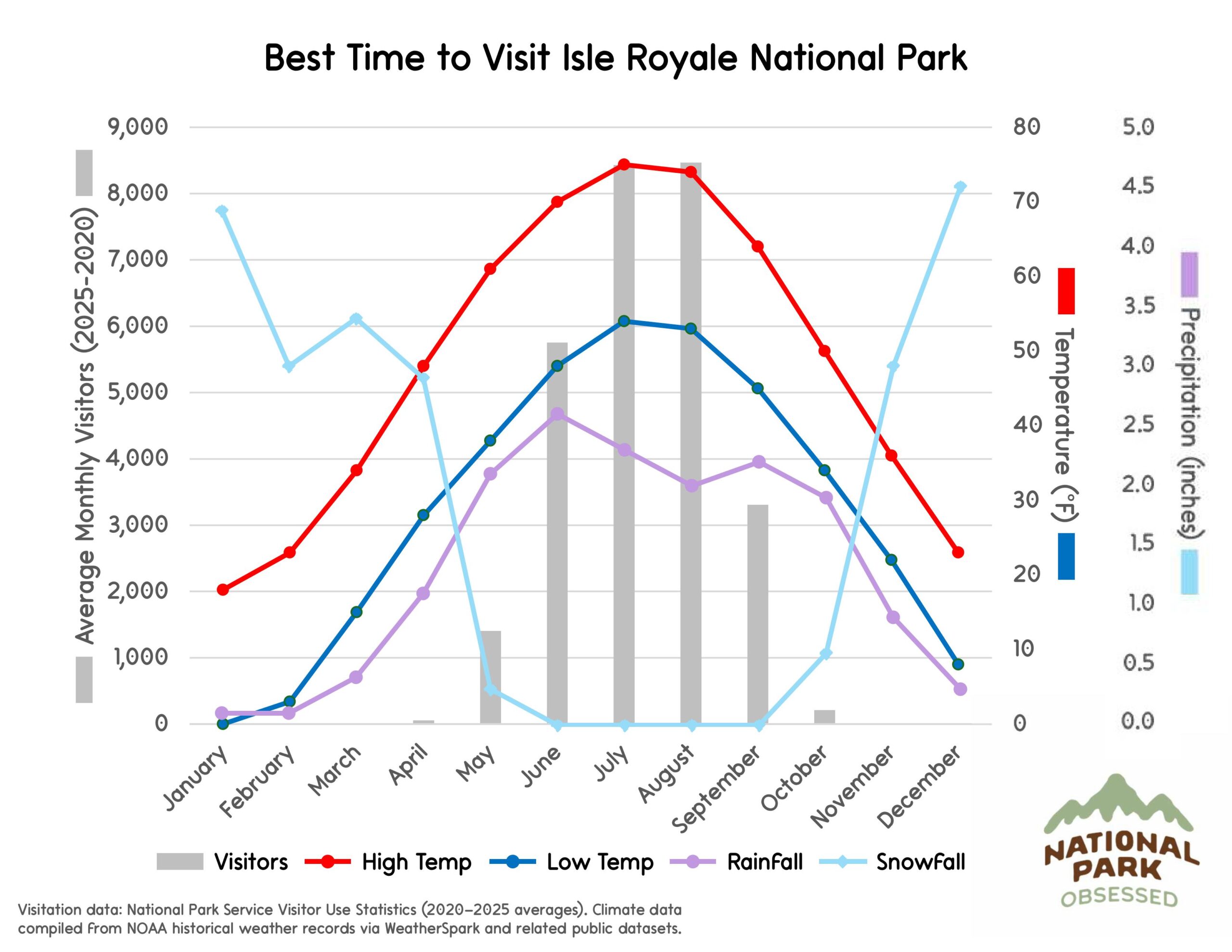
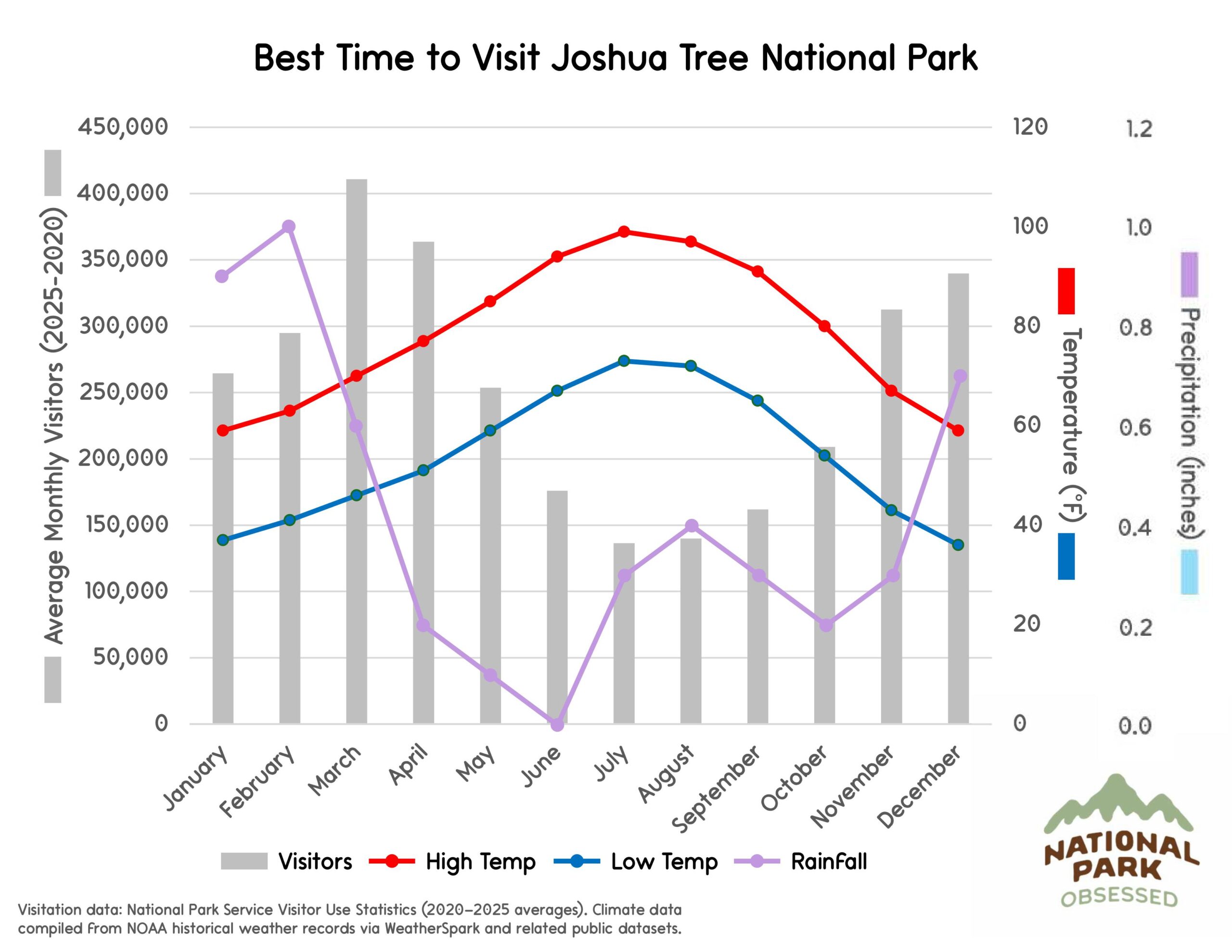
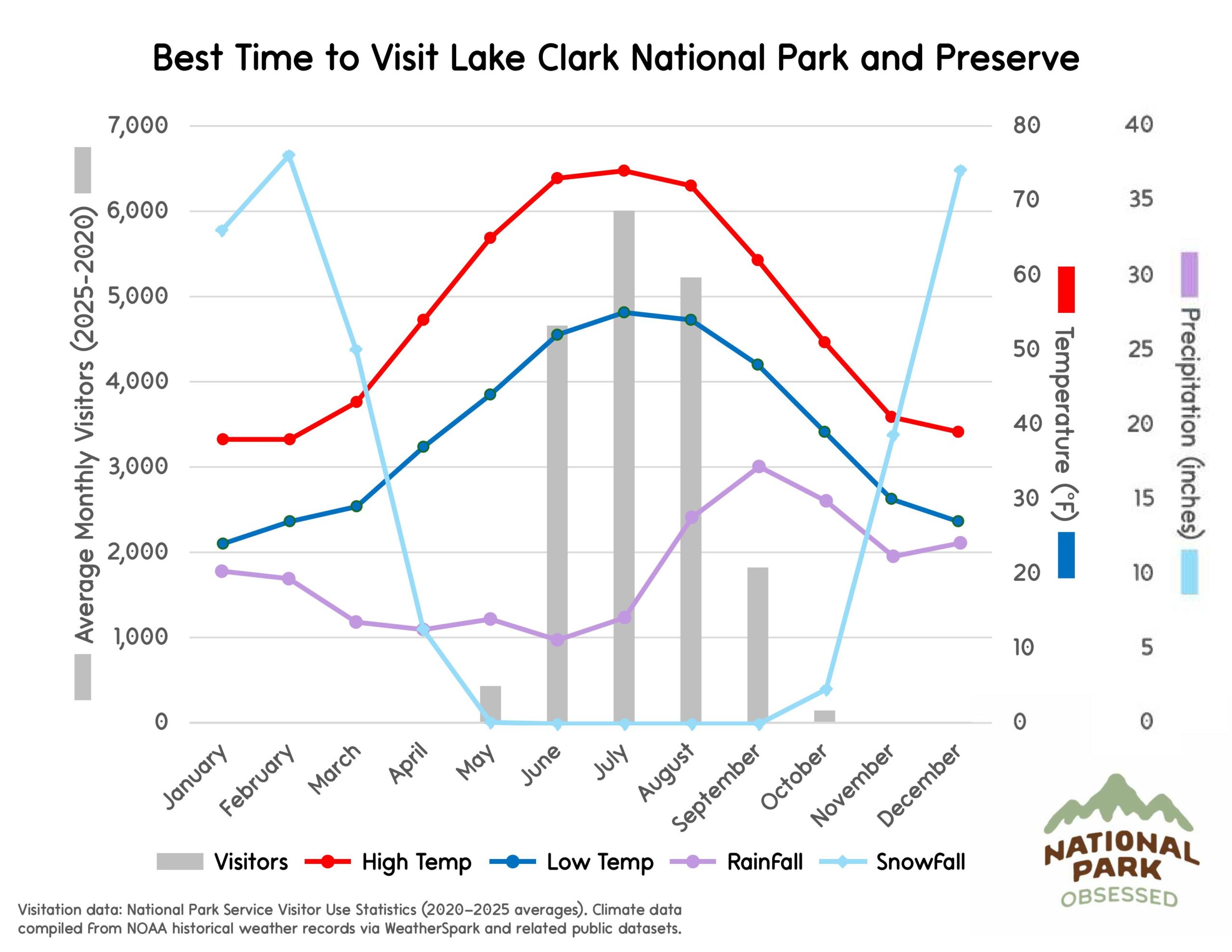
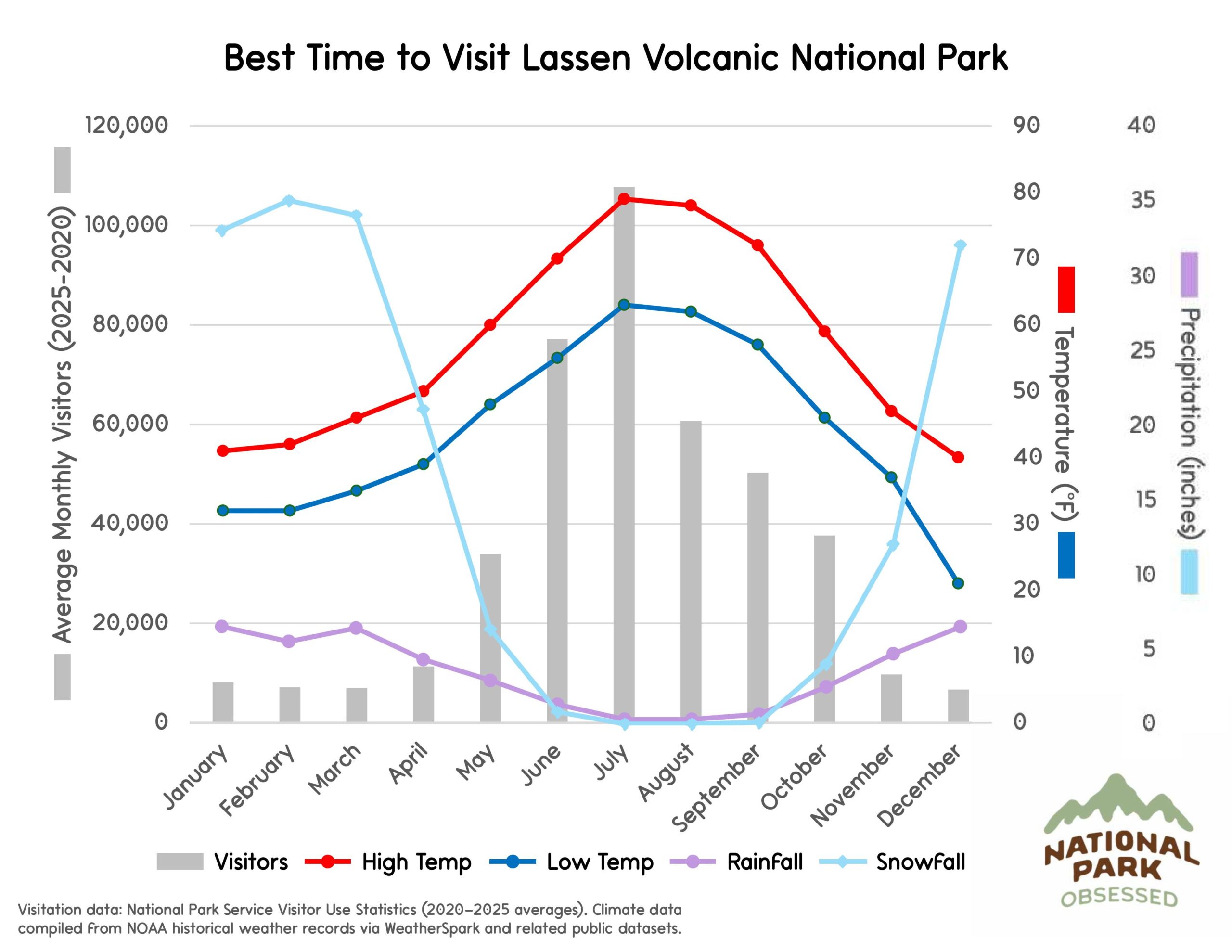
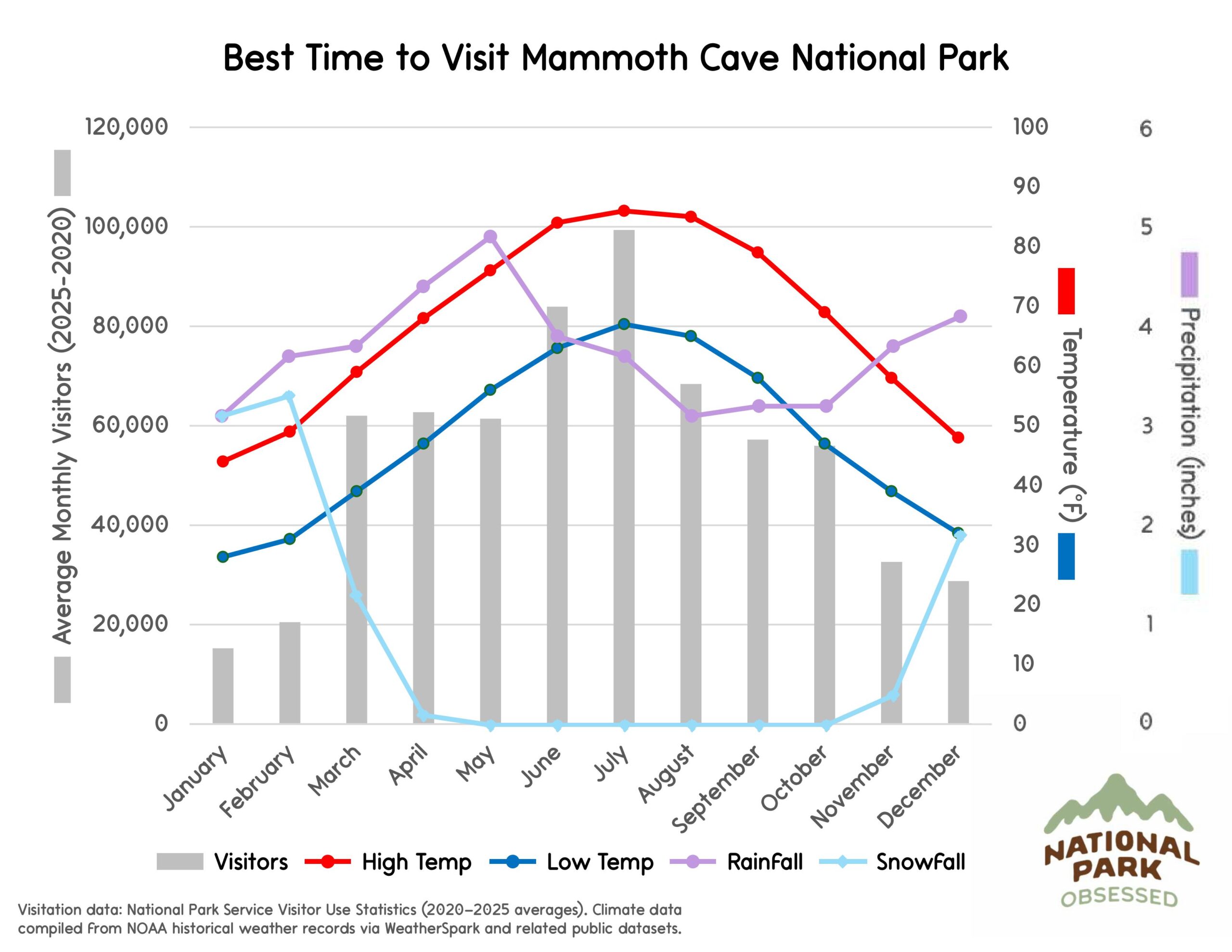
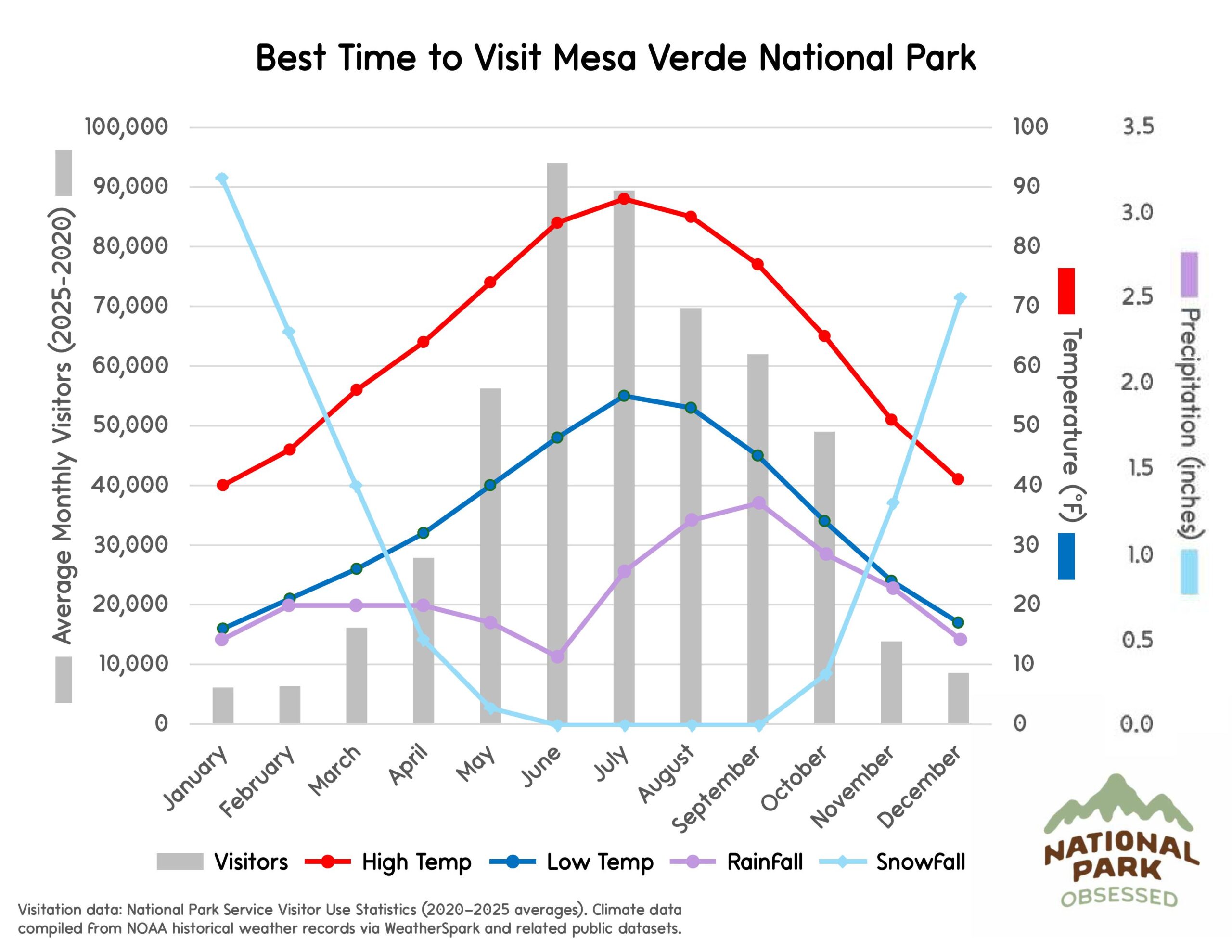
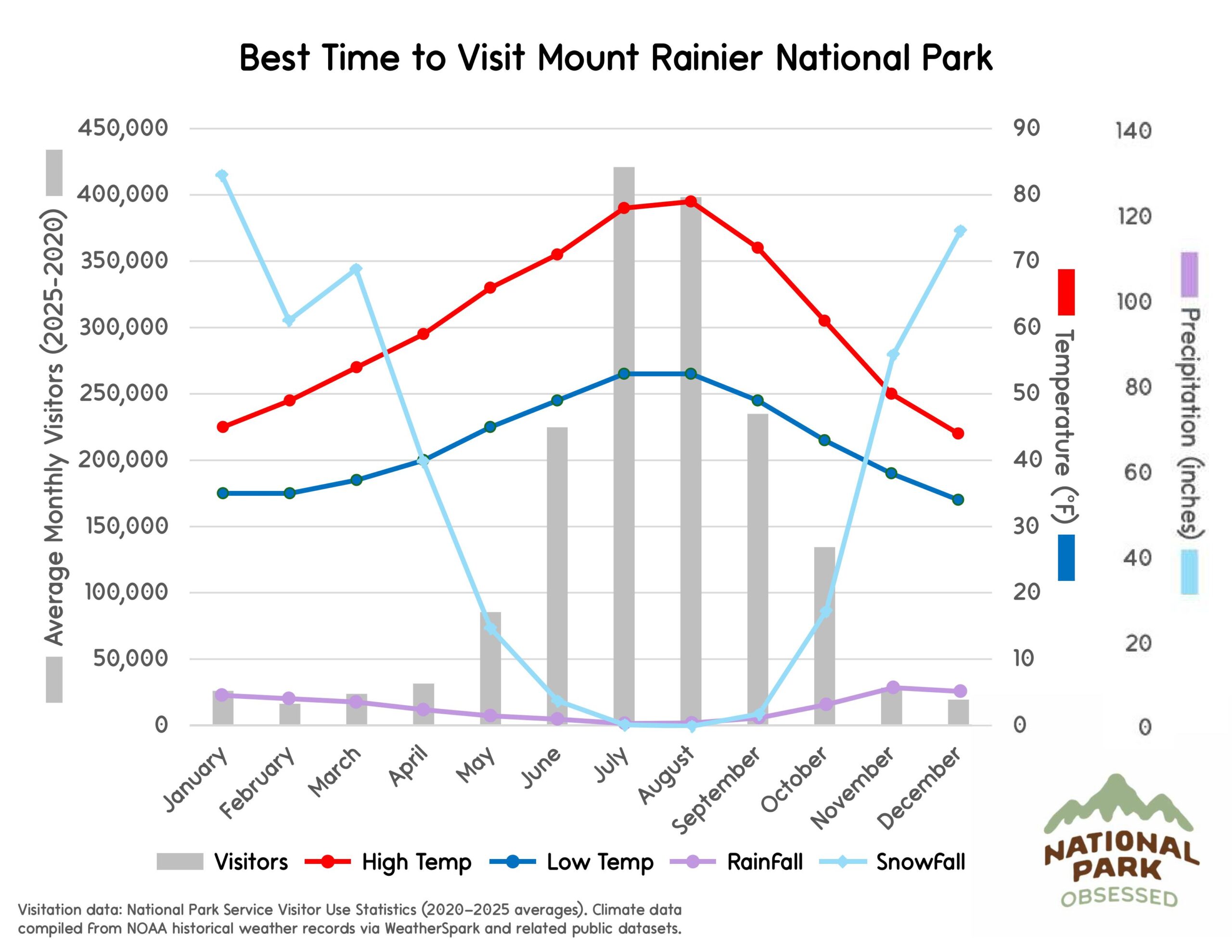
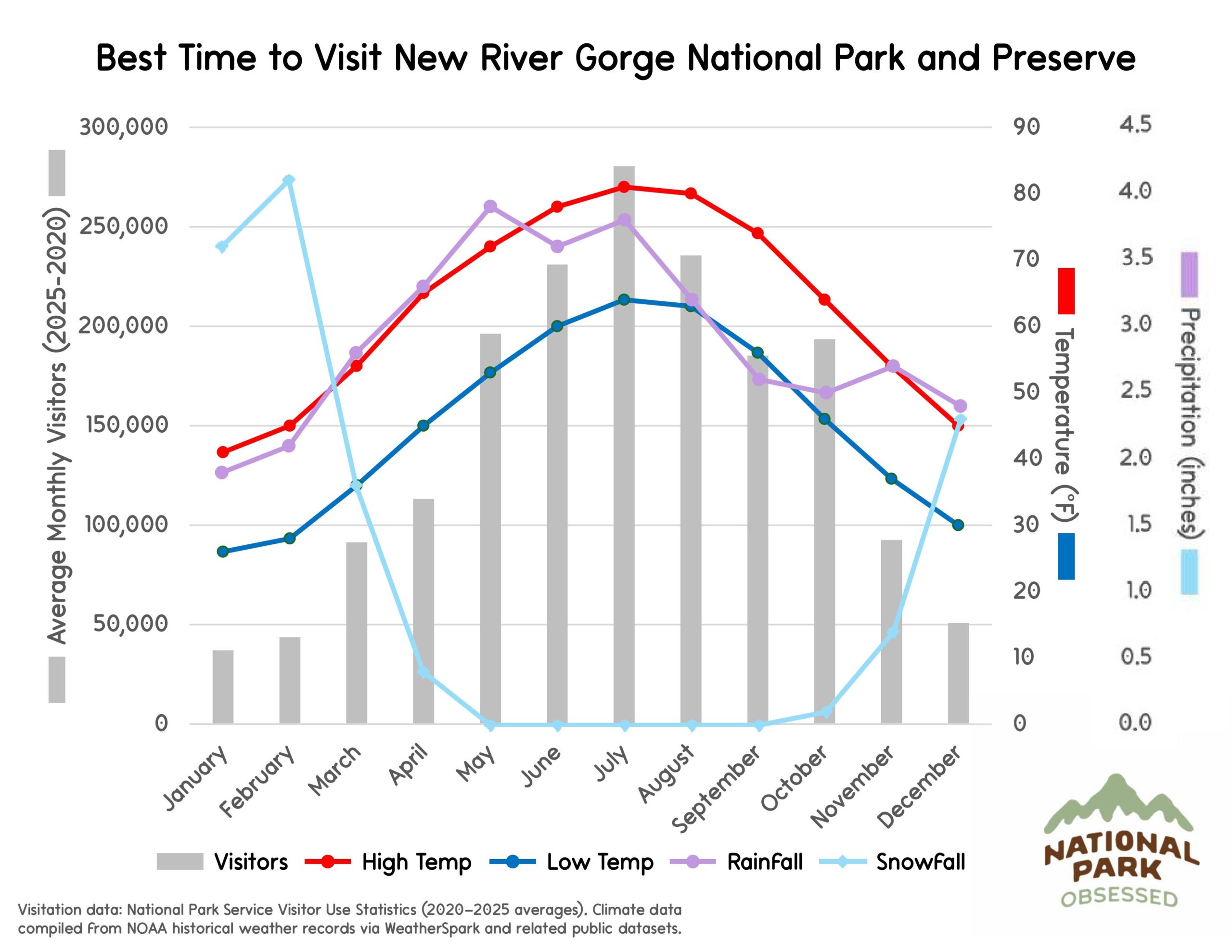
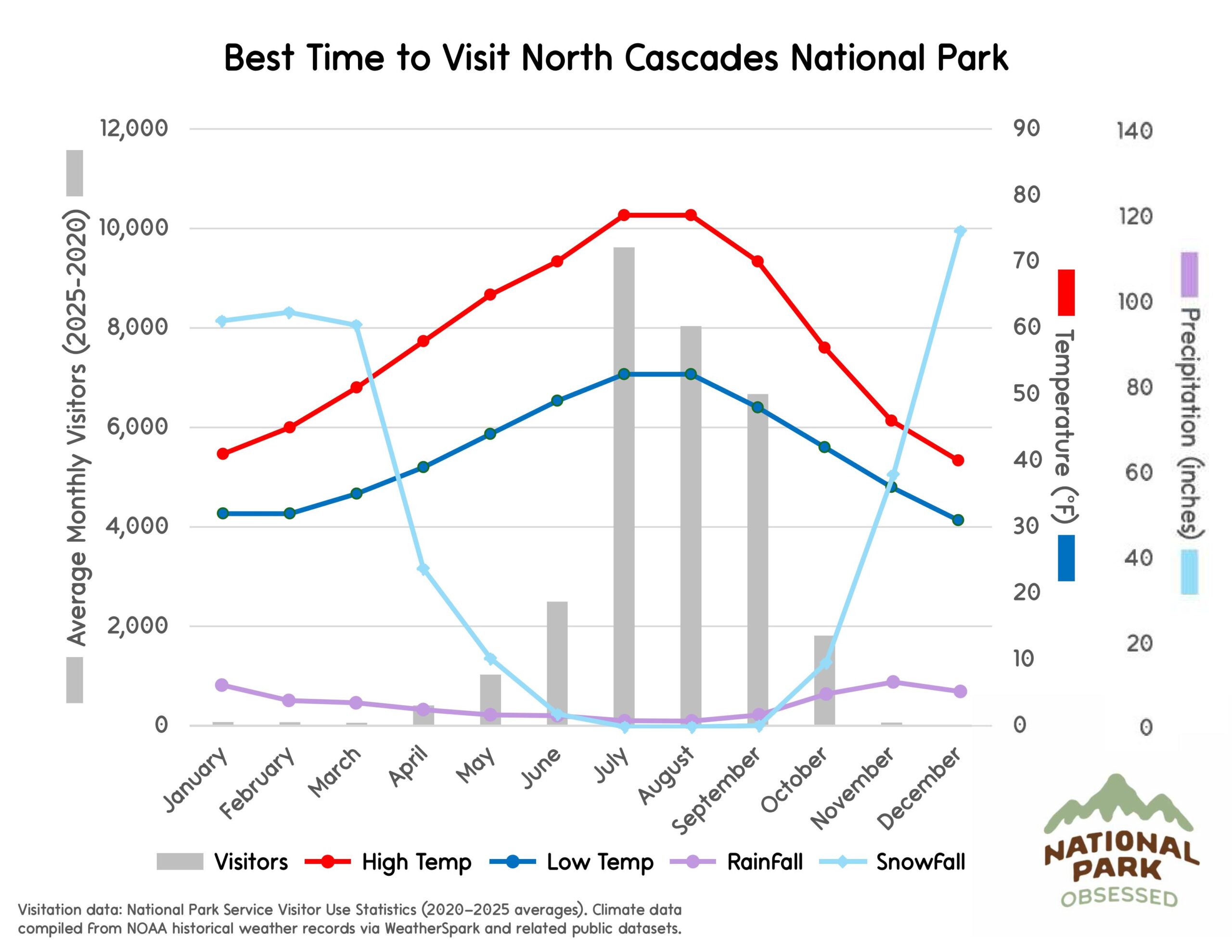
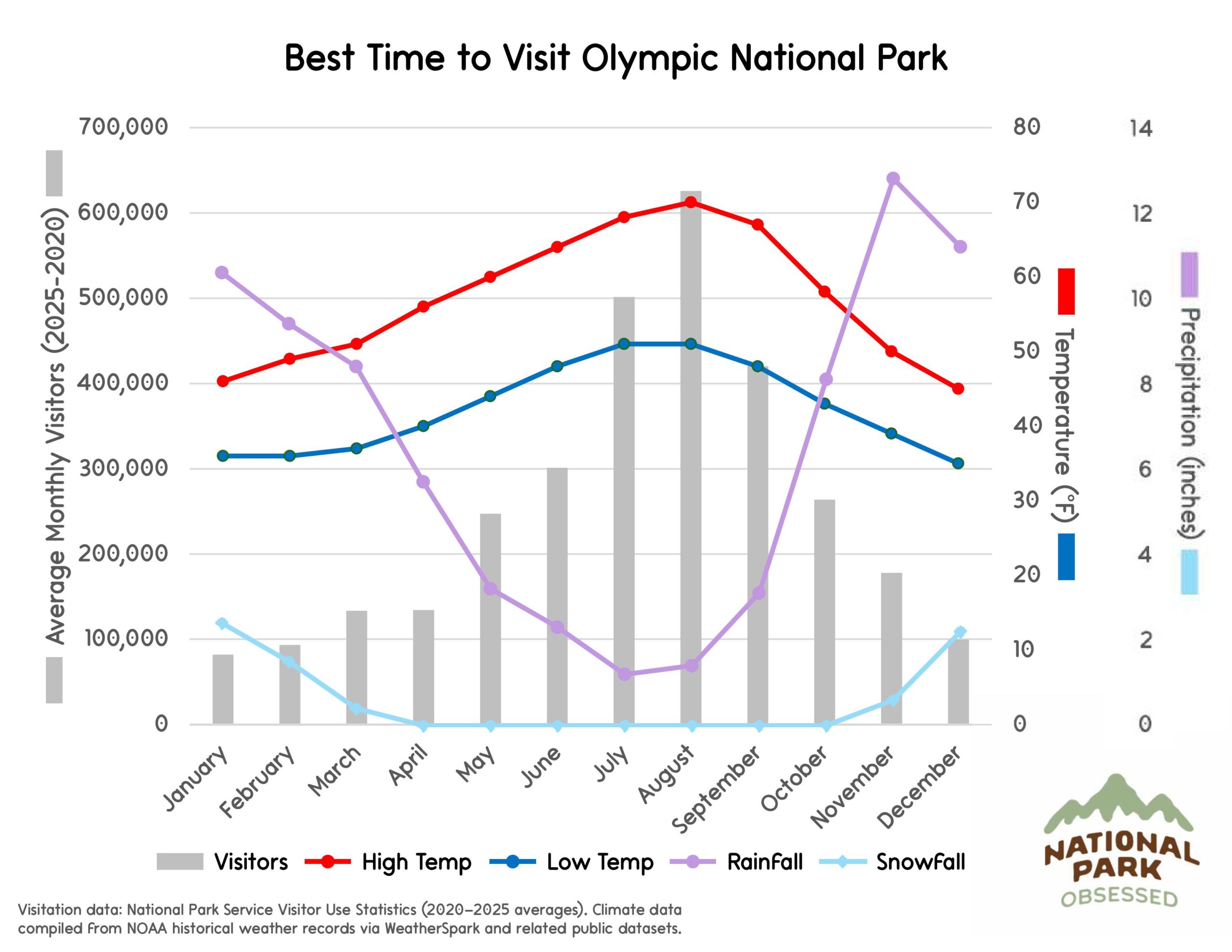
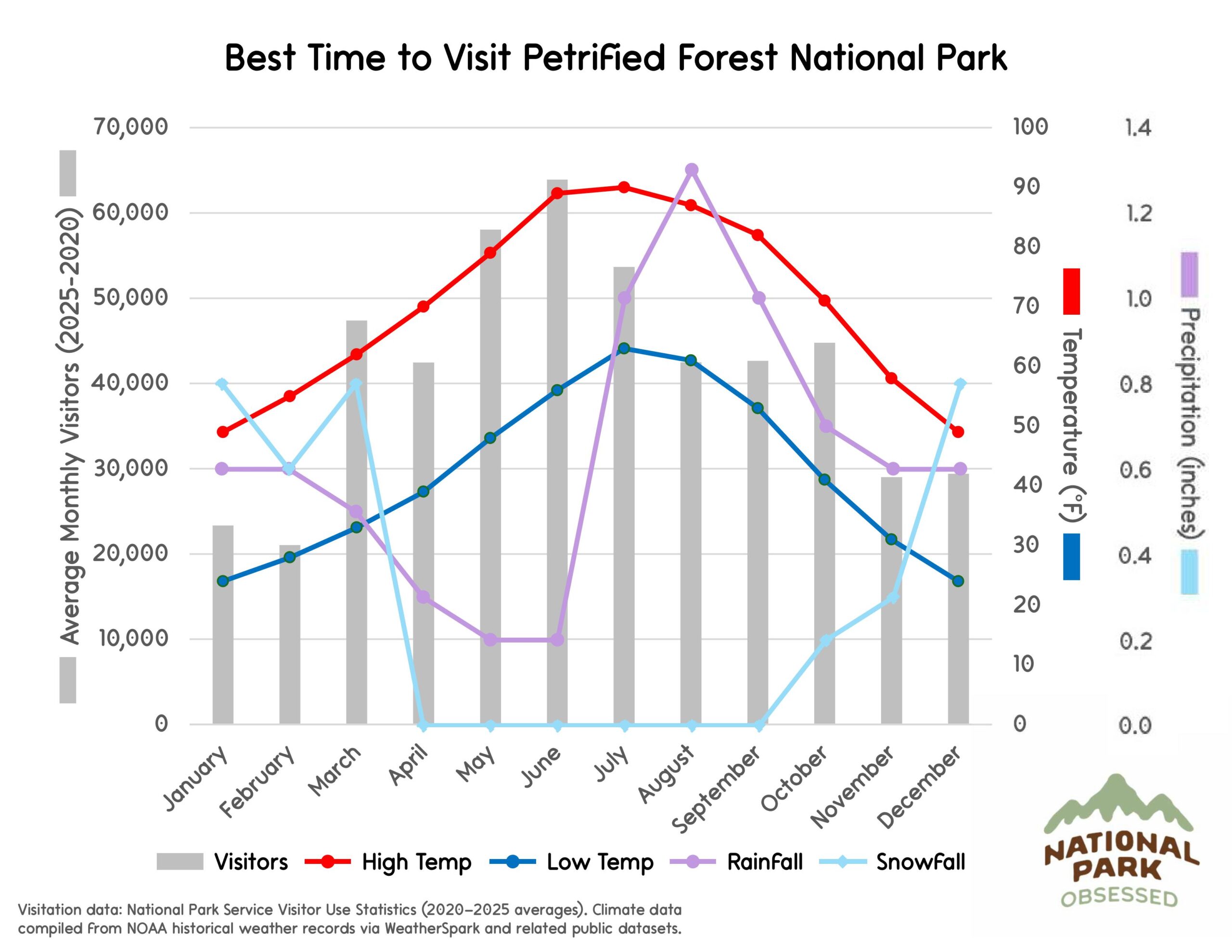
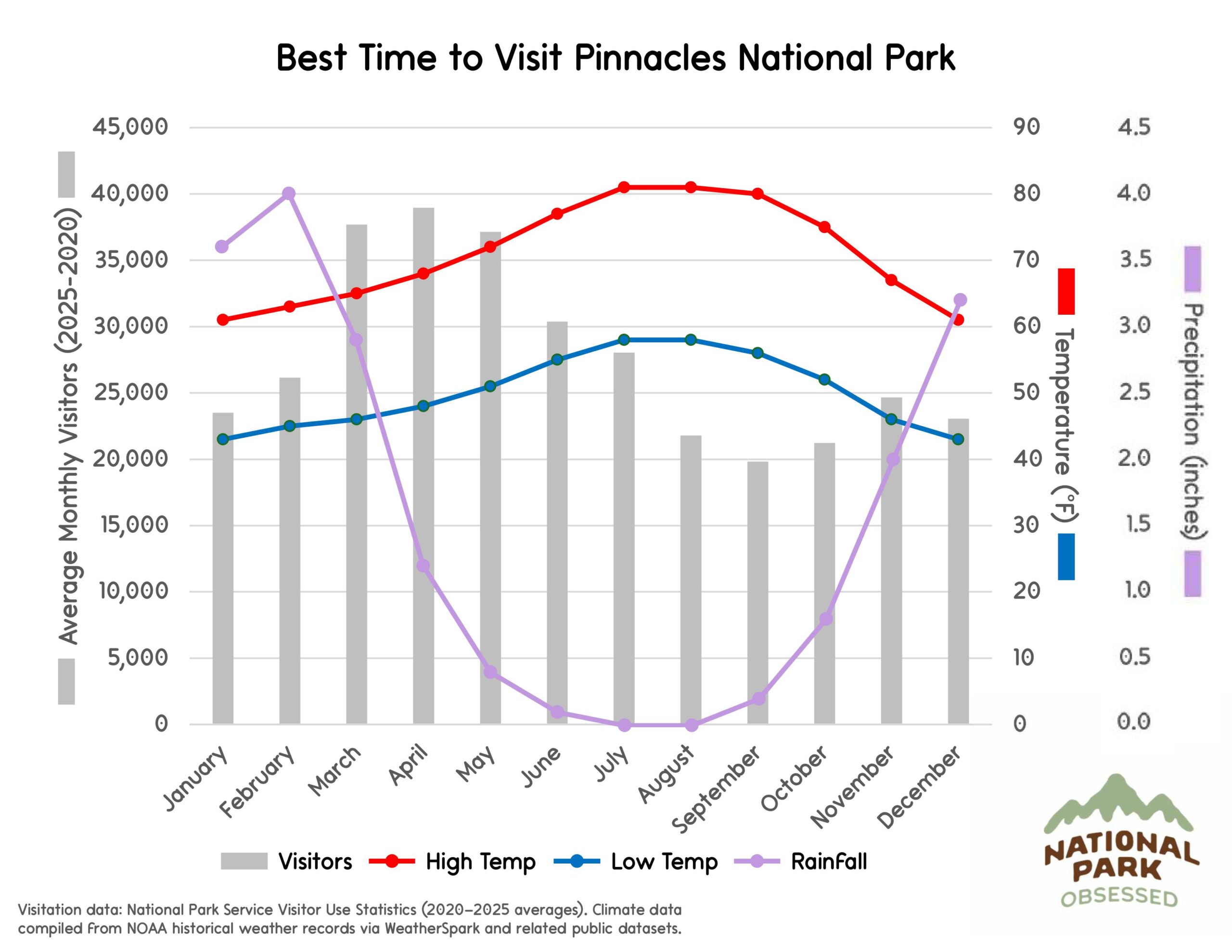
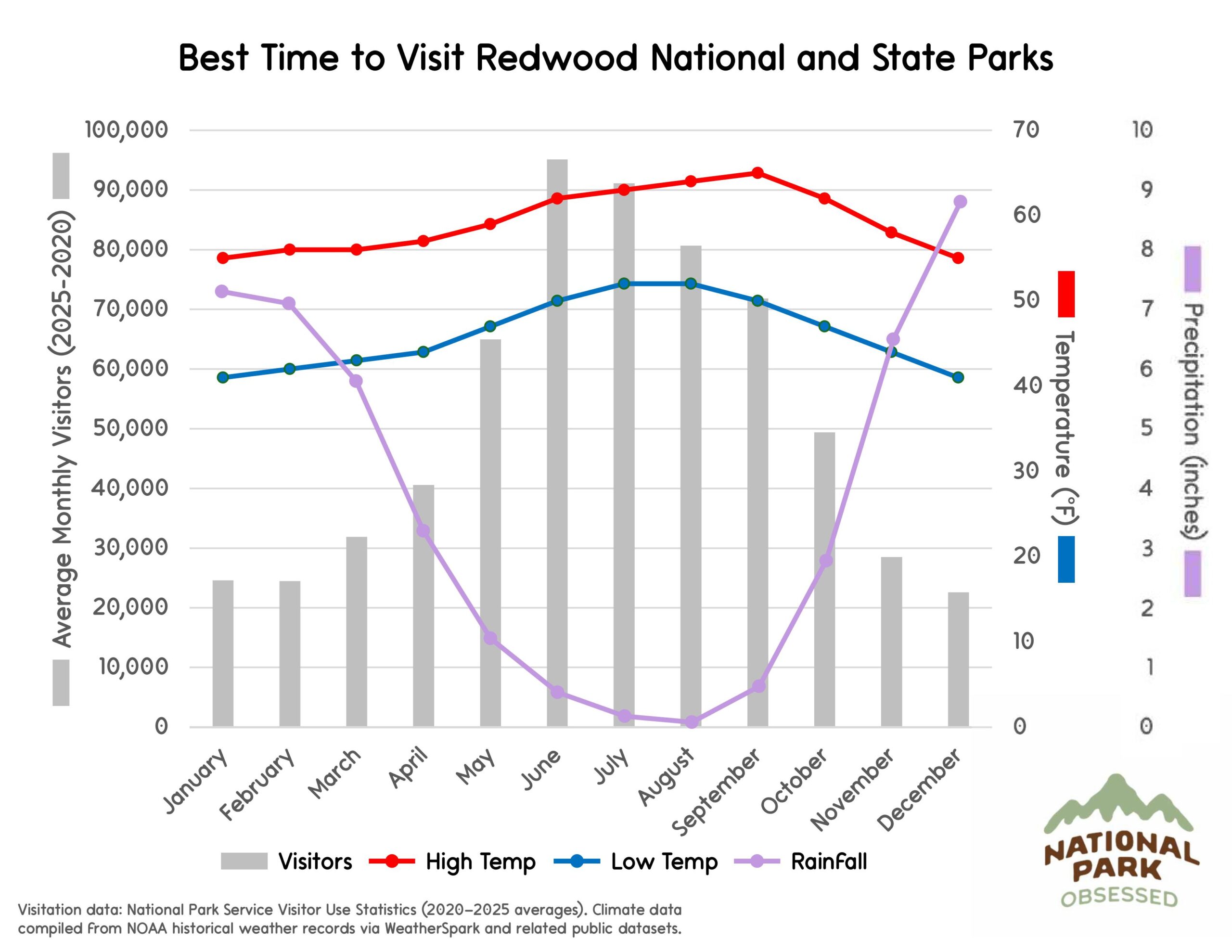
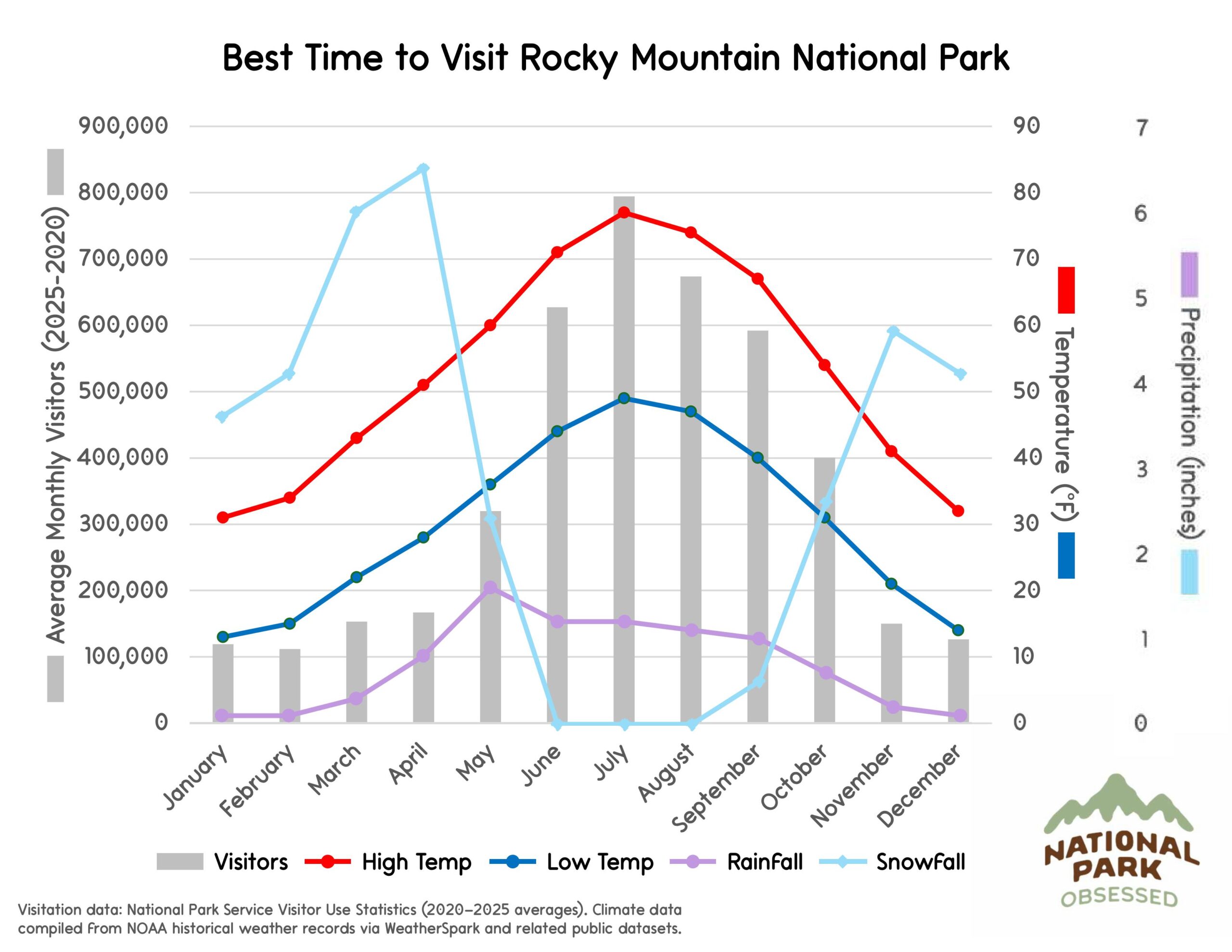
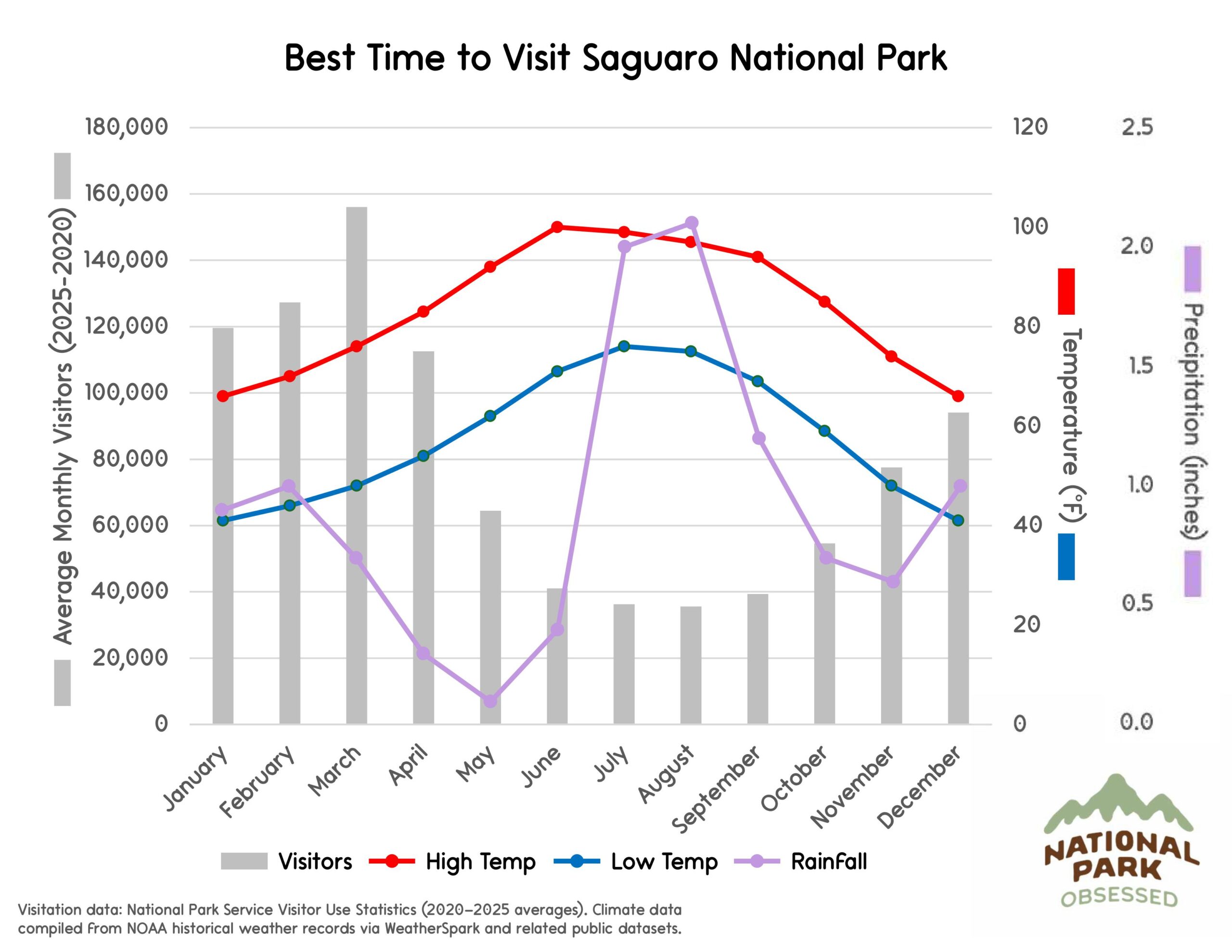
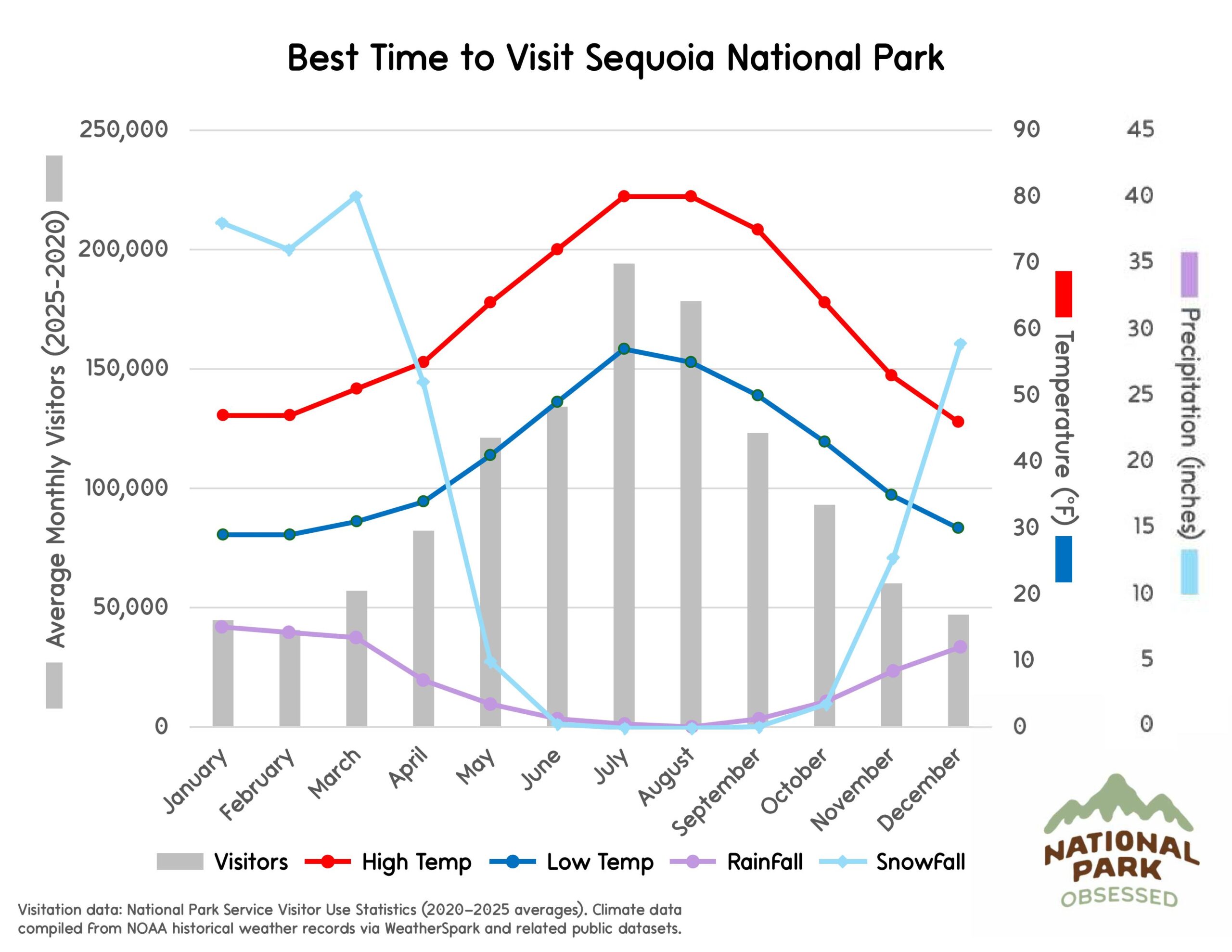
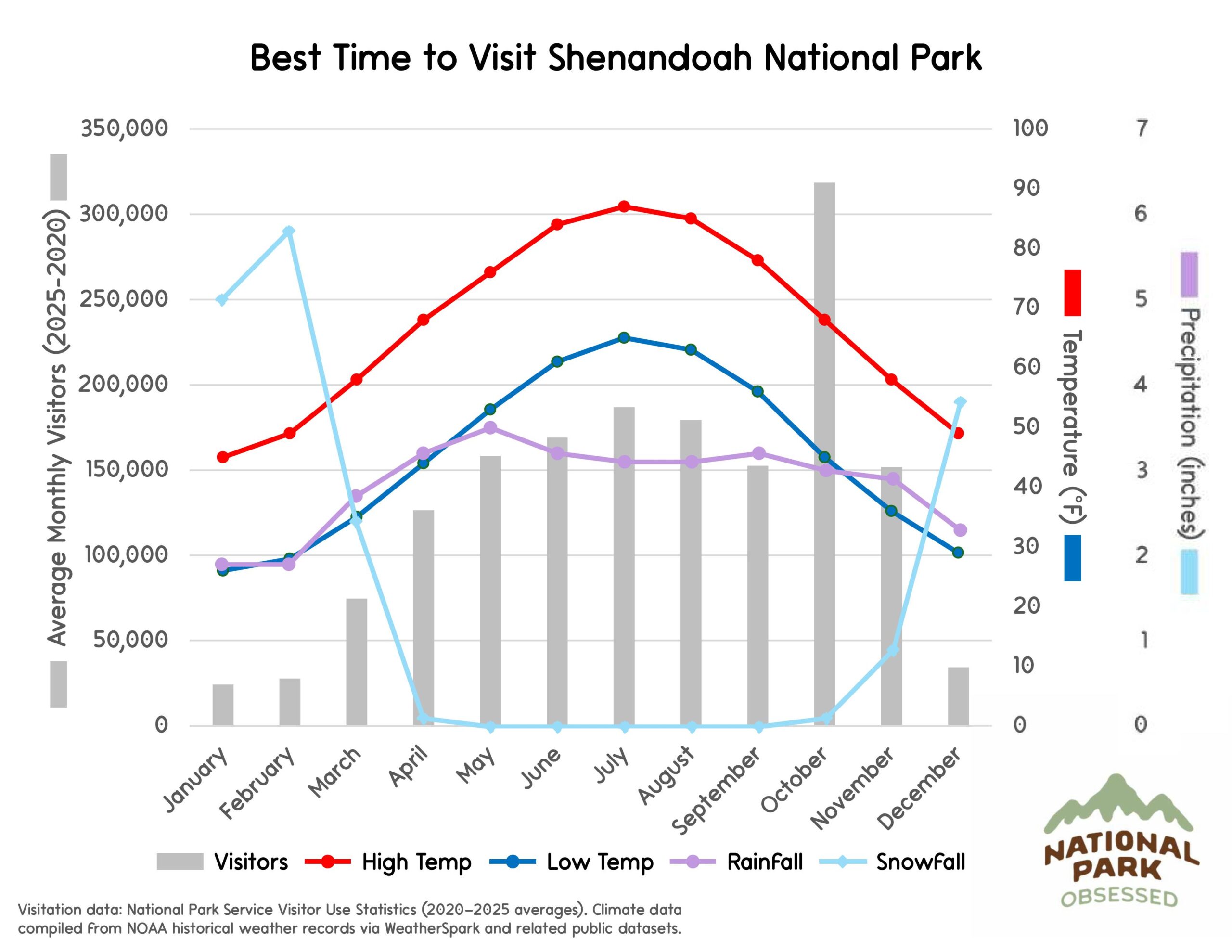
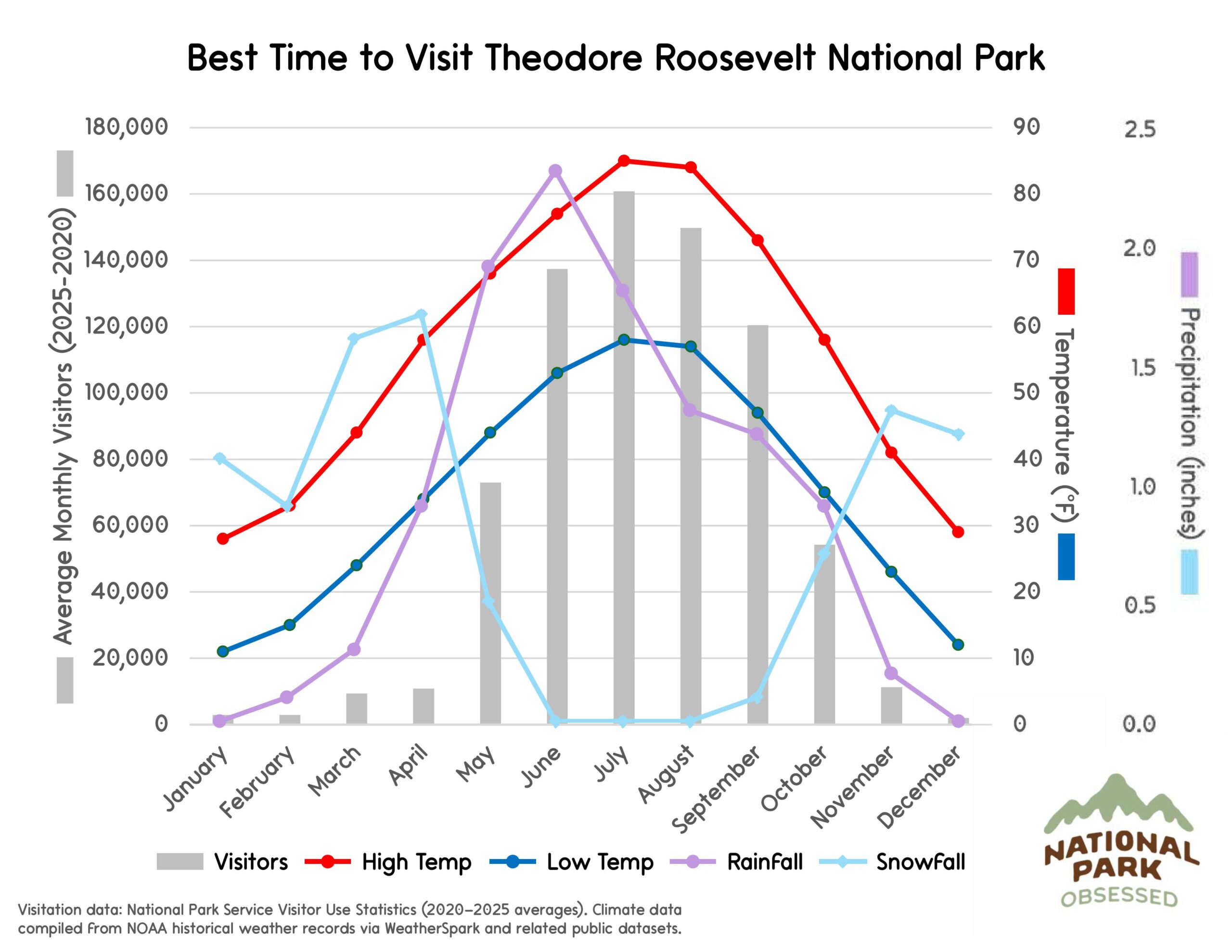
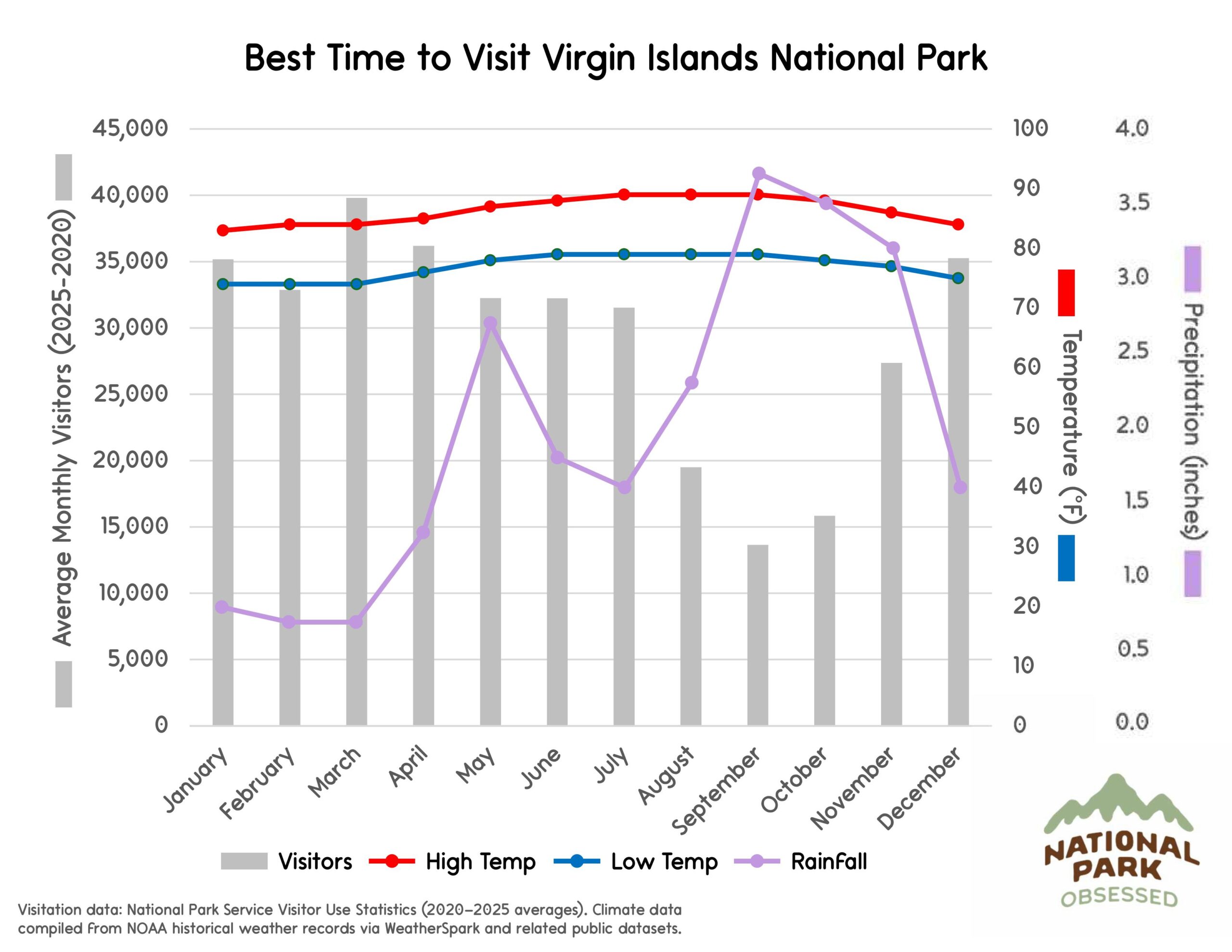
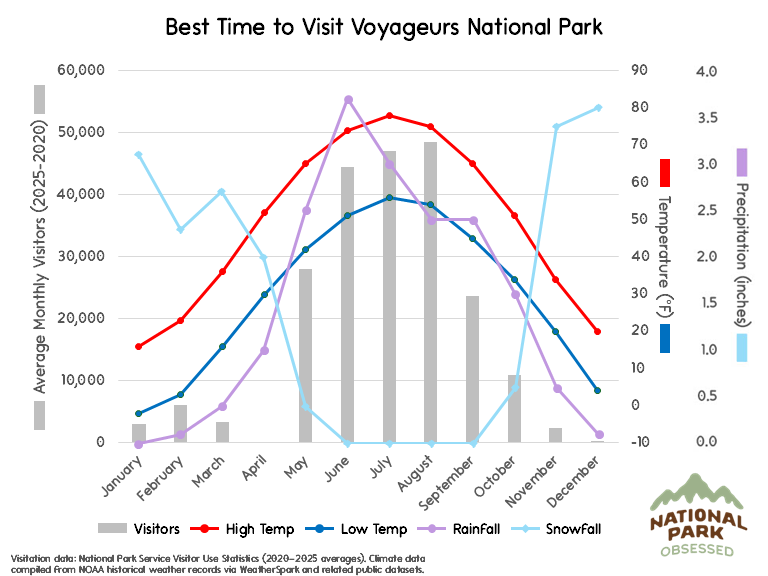
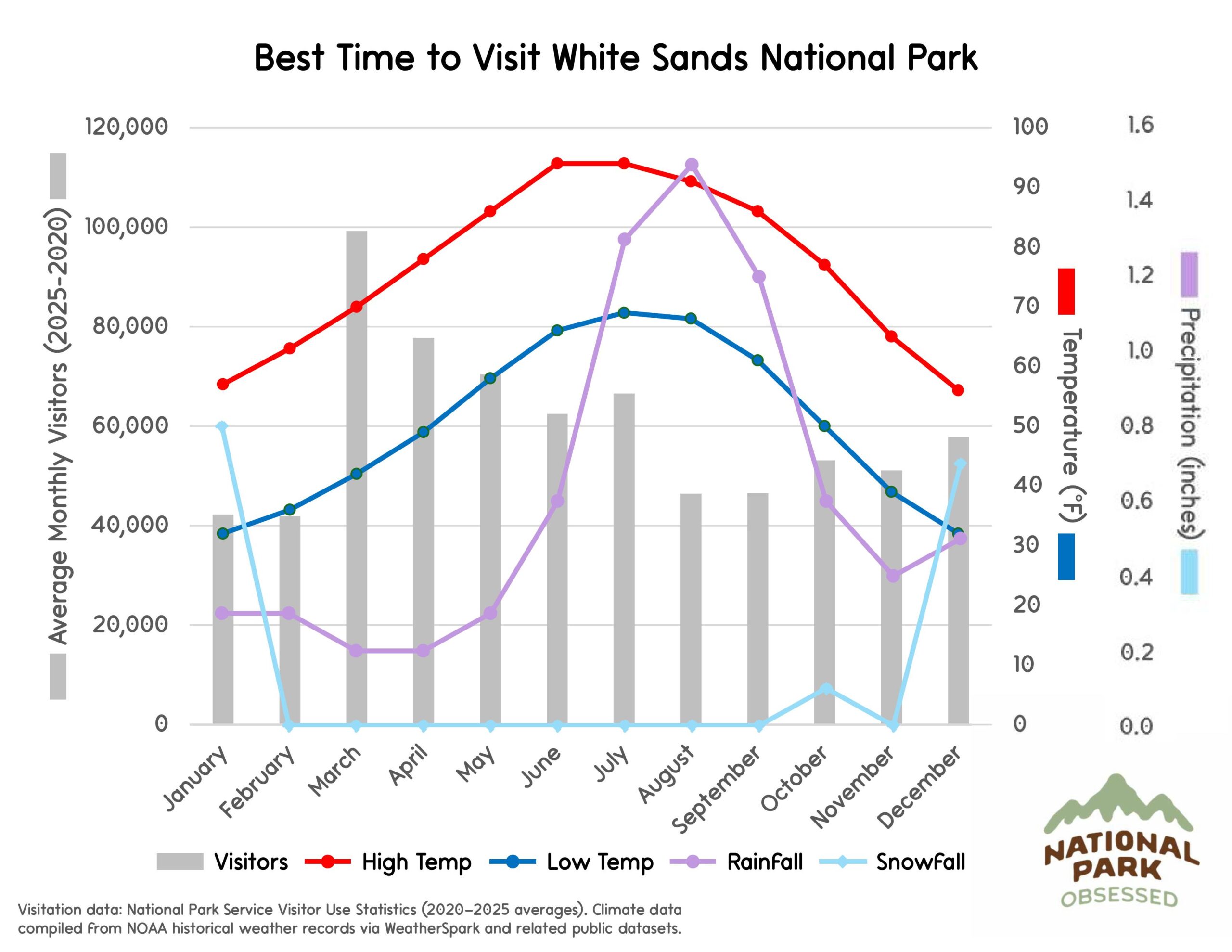
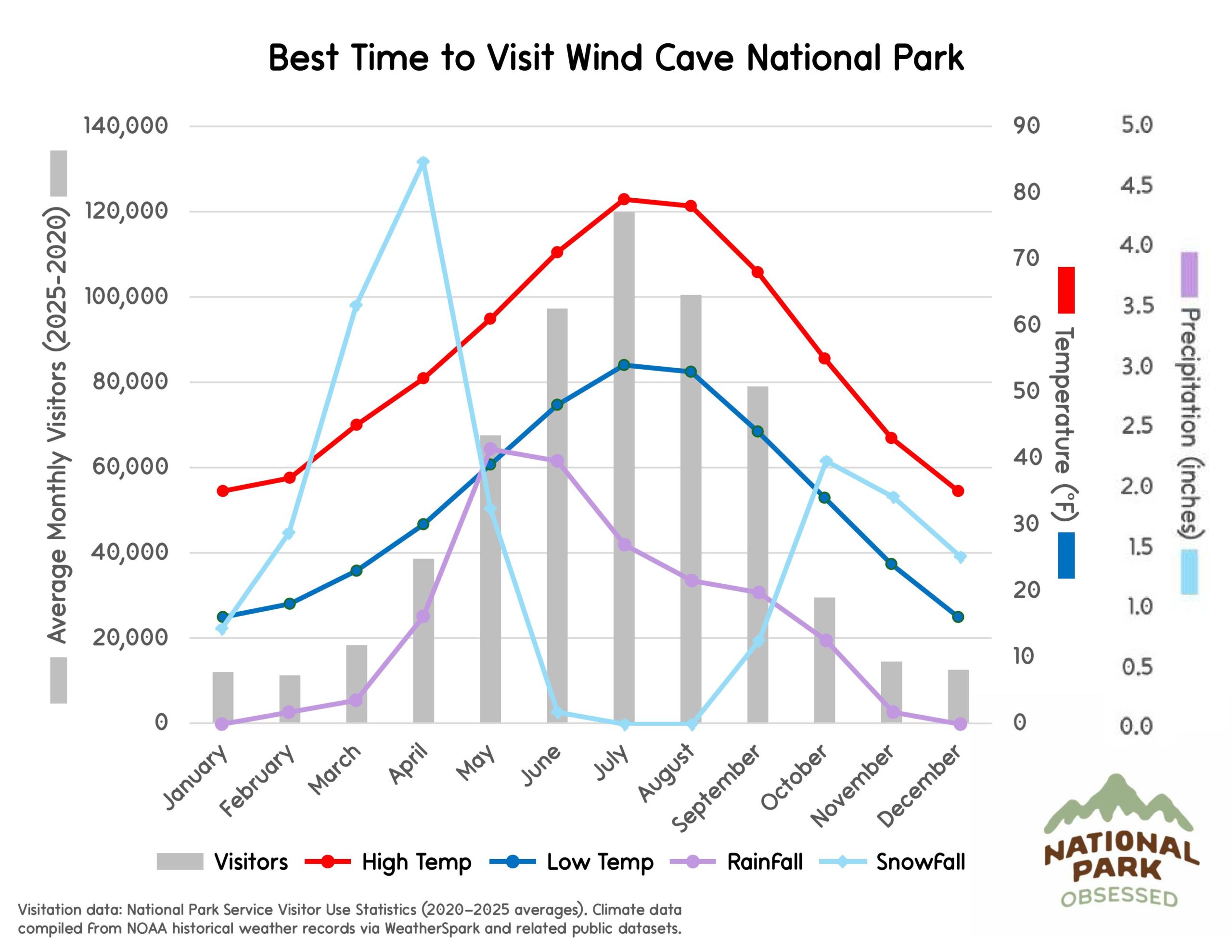
How to Read Our Monthly Visitor & Climate Graphs
I’m an engineer, so I’m good with numbers and spreadsheets. I have spreadsheets for everything and have done some crazy data analysis. So I’ve always wanted to do something to help people work out the best time for them to visit the National Parks. I just had trouble figuring out what I wanted to do until now.
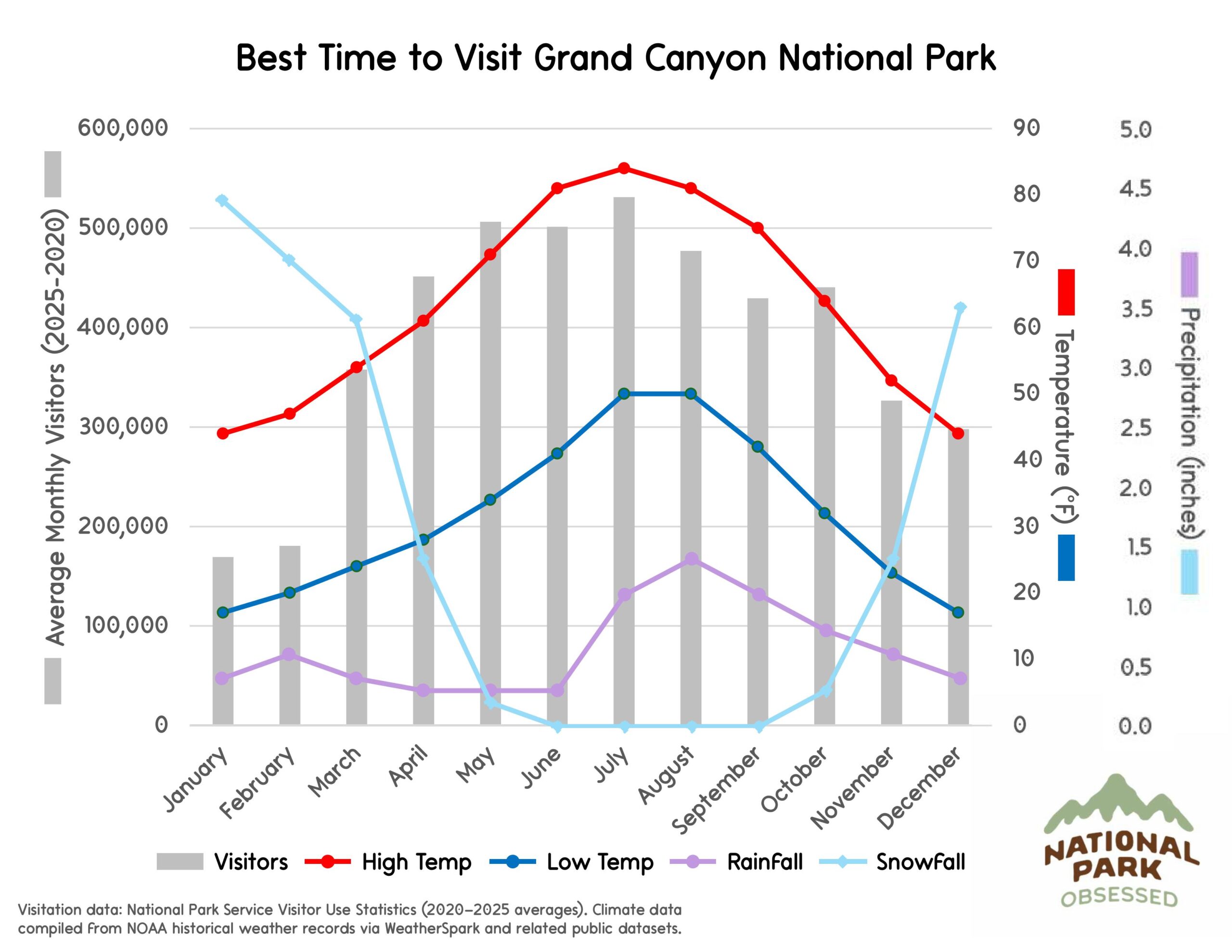
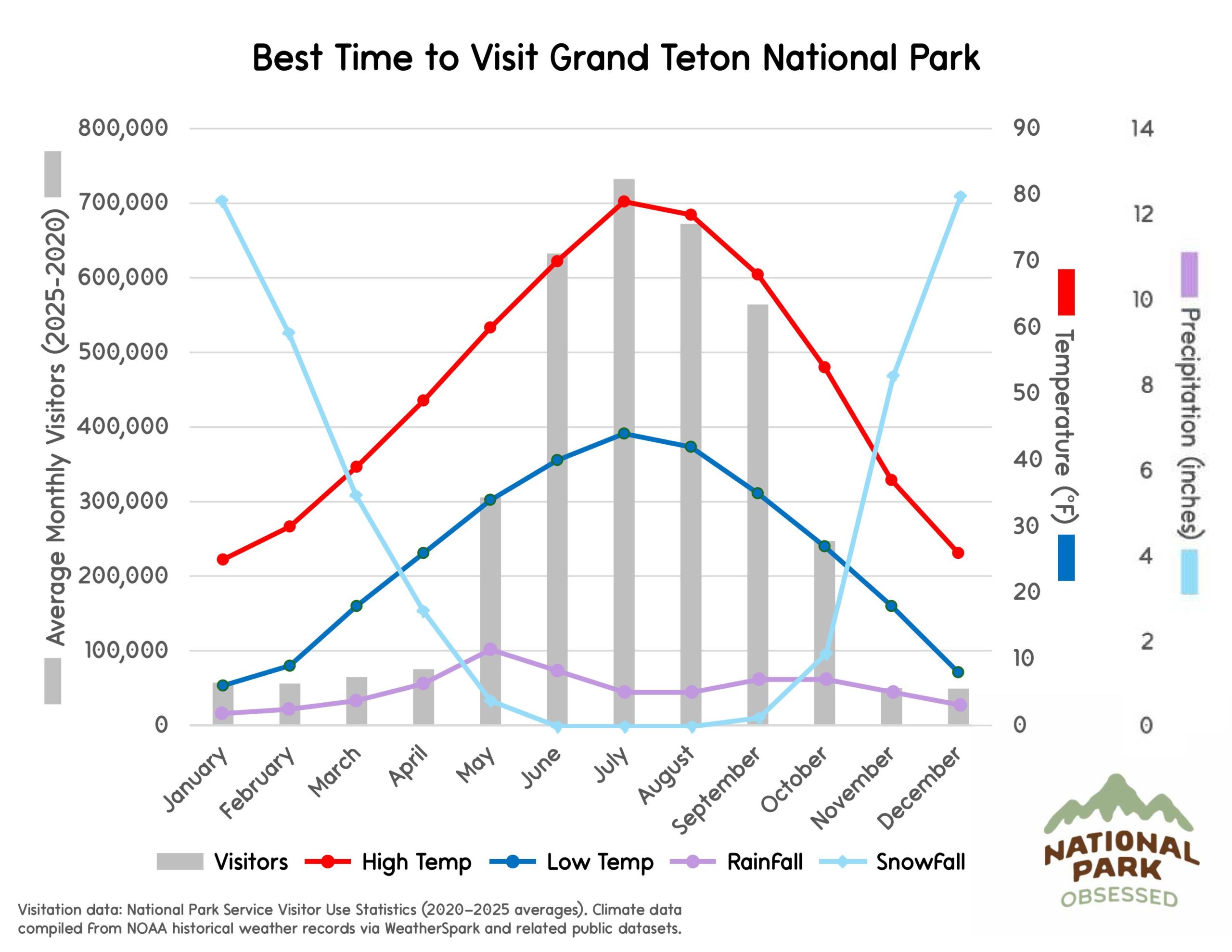
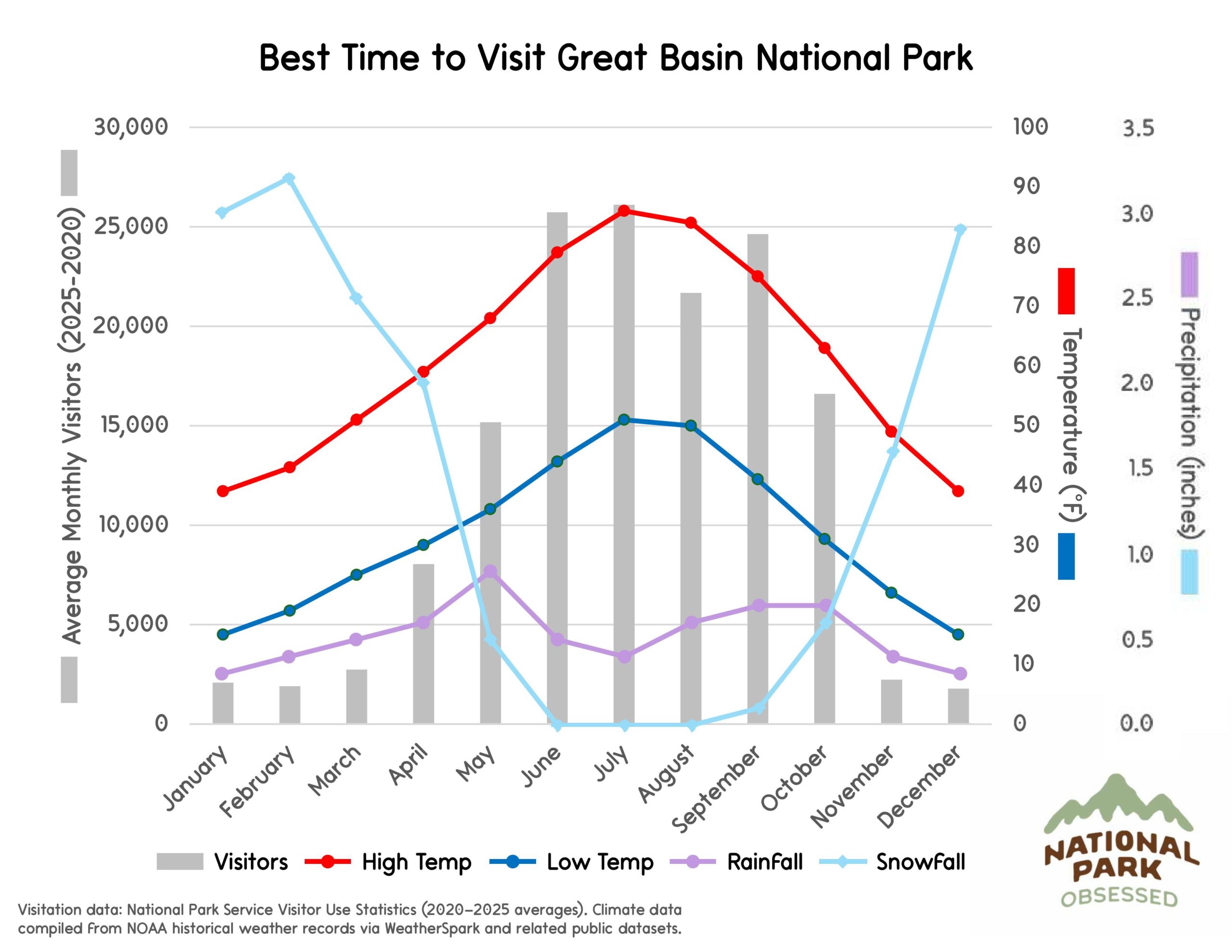
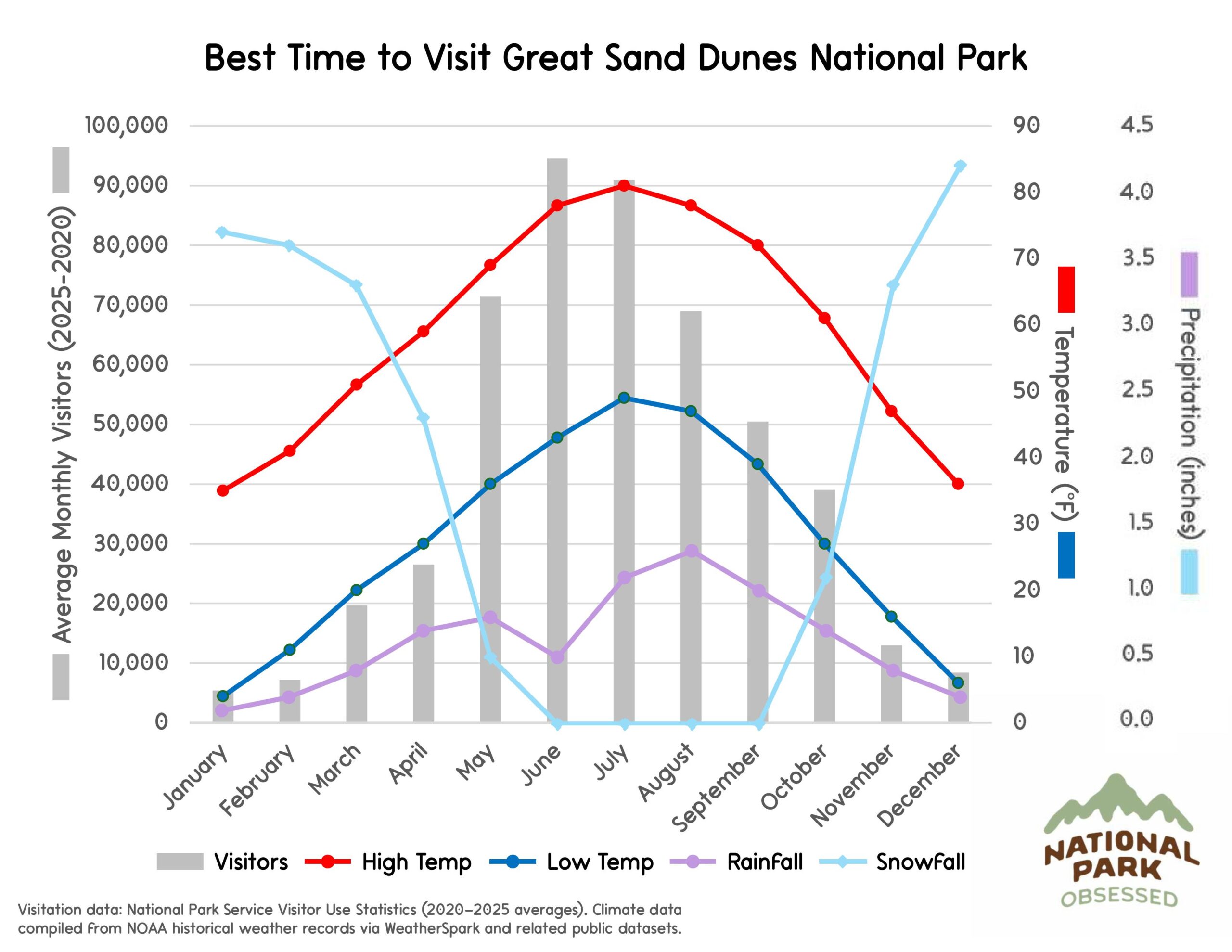
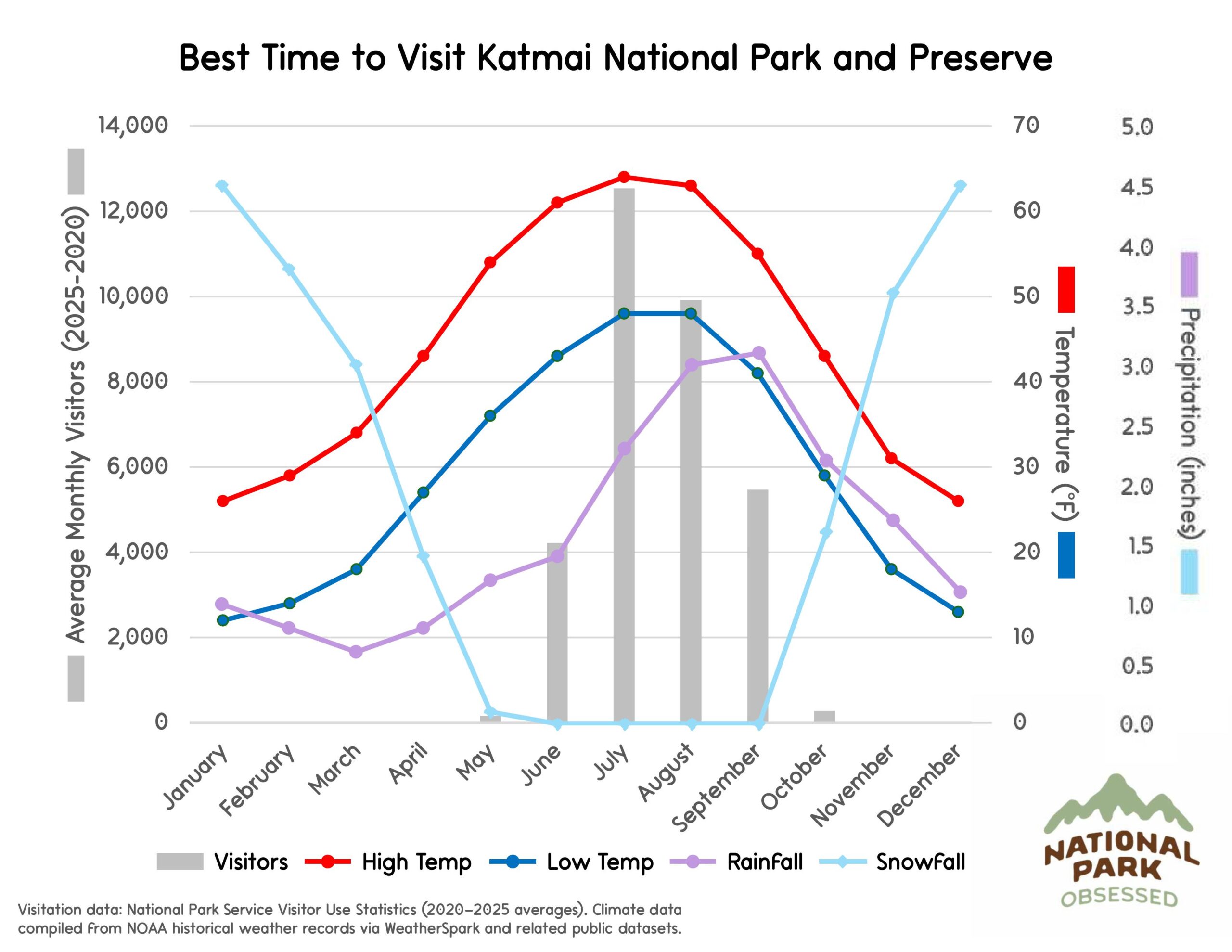
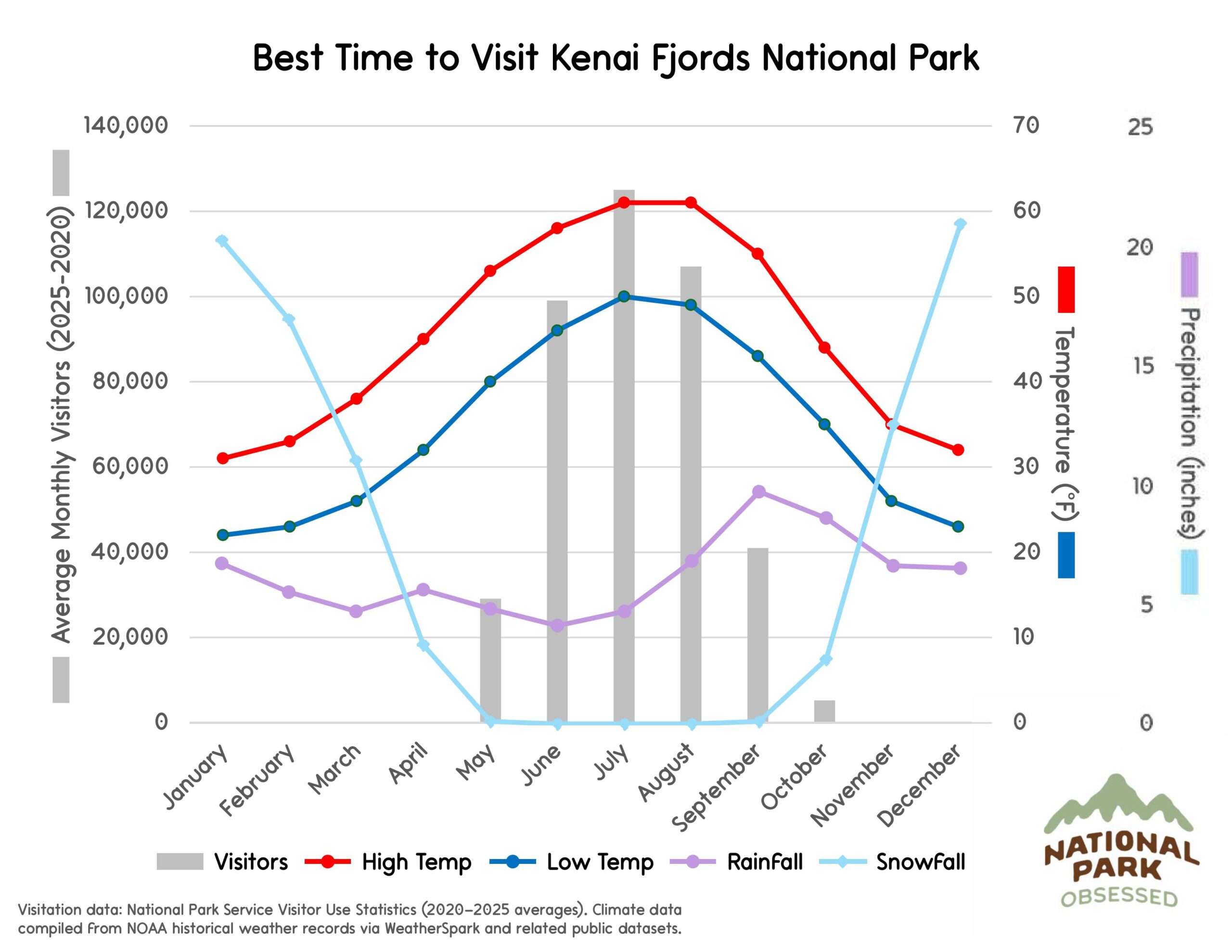
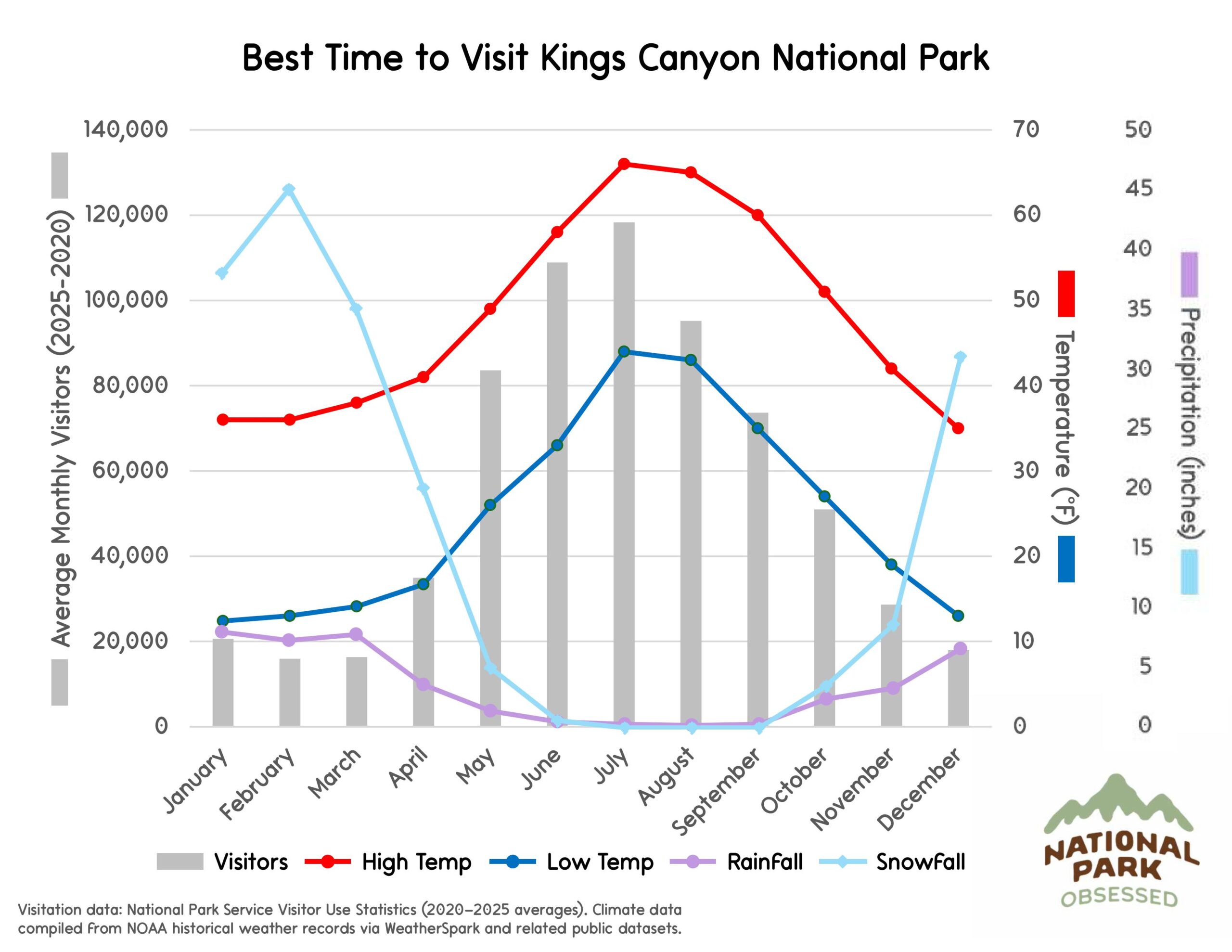
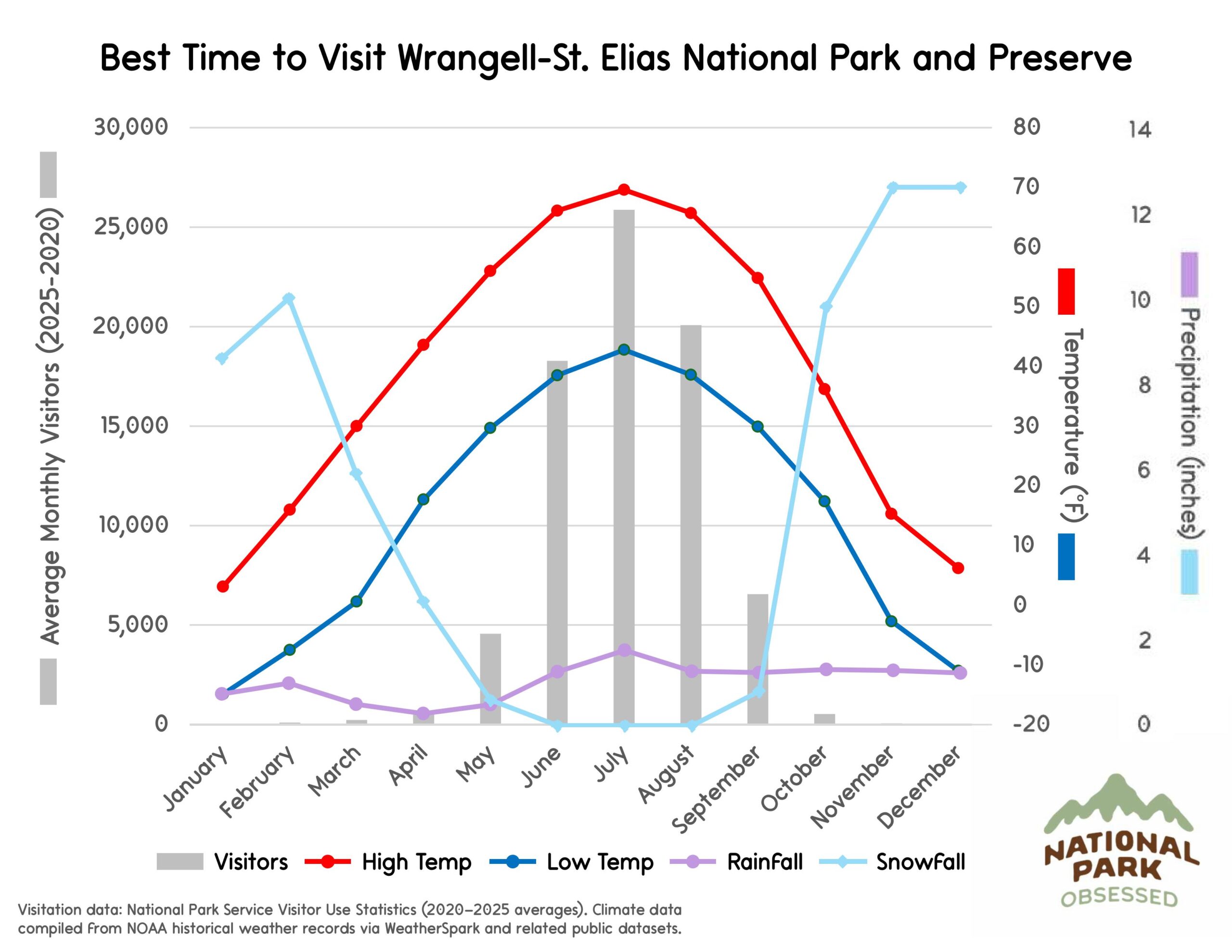
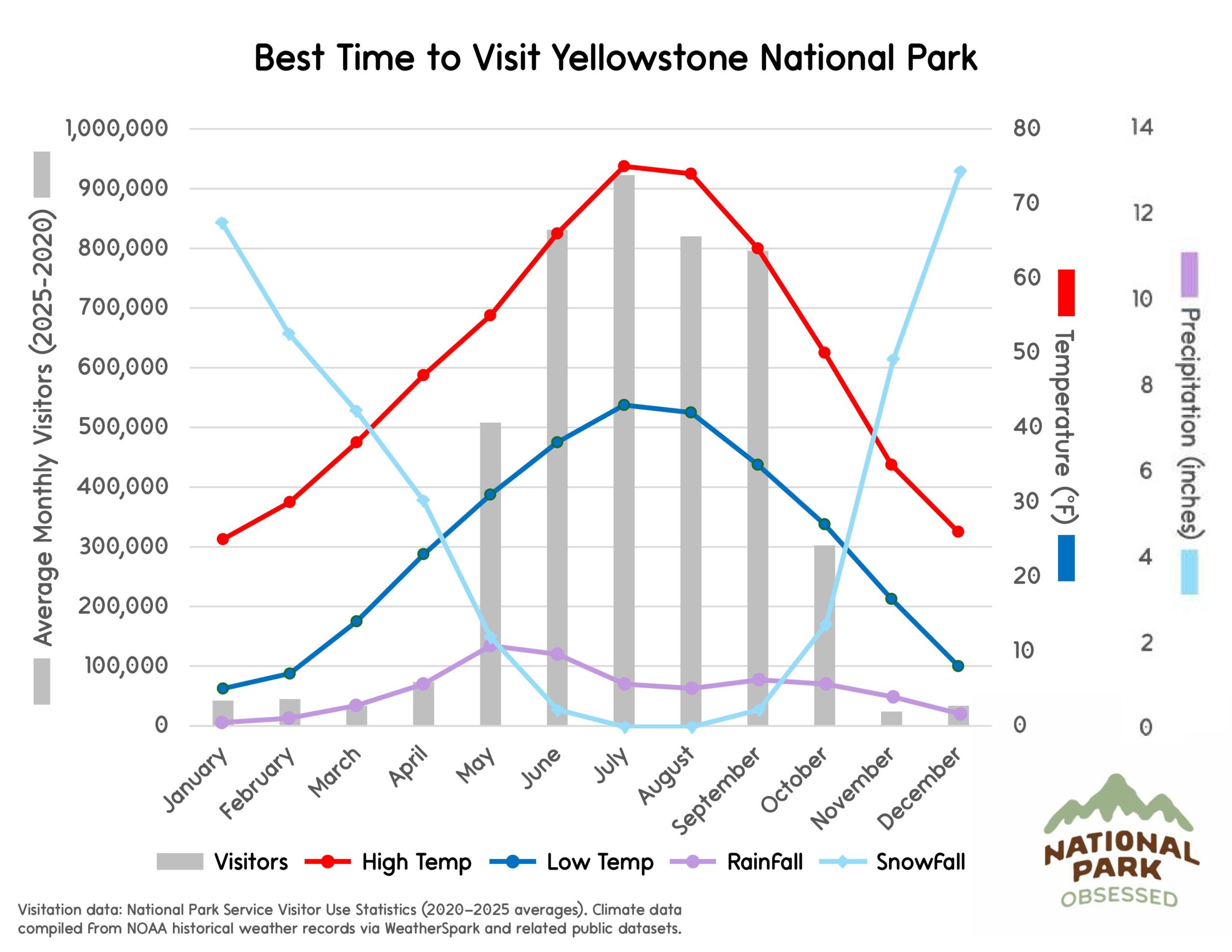
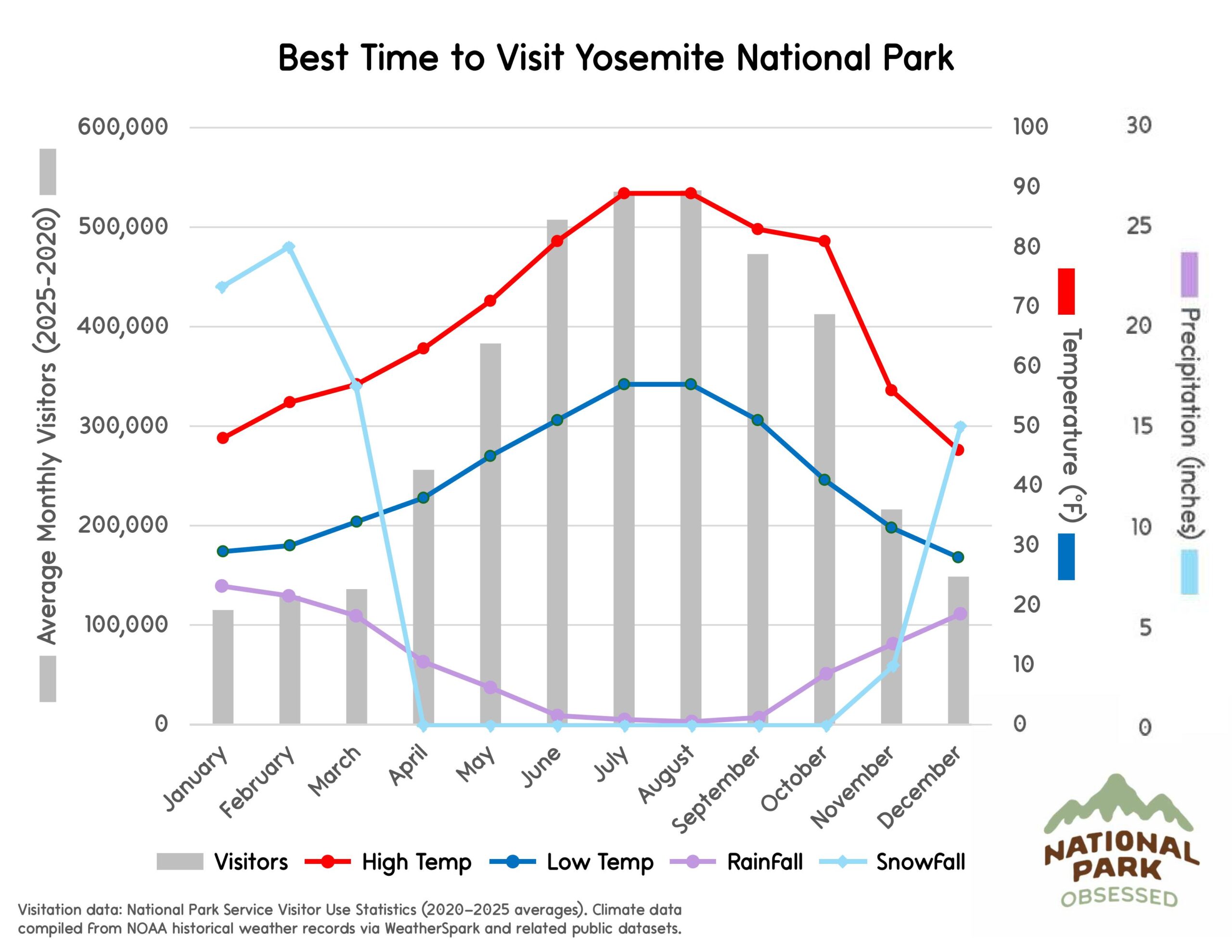
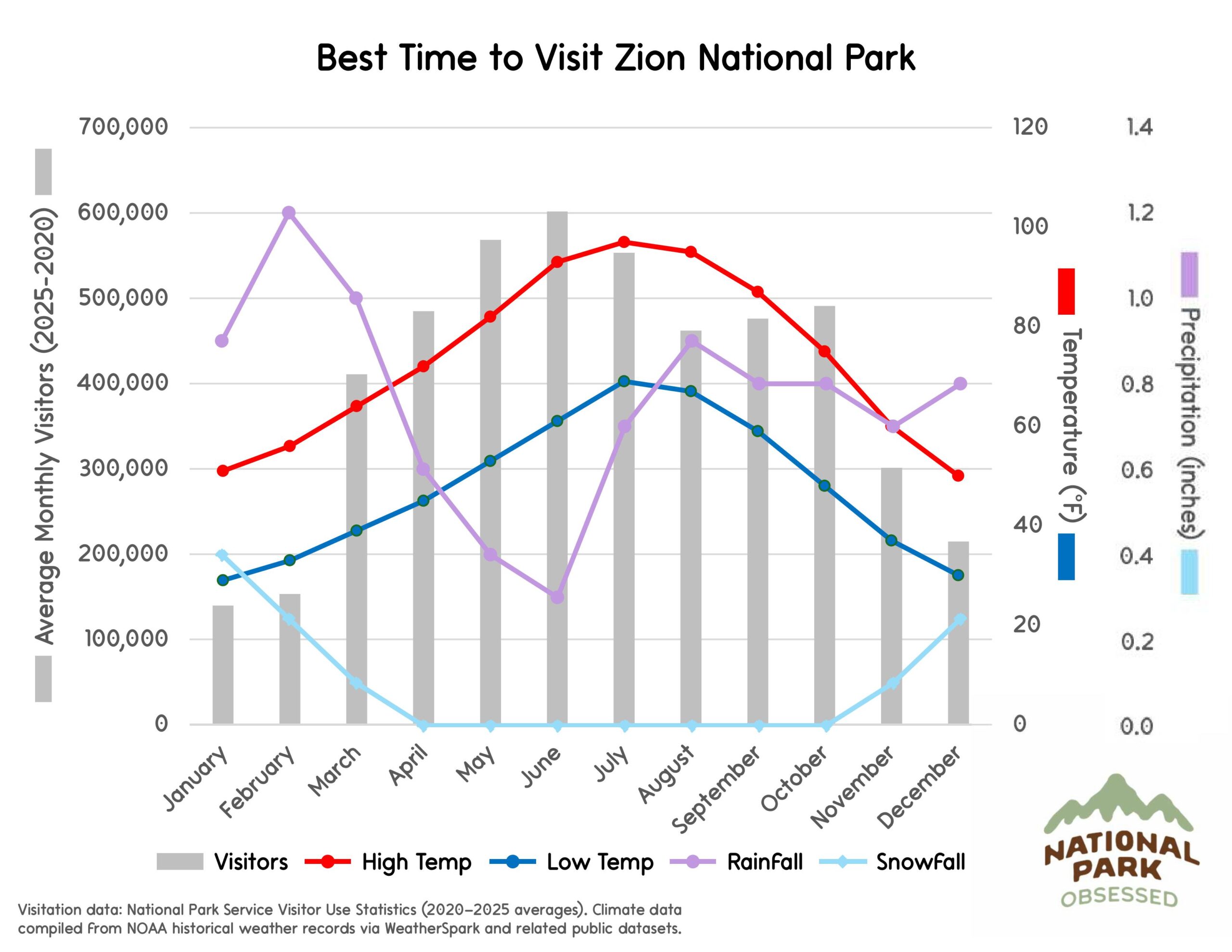
I had to break a few chart and graph rules, like adding a fourth axis. So these charts are just a little more data-rich than most graphs and charts, and it might take you a few minutes to get your head around these charts. These charts showcase 3 sets of data:
- Visitors per month (grey bars, left-hand vertical/y-axis)
- Average high/low tempature for each month (red and blue lines, first right-hand vertial/y-axis)
- Average rainfall & snowfall for each month (purple and light blue lines, second right-hand vertical/y-axis)
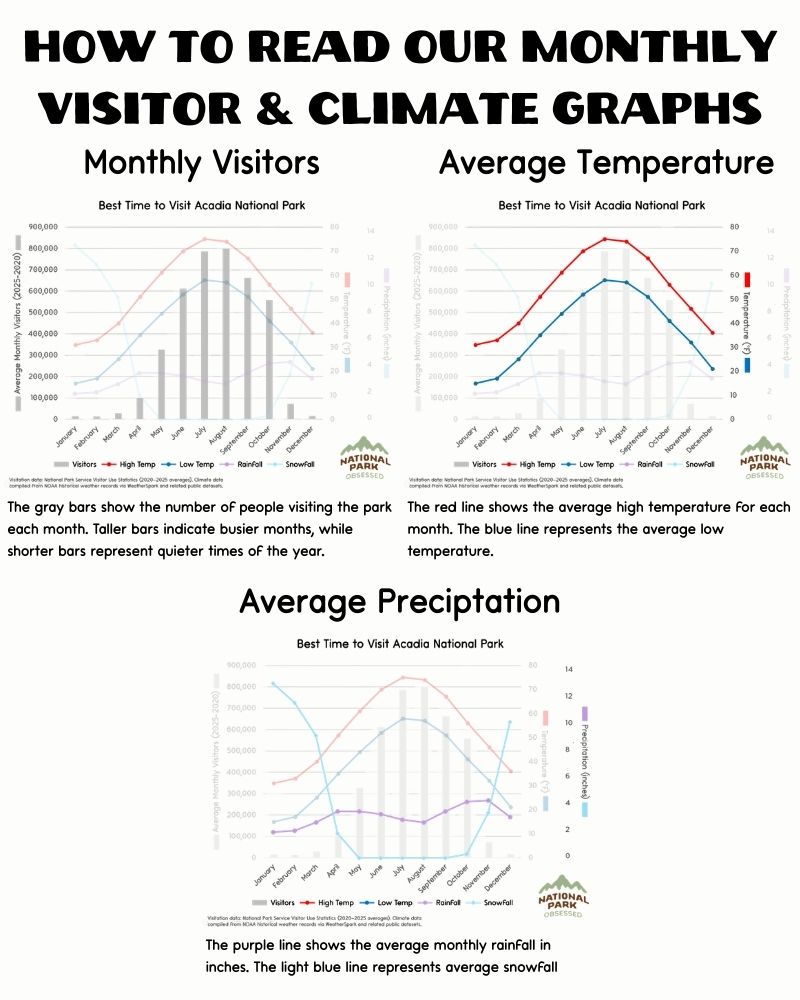
The average visitor date from the National Park Service Visitor Use Statistics. I average the monthly visitor counts from 2020 to 2025.
The weather data is from a combo of sources. Most of it is from WeatherSpark, which is based on historical NOAA weather data. Or Wikipedia’s interpretation of the NOAA data. A few places, like Mount Rainier and the North Cascades, lacked snow data, so I’ve borrowed their numbers from nearby ski resorts.
So the weather data is more of a loose trend than exact data, and the visitation data has a few issues, like including the COVID years or where NPS is obviously cutting and pasting the winter months from year to year (looking at you, Wrangell, it’s amazing how your winter visitation has been exactly the same since 1996). But this isn’t for an academic journal or study. It’s for tourists to get an idea of what to expect in terms of weather and crowds.
Find your National Park
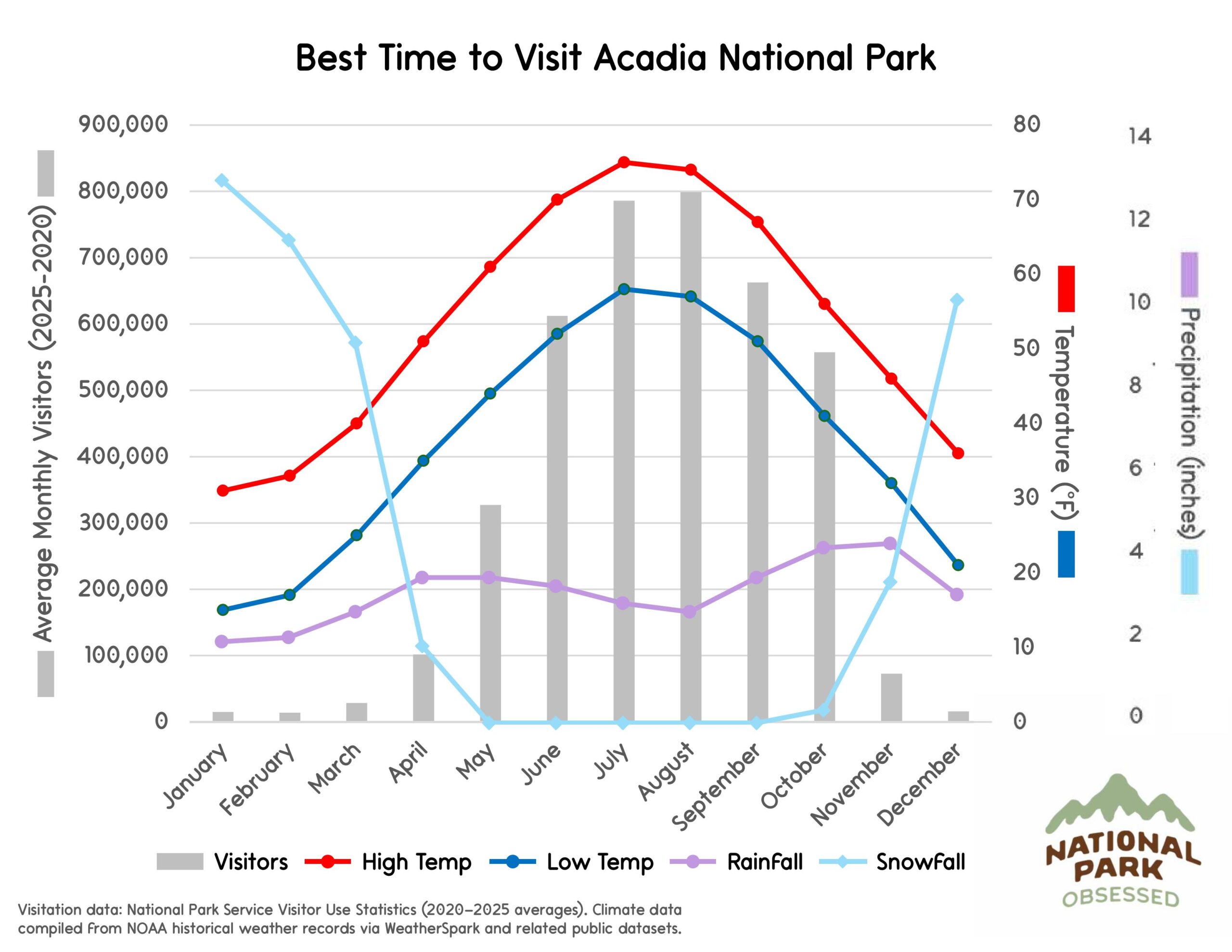
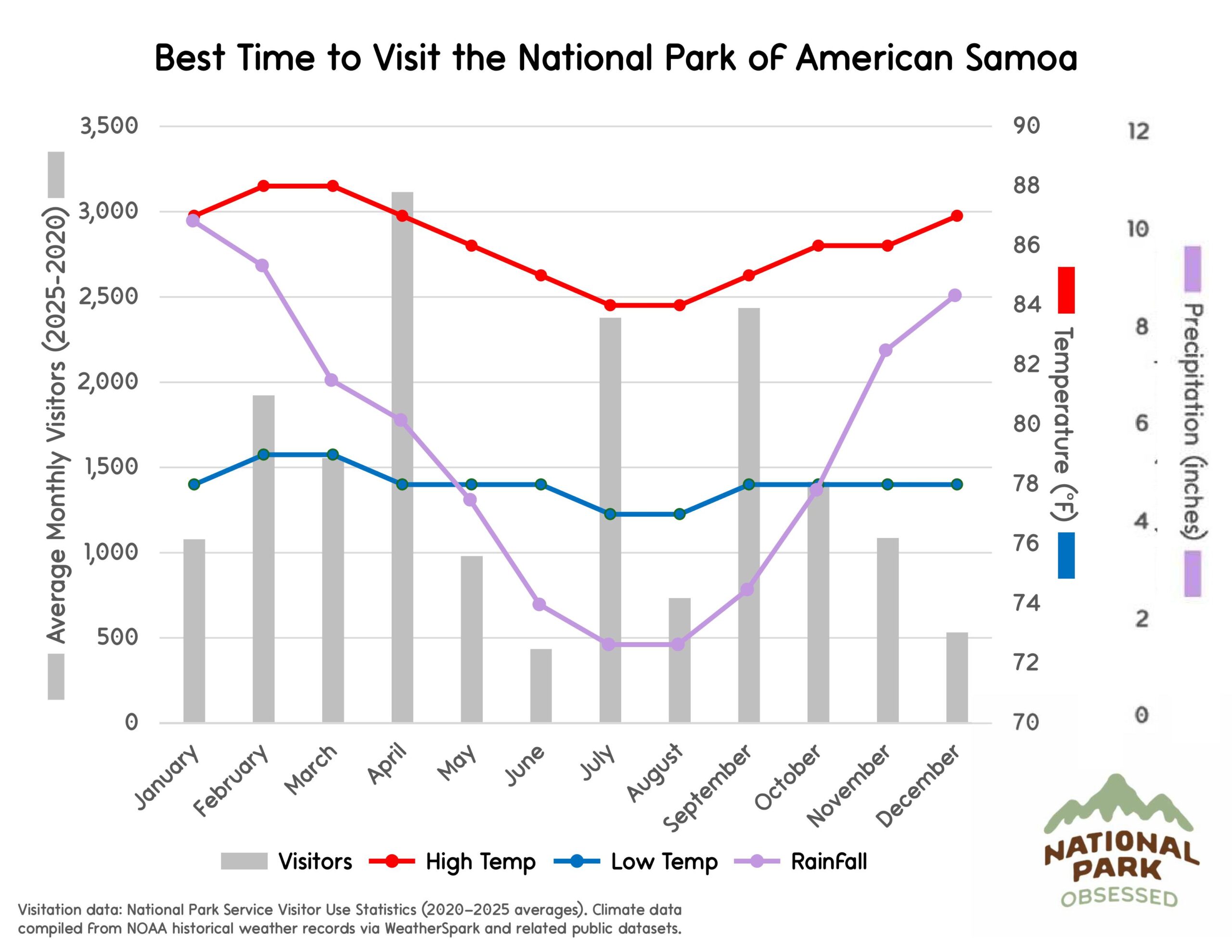
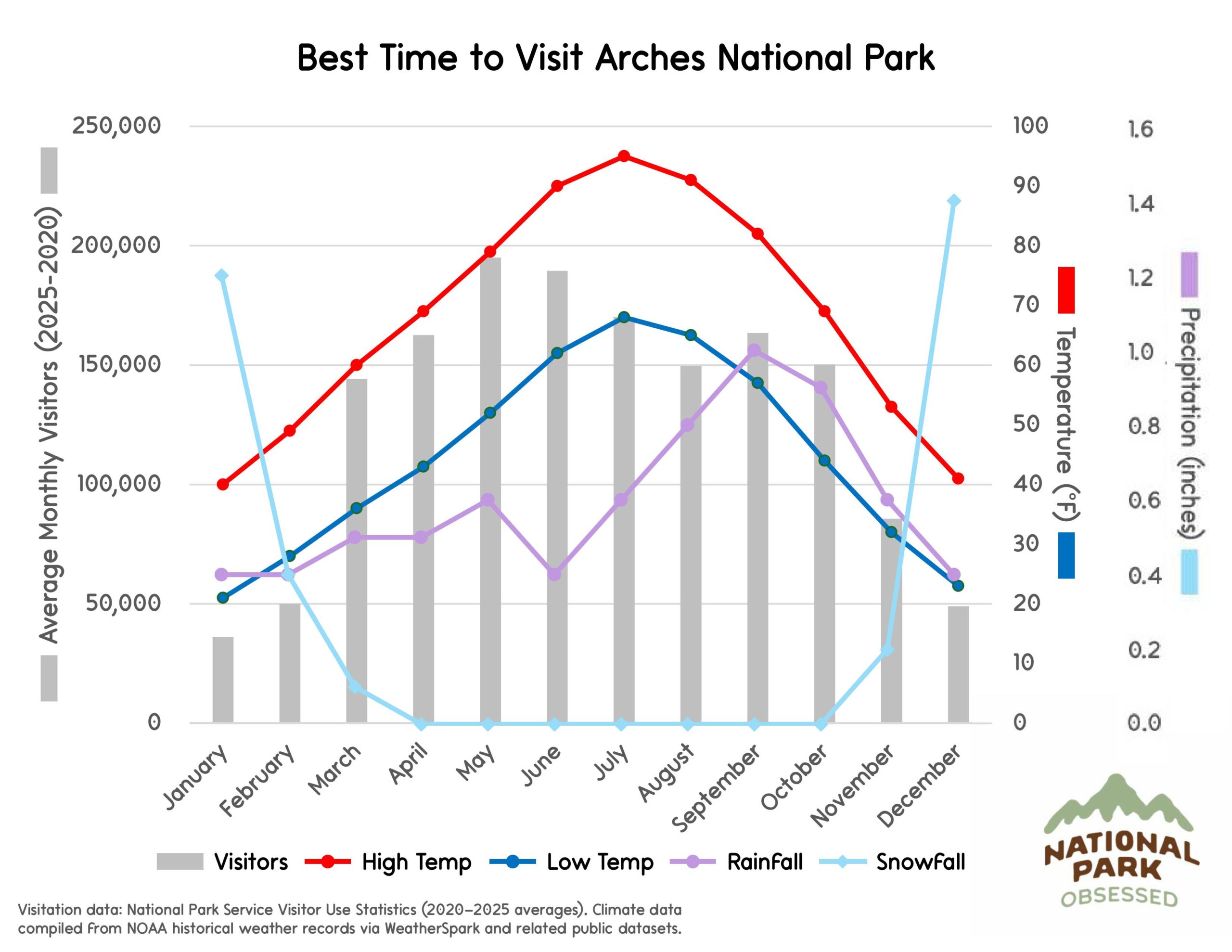
If you’re still deciding where to go, the full guide makes it easy to match your travel dates with the best parks.
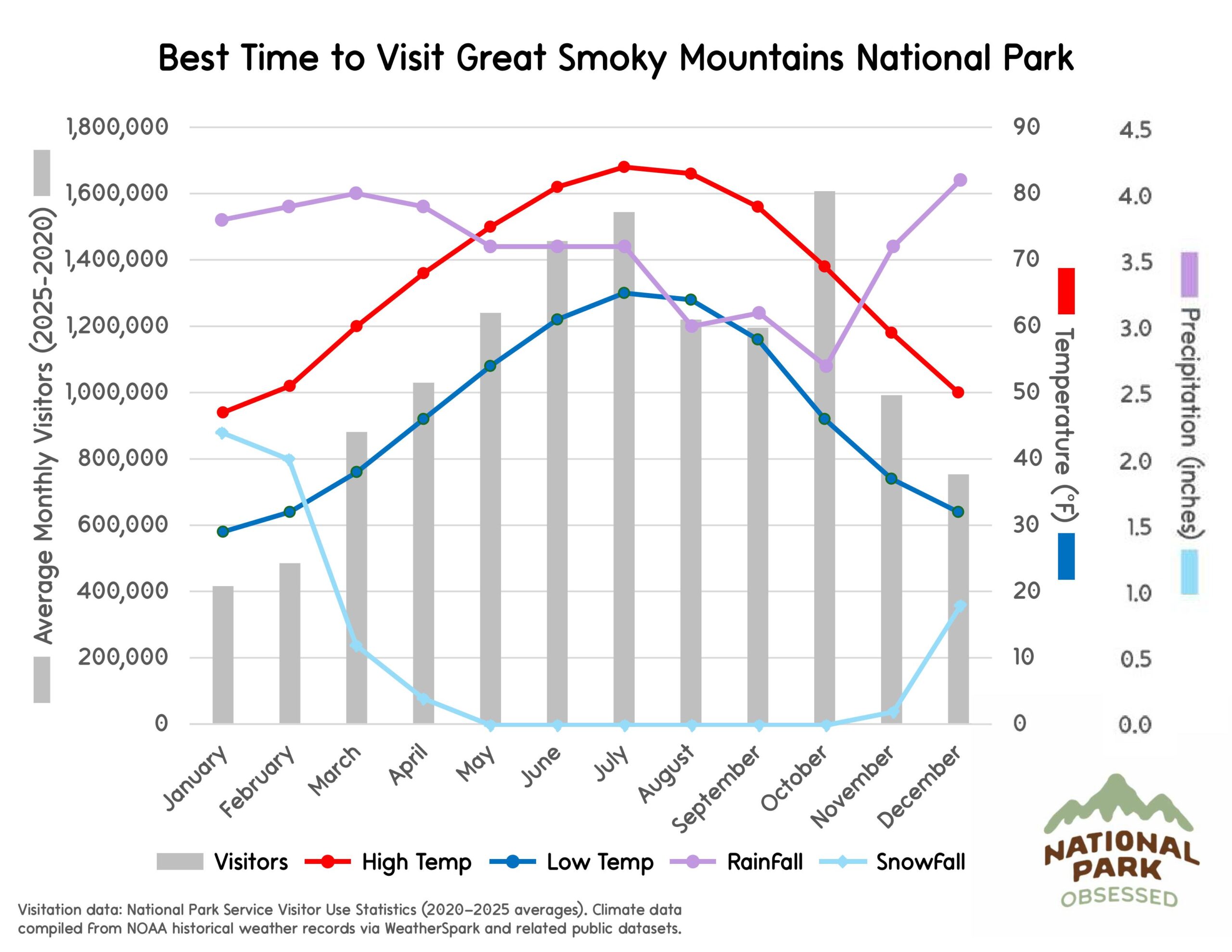
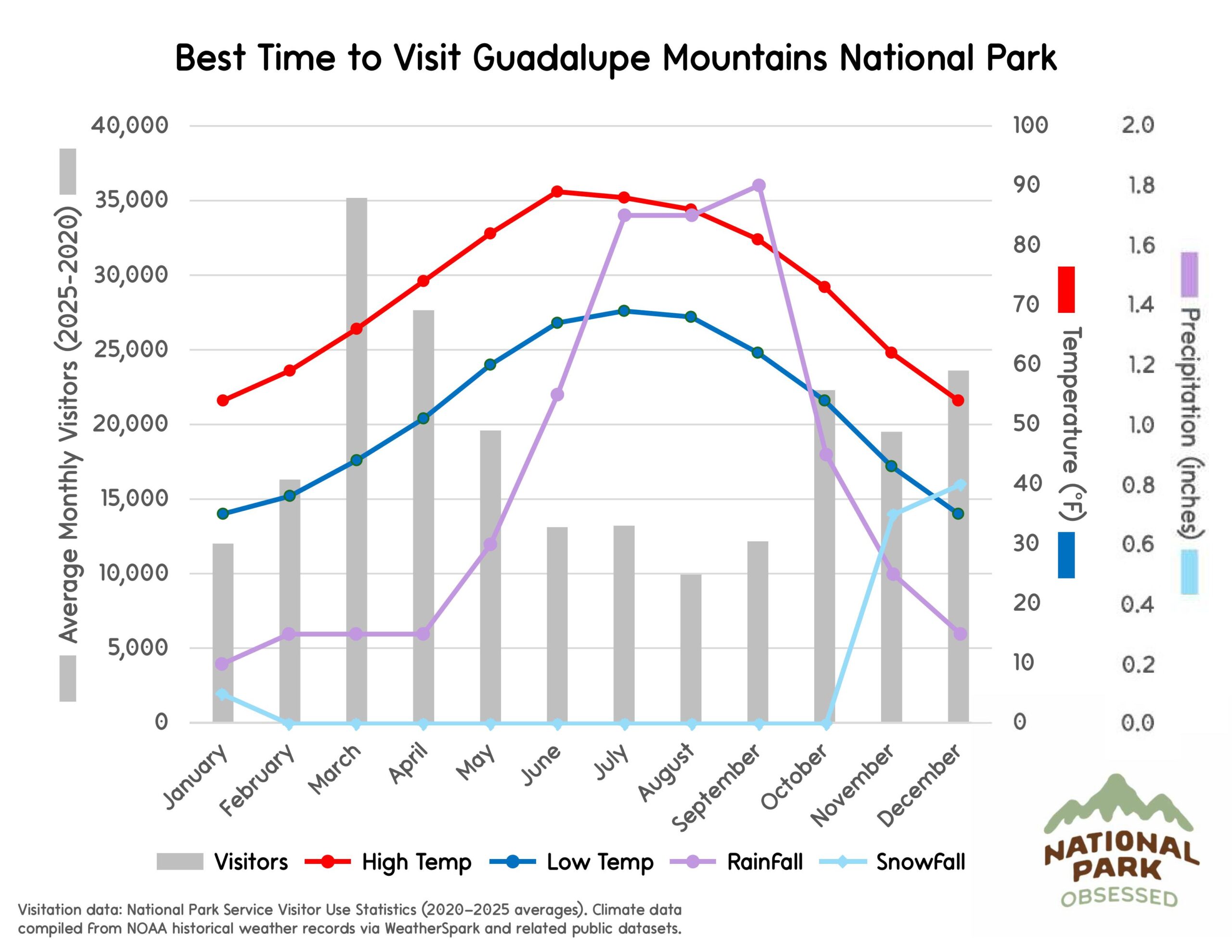
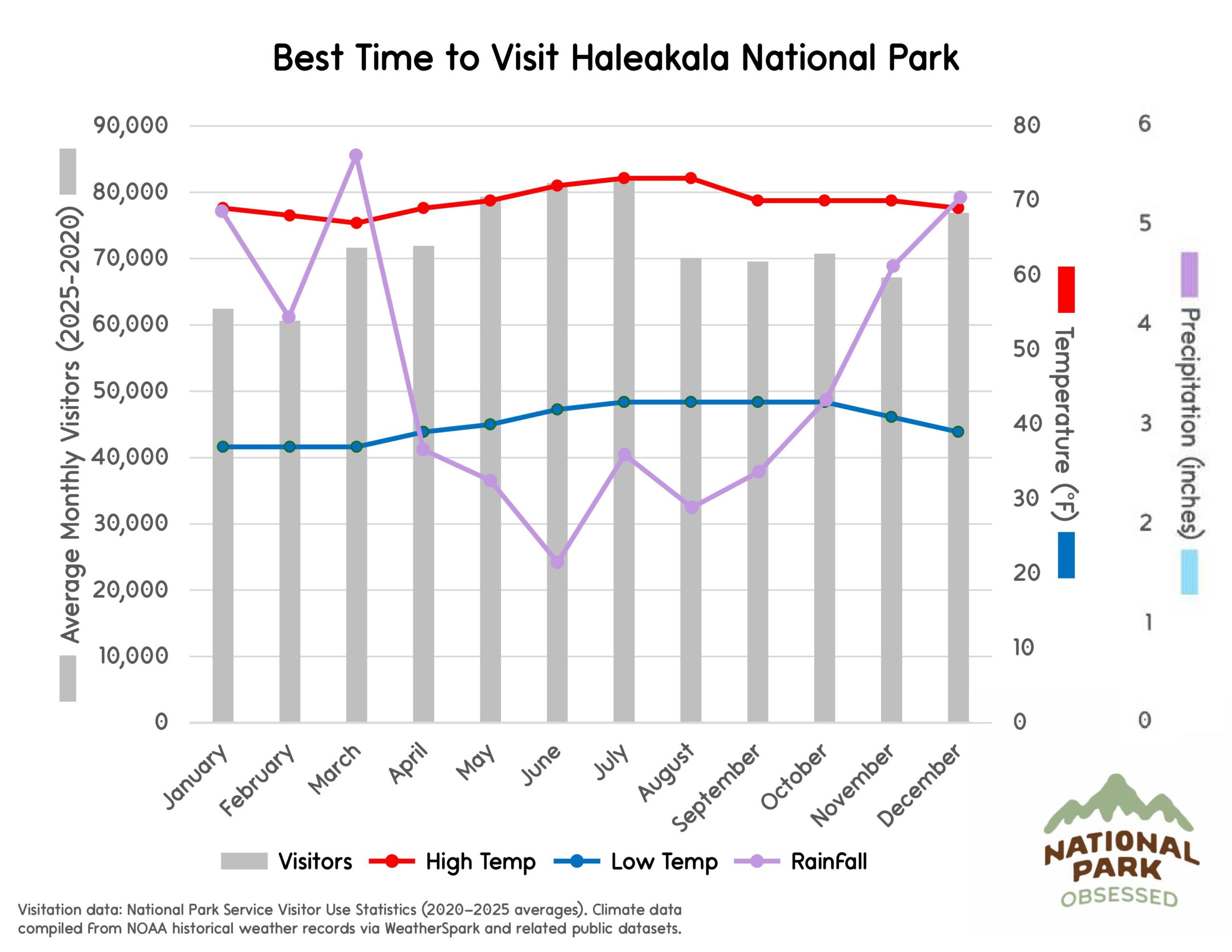
Picking the wrong park at the wrong time can completely derail your trip.
The full guide helps you avoid these mistakes year-round with clear, month-by-month recommendations.
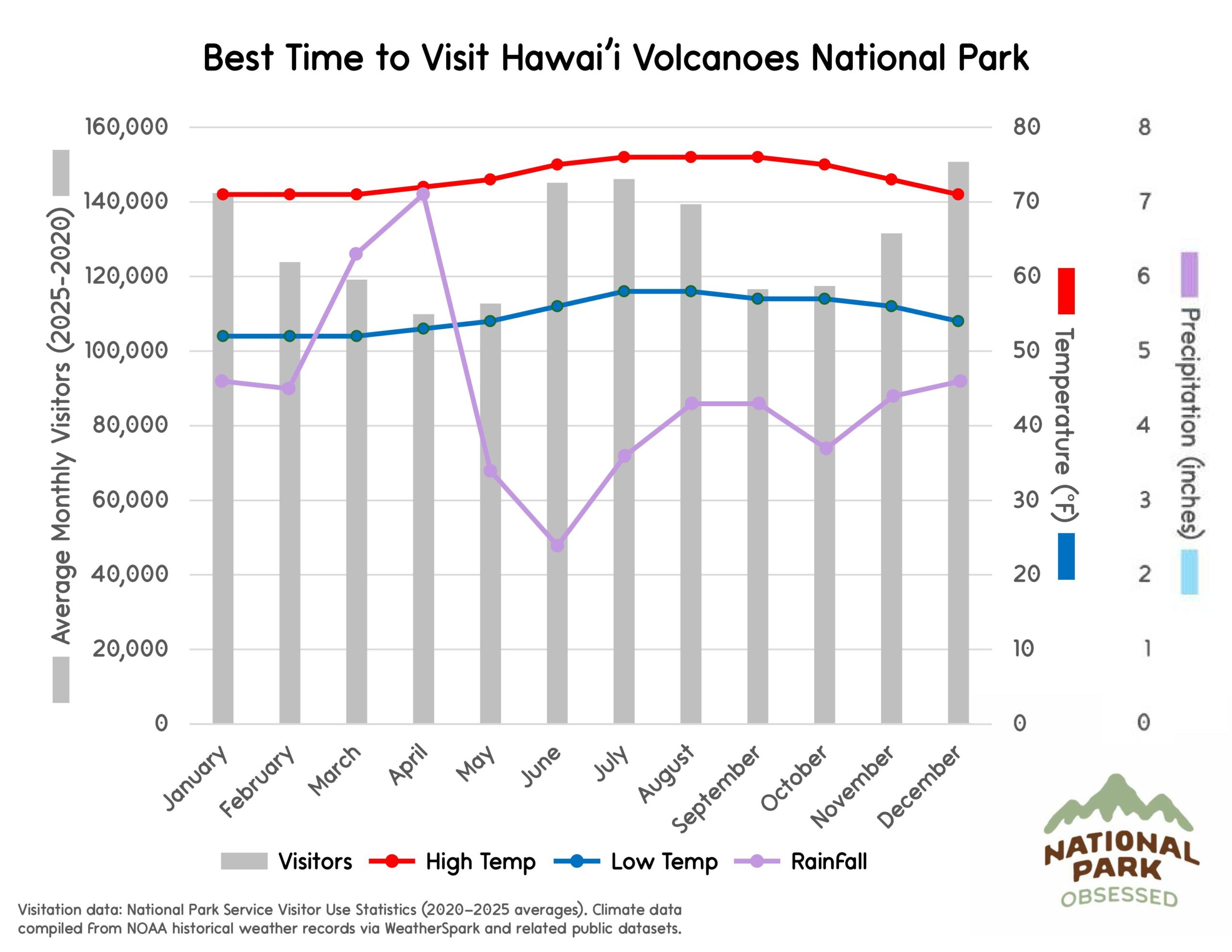
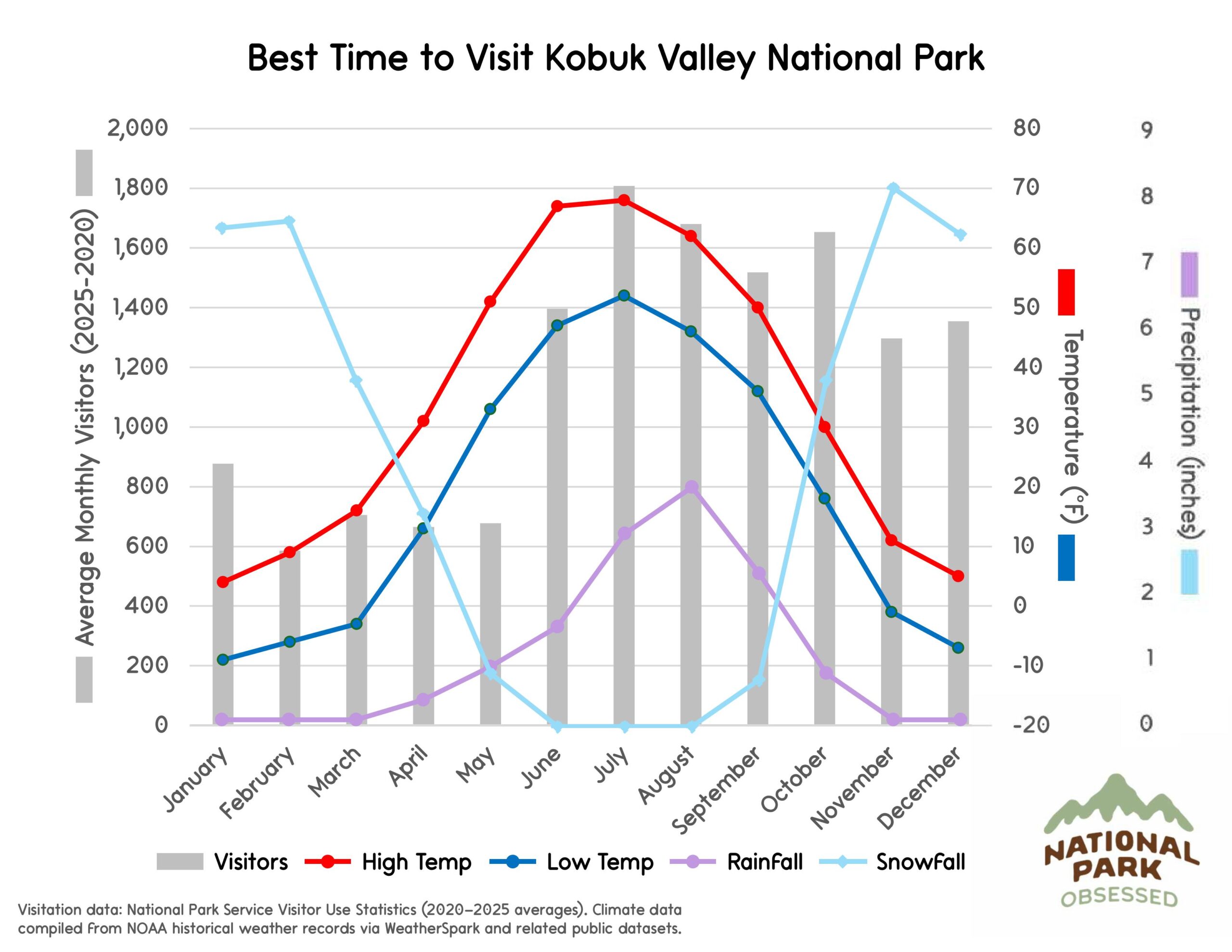
I have serious doubts about NPS’s visitor counts for Kobuk from October through April. It is almost impossible to visit Kobuk Valley during the winter, and there is no explanation that works other than that they are counting the number of people who walk into the Northwest Arctic Heritage Center. The Heritage Center has some of the best Wi-Fi signals in Kotzebue.
Not sure where to go this month?
This guide shows you exactly which parks are at their best based on weather, crowds, and seasonal access.
Planning a National Park trip this year? Timing can make or break your experience.
👉 Get the full When to Visit Every U.S. National Park guide (25% off preorder)
Final Thoughts: Choosing the Right Park at the Right Time
The best national park to visit isn’t just about the destination. It’s about timing.
The same park can feel completely different depending on when you go. Weather, crowds, seasonal closures, and overall conditions can all impact your experience more than most people expect.
If you take one thing away from this guide, it’s this:
There’s always a great national park to visit; you just need to match it to the right month.
This article gives you a starting point, but if you want to plan with confidence and skip the guesswork, the full guide was built for exactly that.
It breaks down:
- The best parks for all 12 months
- Detailed insights for all 63 national parks
- What to expect so you can plan smarter and avoid common mistakes
👉 Right now, you can preorder the full guide at 25% off.
If you’re serious about planning your next national park trip, this will save you hours of research and help you get it right the first time.
Frequently Asked Questions (FAQs)
When is the absolute best time to visit the most popular national parks, like Yellowstone or Yosemite, to avoid crowds?
The absolute best times to visit highly popular parks like Yellowstone and Yosemite to avoid the largest crowds are during the shoulder seasons: April to mid-May (before the summer rush, though some roads might still be closed) and September to mid-October (after the summer crowds, with fall colors appearing in many areas). Visiting on weekdays rather than weekends during these shoulder seasons can further reduce crowds. Always check specific park websites for road opening/closing dates and potential reservation requirements.
I want to see wildlife. When and where are the best parks for animal sightings?
Wildlife viewing opportunities vary greatly by park and season. Spring (April-May) is excellent for seeing young animals like fawns and bear cubs in parks like Yellowstone, Grand Teton, and Great Smoky Mountains.
Fall (September-October) is prime time for the elk rut in Rocky Mountain National Park and often offers good viewing opportunities in Yellowstone and Grand Teton as animals prepare for winter.
Winter (December-March) can be excellent for spotting animals like bison and wolves in Yellowstone against the snow, as they congregate in lower valleys. For birdwatching, the Everglades in Florida are best during the dry season (November-April). Always maintain a safe and respectful distance from wildlife.
Which national parks are best to visit during the hot summer months (July/August)?
During the peak heat of July and August, it’s best to focus on national parks offering cooler temperatures or strategies to beat the heat. Higher elevation parks like Rocky Mountain National Park, Mount Rainier National Park, North Cascades National Park, and Glacier National Park offer respite from the heat. Parks in the
Pacific Northwest like Olympic National Park and Crater Lake National Park also tend to have more moderate summer temperatures. If visiting hotter regions like Utah or Arizona, plan activities for early morning or late evening, stay hydrated, and consider parks with water features like rivers or lakes for cooling off.
When is the best time to see wildflowers in national parks?
Wildflower viewing is highly dependent on location and elevation. Spring (March-May) is generally the prime wildflower season across many parks. Specific hotspots include:
- Desert Parks (California, Arizona): March-April (e.g., Joshua Tree, Saguaro, Death Valley).
- Great Smoky Mountains National Park: April-May for forest floor blooms, June for higher

Hi, I'm Jennifer!
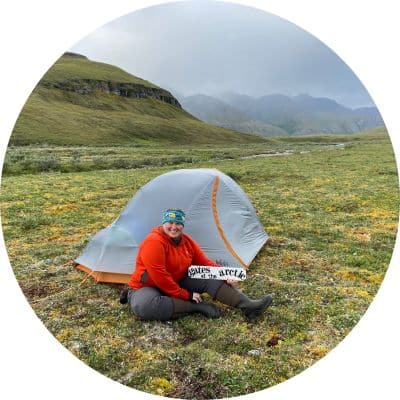
Welcome to the wonderful world of National Parks. I'm here to help you plan your NEXT amazing adventure through the United States National Parks and beyond. I want the national parks to be accessible to all.
I live in Tennessee, and when I'm home, you can find me hiking in the Smokies and the Cumberland Plateau.
58/63 National Parks
250+/423 National Park Units
Want to know more? Start Here.
Snag one of my National Park Ebooks and Downloadable Itineraries
Talk with an Expert
Share your love of the parks with a shirt, ornaments, hoodies, frames, and more.