Planning a trip to visit multiple National Parks? One of the easiest ways to make the most of your vacation is to group nearby National Parks into a single trip. Some National Parks are just a few hours apart, making it easy to visit two, three, or even five parks on one road trip. Others might look close together on a map but require significantly more time and effort to travel between them.
I’ve visited 59 of the U.S. National Parks, and one of the biggest lessons I’ve learned is that where you go and how you group your parks can make a huge difference in how much time you spend exploring versus driving.
When I started working toward visiting every National Park, I quickly learned that planning trips around groups of nearby parks was one of the most practical ways to make progress on my goal. That’s why I created this National Park Cluster Map. It shows which U.S. National Parks are geographically close to each other and helps you identify combinations that make sense for a single vacation.
Whether you’re planning your first National Park road trip, trying to visit several parks in one week, or working toward visiting every National Park, this guide will help you figure out which parks to visit together.
This post may contain affiliate links, meaning if you book or buy something through one of these links, I may earn a small commission at no extra cost to you! Read the full disclosure policy here
What Is a National Park Cluster?
A National Park cluster is a group of National Parks located relatively close to one another that can potentially be visited on the same trip. I define relatively close as parks that are within a one-day drive or 500 miles, for the most part.
For example, Yellowstone and Grand Teton National Parks are connected by the John D. Rockefeller, Jr. Memorial Parkway. These two parks make a natural combination because you can drive directly between them.
In Utah, five National Parks are spread across the southern part of the state. While you wouldn’t want to rush through all five in just a few days, they make an excellent extended road trip.
Not every National Park cluster is quite so straightforward.
Alaska’s National Parks are a perfect example. Several parks appear close together on a map, but many aren’t connected to the road system. Visiting multiple parks may require flights, boats, and a significantly larger budget.
The important thing to remember is that National Park clusters are planning tools, not official National Park Service designations.
I’ve grouped parks based primarily on geography, but you’ll still need to consider driving distances, road access, seasonal closures, and how much time you want to spend in each park.
Some parks also appear in overlapping clusters because they can reasonably fit into more than one road trip.
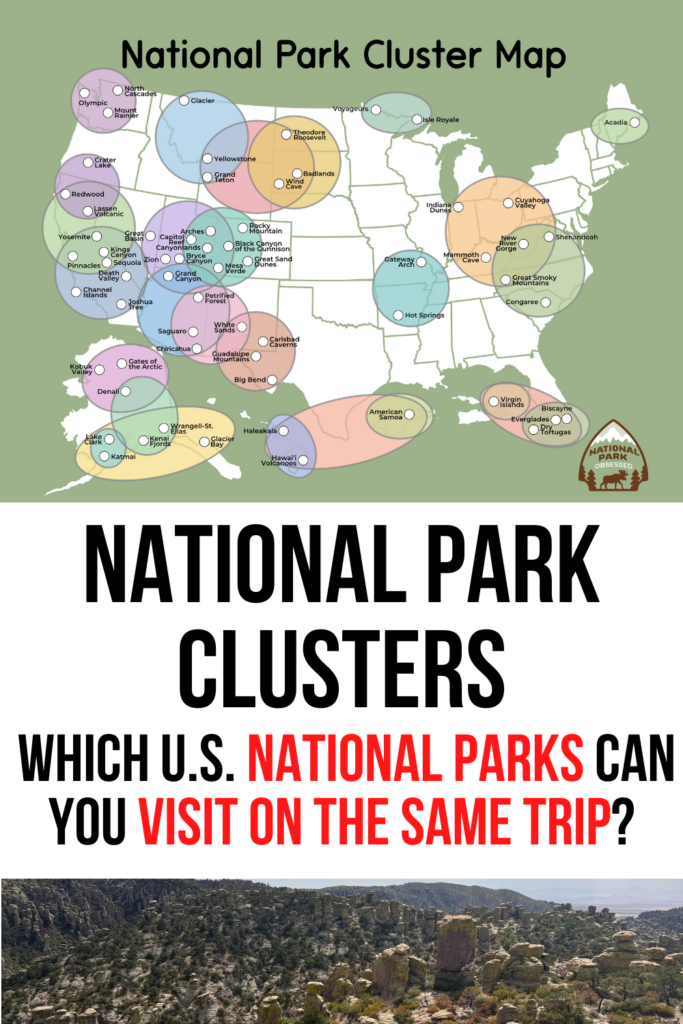
National Park Cluster Map
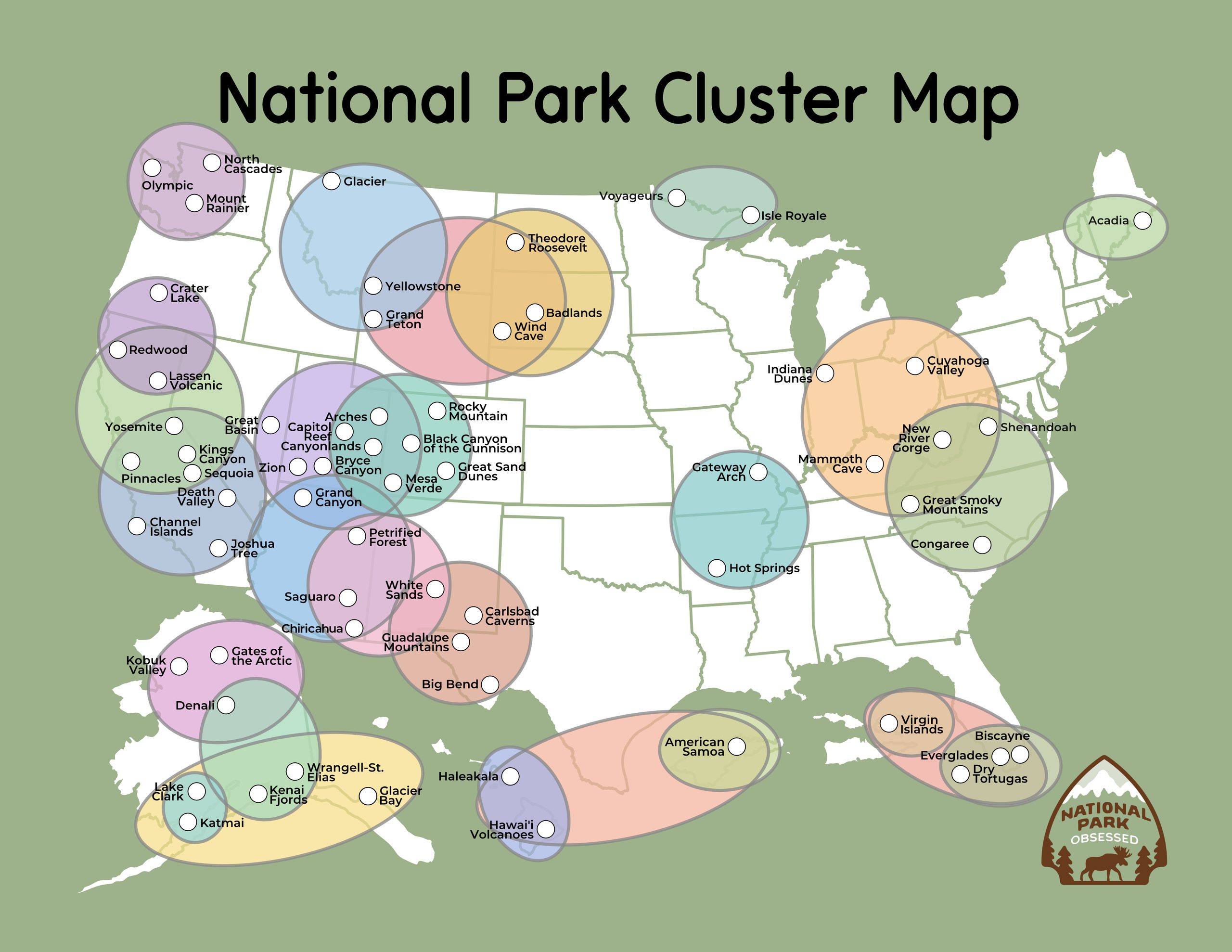
This National Park Cluster Map highlights groups of U.S. National Parks that are geographically close (or can be considered a cluster) to one another.
Each colored circle represents a potential group of parks you could combine into a single trip. Some circles overlap because certain parks work well with several different road trip routes.
The map is designed to help you start planning, rather than provide exact driving routes.
Which National Parks Are Close to Each Other?
The table below lists each National Park along with other parks within my clusters. Some parks, like Arches and Canyonlands, are close enough to visit during a short road trip. Others are farther apart but can still be combined into a longer vacation.
I’ve included a range of potential park combinations, from neighboring parks to those that might fit into a larger regional road trip. This gives you more flexibility when deciding which parks to visit together.
Keep in mind that this table is based on my cluster map, and while some parks might appear close together, they may require significant travel time, seasonal road access, or transportation by boat or plane.
Use this list alongside the National Park Cluster Map to identify potential combinations, then check actual travel distances and transportation options before finalizing your itinerary.
You don’t need to visit every park listed in a cluster. The goal is to help you find nearby National Parks that fit your available time and travel plans.
| National Park | Nearby National Parks |
|---|---|
| Acadia | None |
| American Samoa | Haleakala, Hawaii Volcanoes |
| Arches | Black Canyon of the Gunnison, Bryce Canyon, Canyonlands, Capitol Reef, Grand Canyon, Great Basin, Great Sand Dunes, Mesa Verde, Rocky Mountain, Zion |
| Badlands | Grand Teton, Theodore Roosevelt, Wind Cave, Yellowstone |
| Big Bend | Carlsbad Caverns, Guadalupe Mountains, White Sands |
| Biscayne | Dry Tortugas, Everglades, Virgin Islands |
| Black Canyon of the Gunnison | Arches, Bryce Canyon, Canyonlands, Capitol Reef, Grand Canyon, Great Basin, Great Sand Dunes, Mesa Verde, Rocky Mountain, Zion |
| Bryce Canyon | Arches, Black Canyon of the Gunnison, Canyonlands, Capitol Reef, Grand Canyon, Great Basin, Mesa Verde, Zion |
| Canyonlands | Arches, Black Canyon of the Gunnison, Bryce Canyon, Capitol Reef, Grand Canyon, Great Basin, Great Sand Dunes, Mesa Verde, Rocky Mountain, Zion |
| Capitol Reef | Arches, Black Canyon of the Gunnison, Bryce Canyon, Canyonlands, Grand Canyon, Great Basin, Great Sand Dunes, Mesa Verde, Rocky Mountain, Zion |
| Carlsbad Caverns | Big Bend, Guadalupe Mountains, White Sands |
| Channel Islands | Death Valley, Joshua Tree, Kings Canyon, Pinnacles, Sequoia, Yosemite |
| Chiricahua | Grand Canyon, Petrified Forest, Saguaro |
| Congaree | Great Smoky Mountains, New River Gorge , Shenandoah |
| Crater Lake | Lassen Volcanic, Mount Rainier, North Cascades, Olympic, Redwood |
| Cuyahoga Valley | Great Smoky Mountains, Indiana Dunes, Mammoth Cave, New River Gorge , Shenandoah |
| Death Valley | Channel Islands, Joshua Tree, Kings Canyon, Pinnacles, Sequoia, Yosemite |
| Denali | Gates of the Arctic, Kenai Fjords, Kobuk Valley, Wrangell-St. Elias |
| Dry Tortugas | Biscayne, Everglades, Virgin Islands |
| Everglades | Biscayne, Dry Tortugas, Virgin Islands |
| Gates of the Arctic | Denali, Kobuk Valley |
| Gateway Arch | Hot Springs |
| Glacier | Grand Teton, Yellowstone |
| Glacier Bay | Katmai, Kenai Fjords, Lake Clark, Wrangell-St. Elias |
| Grand Canyon | Arches, Black Canyon of the Gunnison, Bryce Canyon, Canyonlands, Capitol Reef, Chiricahua, Great Basin, Great Sand Dunes, Mesa Verde, Petrified Forest, Saguaro, Zion |
| Grand Teton | Badlands, Theodore Roosevelt, Wind Cave, Yellowstone |
| Great Basin | Arches, Black Canyon of the Gunnison, Bryce Canyon, Canyonlands, Capitol Reef, Grand Canyon, Mesa Verde, Zion |
| Great Sand Dunes | Arches, Black Canyon of the Gunnison, Canyonlands, Capitol Reef, Grand Canyon, Mesa Verde, Rocky Mountain |
| Great Smoky Mountains | Congaree, Cuyahoga Valley, Indiana Dunes, Mammoth Cave, New River Gorge , Shenandoah |
| Guadalupe Mountains | Big Bend, Carlsbad Caverns, White Sands |
| Haleakala | American Samoa, Hawaii Volcanoes |
| Hawaii Volcanoes | American Samoa, Haleakala |
| Hot Springs | Gateway Arch |
| Indiana Dunes | Cuyahoga Valley, Great Smoky Mountains, Mammoth Cave, New River Gorge , Shenandoah |
| Isle Royale | Voyageurs |
| Joshua Tree | Channel Islands, Death Valley, Kings Canyon, Pinnacles, Sequoia, Yosemite |
| Katmai | Glacier Bay, Kenai Fjords, Lake Clark, Wrangell-St. Elias |
| Kenai Fjords | Denali, Glacier Bay, Katmai, Lake Clark, Wrangell-St. Elias |
| Kings Canyon | Channel Islands, Death Valley, Joshua Tree, Lassen Volcanic, Pinnacles, Redwood, Sequoia, Yosemite |
| Kobuk Valley | Denali, Gates of the Arctic |
| Lake Clark | Glacier Bay, Katmai, Kenai Fjords, Wrangell-St. Elias |
| Lassen Volcanic | Crater Lake, Kings Canyon, Pinnacles, Redwood, Sequoia, Yosemite |
| Mammoth Cave | Cuyahoga Valley, Great Smoky Mountains, Indiana Dunes, New River Gorge , Shenandoah |
| Mesa Verde | Arches, Black Canyon of the Gunnison, Bryce Canyon, Canyonlands, Capitol Reef, Grand Canyon, Great Basin, Zion |
| Mount Rainier | Crater Lake, North Cascades, Olympic |
| New River Gorge | Congaree, Cuyahoga Valley, Great Smoky Mountains, Indiana Dunes, Mammoth Cave, Shenandoah |
| North Cascades | Crater Lake, Mount Rainier, Olympic |
| Olympic | Crater Lake, Mount Rainier, North Cascades |
| Petrified Forest | Chiricahua, Grand Canyon, Saguaro |
| Pinnacles | Channel Islands, Death Valley, Joshua Tree, Kings Canyon, Lassen Volcanic, Redwood, Sequoia, Yosemite |
| Redwood | Crater Lake, Lassen Volcanic |
| Rocky Mountain | Arches, Black Canyon of the Gunnison, Canyonlands, Capitol Reef, Great Sand Dunes, Mesa Verde |
| Saguaro | Chiricahua, Grand Canyon, Petrified Forest |
| Sequoia | Channel Islands, Death Valley, Joshua Tree, Kings Canyon, Lassen Volcanic, Pinnacles, Redwood, Yosemite |
| Shenandoah | Congaree, Cuyahoga Valley, Great Smoky Mountains, Indiana Dunes, Mammoth Cave, New River Gorge |
| Theodore Roosevelt | Badlands, Grand Teton, Wind Cave, Yellowstone |
| Virgin Islands | Biscayne, Dry Tortugas, Everglades |
| Voyageurs | Isle Royale |
| White Sands | Big Bend, Carlsbad Caverns, Chiricahua, Guadalupe Mountains, Petrified Forest, Saguaro |
| Wind Cave | Badlands, Grand Teton, Theodore Roosevelt, Yellowstone |
| Wrangell-St. Elias | Denali, Glacier Bay, Katmai, Kenai Fjords, Lake Clark |
| Yellowstone | Badlands, Grand Teton, Theodore Roosevelt, Wind Cave |
| Yosemite | Channel Islands, Death Valley, Joshua Tree, Kings Canyon, Lassen Volcanic, Pinnacles, Redwood, Sequoia |
| Zion | Arches, Black Canyon of the Gunnison, Bryce Canyon, Canyonlands, Capitol Reef, Grand Canyon, Great Basin, Mesa Verde |
National Parks That Look Close but Aren’t Easy to Combine
One important thing to remember when using the National Park Cluster Map is that parks that appear close together aren’t necessarily easy to visit on the same trip. In some cases, two parks that look like they’re right next to each other can require an entire day of travel to get between them or have different seasons.
Here are a few National Park clusters where you’ll want to pay extra attention to the logistics.
Alaska: Close on the Map, but Not Connected by Roads
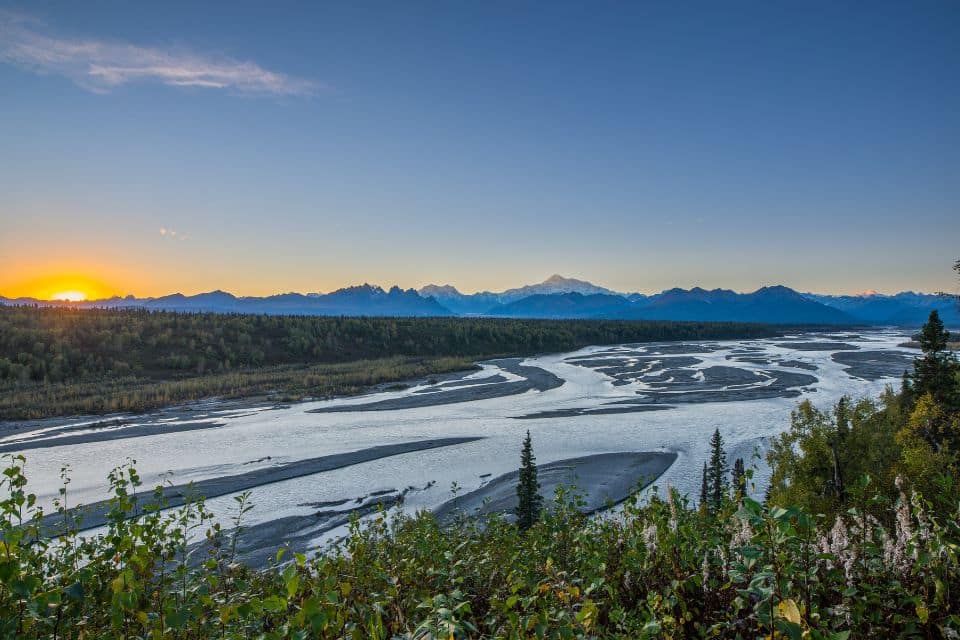
Alaska is probably the best example of why geographic distance doesn’t always translate into easy travel.
Alaska has eight National Parks, and several appear relatively close together on the map. However, only three of Alaska’s National Parks have road access: Denali, Wrangell–St. Elias, and Kenai Fjords. Even in these parks, many areas are accessible only by boat, plane, or on foot.
Visiting parks like Gates of the Arctic, Kobuk Valley, Katmai, and Lake Clark generally requires small aircraft or boat transportation.
For example, Gates of the Arctic and Kobuk Valley are geographically close enough to combine into one trip, but doing so requires careful coordination with air taxi operators, favorable weather, and a substantial budget.
If you’re planning to visit multiple Alaska National Parks, focus on transportation logistics first rather than simply grouping the closest parks together.
Planning to visit multiple Alaska National Parks? Check out my Alaska National Park itineraries to help you navigate the complicated logistics and make the most of your trip.
Hawaii and American Samoa: Islands Make a Difference
Haleakalā and Hawaiʻi Volcanoes are relatively close compared to many mainland National Parks, but they’re located on different Hawaiian islands.
Haleakalā is on Maui, while Hawaiʻi Volcanoes is on the Island of Hawaii. Visiting both requires inter-island transportation, and I recommend allowing several days on each island.
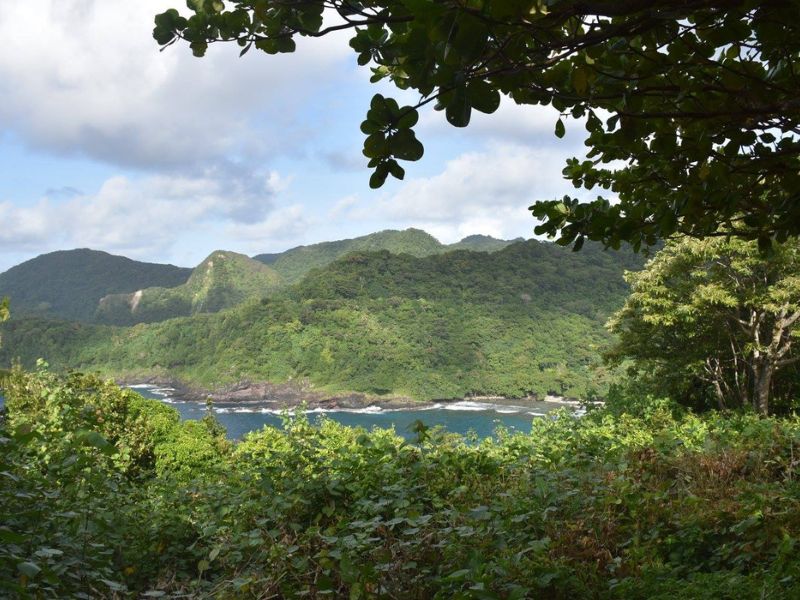
American Samoa presents an even bigger challenge. I’ve included the National Park of American Samoa in the Pacific portion of the cluster map because of the flight options to get there. American Samoa located roughly 2,600 miles southwest of Hawaii. Once you arrive, visiting the park’s different sections on Tutuila, Ofu, and Taʻū involves additional transportation planning.
Planning a trip to the National Park of American Samoa? Check out my American Samoa Travel Guide and Itinerary to help you navigate the transportation logistics, explore the islands, and make the most of your visit.
Isle Royale and Voyageurs: Water Changes Everything
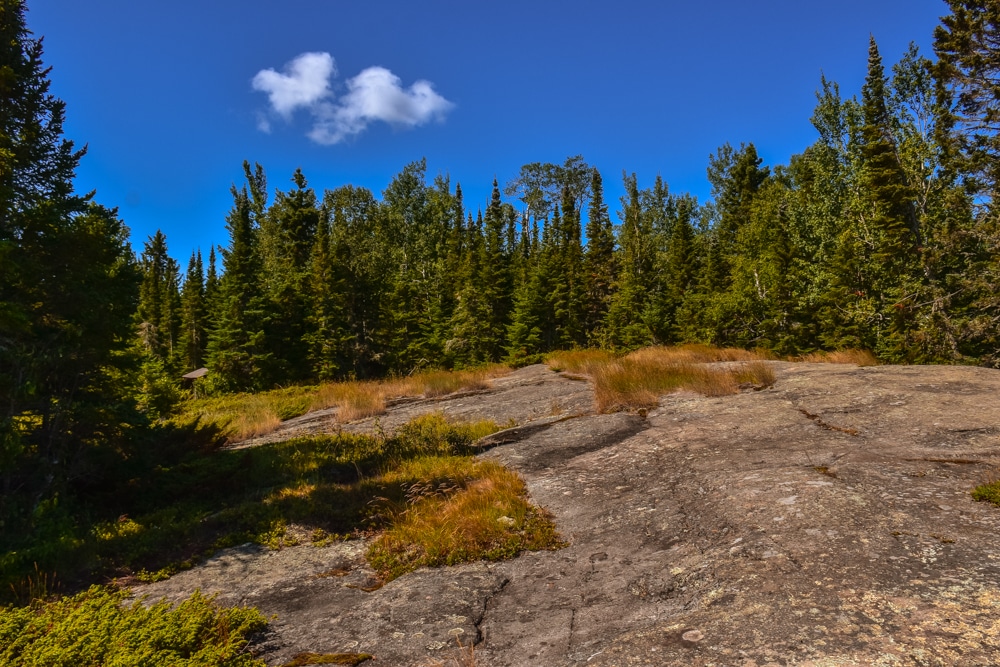
Voyageurs and Isle Royale appear close together on the map, but they’re not as easy to combine as you might expect. Voyageurs National Park is located along Minnesota’s northern border, while Isle Royale is an island in Lake Superior.
You can drive to the main access points for Voyageurs, but much of the park is best explored by boat.
Isle Royale is even more complicated. There are no roads connecting it to the mainland, so visitors must arrange transportation by ferry, seaplane, or private boat. One of the major transport hubs for Isle Royale is located near Voyageurs, but you are on the far side of the island with more limited access to the best parts of the park.
Depending on where you start, traveling between the two parks can involve several hours of driving plus a separate boat or seaplane journey. If you plan to visit both, I recommend booking your Isle Royale transportation first and building the rest of your trip around those dates.
Mountain Ranges, Remote Roads, and Seasonal Closures
Even in the contiguous United States, geographic proximity can be misleading. Mountain ranges, limited road networks, and seasonal closures can turn what looks like a short trip into a much longer drive.
For example:
- Yosemite and Death Valley: The Sierra Nevada separates these parks. When Tioga Road closes for winter, driving between them requires a major detour. Death Valley is also unbearably hot during the summer.
- Grand Canyon and Zion: The parks look relatively close, but driving between them requires navigating around the Grand Canyon. The North Rim also has seasonal access limitations.
My advice: Use the National Park Cluster Map to identify possible park combinations, then check actual driving routes, seasonal access, and transportation requirements before building your itinerary.
The goal isn’t necessarily to visit every park in a cluster. It’s to find combinations that make sense for the time you have and the experiences you want.
How Many National Parks Can You Visit in One Week?
One of the most common questions I see from travelers is how many National Parks they can realistically visit during a one-week vacation. The answer depends on which parks you’re visiting, how far apart they are, and what you want to experience.
Some National Parks can be explored in a day or two if you’re primarily interested in scenic drives and major highlights. Others deserve several days or even an entire week. Here’s a general guideline:
| Number of parks | What to expect in one week |
|---|---|
| 1 National Park | A relaxed trip with time for hiking and deeper exploration |
| 2 National Parks | Often ideal for a one-week vacation |
| 3 National Parks | Very manageable in the right geographic cluster |
| 4 National Parks | Possible with careful planning and shorter visits |
| 5+ National Parks | Usually a fast-paced trip focused on highlights |
Personally, I prefer planning trips that give me enough time to actually experience the parks rather than simply checking them off a list.
There’s nothing wrong with visiting several parks during a single vacation, especially if you’re working toward visiting every National Park. But there’s a big difference between spending a few hours at a park and having enough time to hike, explore, and appreciate what makes it special.
For example, you could visit Arches, Canyonlands, Capitol Reef, Bryce Canyon, and Zion in one week, but you’d spend a significant portion of your vacation driving.
With two weeks, you could explore the same five parks at a much more comfortable pace.
The key is finding a balance between the number of parks you want to visit and the experiences you don’t want to miss.
How to Plan a National Park Road Trip Using This Map
Once you’ve identified a group of National Parks you’d like to visit, it’s time to turn that cluster into a realistic itinerary.
1. Choose Your Must-Visit National Parks
Start by identifying the one or two parks you’re most excited about.
These are your anchor destinations.
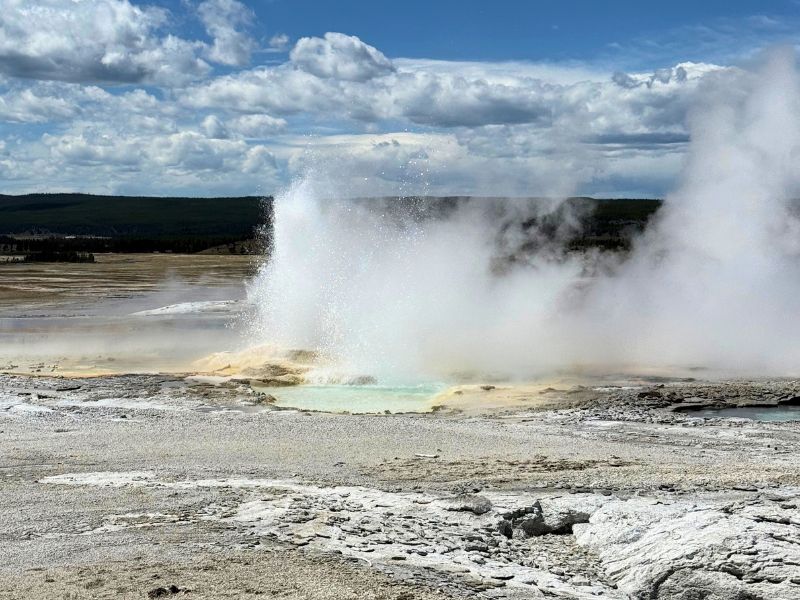
For example, if Yellowstone is your dream National Park, start by planning how much time you want to spend there. Then look at whether Grand Teton or Glacier can fit into the rest of your vacation.
It’s usually easier to build a great itinerary around your priorities than to start with a list of every nearby park and try to squeeze them all in.
2. Determine How Many Days You Have
Be realistic about how much vacation time you have available. A seven-day vacation doesn’t necessarily mean seven full days exploring National Parks.
You may need to account for flights, picking up a rental car, driving between parks, grocery shopping, and getting to your accommodations. I generally recommend treating your arrival and departure days as travel days unless you have a very convenient flight schedule.
3. Check the Driving Distances Between Parks
One of the biggest mistakes people make when planning National Park road trips is assuming that parks close together on a map are also close together by road.
Before finalizing your route, consider whether a loop or one-way road trip makes more sense. A loop allows you to pick up and return a rental car at the same location, while a one-way trip can reduce backtracking between parks. However, one-way rental cars sometimes come with additional fees, so compare your options before booking.
4. Consider the Best Time of Year to Visit
The best time to visit one National Park isn’t necessarily the best time to visit another park in the same cluster.
California is a perfect example. Summer provides access to Lassen Volcanic, Yosemite, Kings, and Sequoia, but Death Valley, Joshua Tree, and Pinnacles can experience dangerously high temperatures during the same period. The opposite is true during the winter.
Choosing the right season can make a major difference in how enjoyable your trip will be.
Check out the Best National Parks to Visit by Month (Your Ultimate Year-Round Guide)
5. Check National Park Reservations and Seasonal Closures
Some National Parks require reservations for specific activities, tours, campgrounds, lodging, or transportation. Others have seasonal roads that close for several months each year.
Before booking flights or accommodations, check whether any of your must-do experiences require advance reservations. Pay particular attention to cave tours, boat trips, popular campgrounds, backcountry permits, and other activities with limited capacity.
My advice: Start researching reservations several months before your trip, especially if you’re visiting during peak season.
6. Build in Extra Time
One of my favorite things about National Park road trips is discovering unexpected places along the way.
Maybe you spot wildlife and want to spend an hour watching it. Maybe you find a hiking trail that wasn’t originally on your itinerary. Or maybe a scenic overlook turns into your favorite stop of the entire trip.
If every minute of your itinerary is scheduled, you won’t have much flexibility to enjoy those experiences. I recommend building some extra time into your road trip, particularly when visiting large parks or areas where weather can affect your plans.
7. Don’t Forget About Other National Park Service Sites
The 63 National Parks are only a small portion of the places managed by the National Park Service. There are hundreds of additional NPS units, including National Monuments, National Historical Parks, National Historic Sites, National Battlefields, and National Recreation Areas.
Many are located along popular National Park road trip routes. For example, you can visit Mount Rushmore National Memorial and Jewel Cave National Monument while exploring Badlands and Wind Cave.
In Utah, Natural Bridges National Monument and Cedar Breaks National Monument can make excellent additions to a longer National Park road trip.
Adding a few of these sites can make your trip even more memorable without requiring an entirely separate vacation.
Frequently Asked Questions About National Park Clusters
Which National Parks are closest to each other?
Several National Parks are located immediately next to each other or connected by relatively short drives.
Yellowstone and Grand Teton are connected by the John D. Rockefeller, Jr. Memorial Parkway. Sequoia and Kings Canyon share a boundary and are jointly administered. Arches and Canyonlands are both accessible from Moab, Utah.
Other convenient combinations include Carlsbad Caverns and Guadalupe Mountains, Bryce Canyon and Zion, and Badlands and Wind Cave.
Can you visit multiple National Parks in one week?
Yes! Many National Park clusters can be explored during a one-week vacation. I generally recommend choosing two or three parks for a balanced trip, although you can visit more if they’re close together and you’re comfortable with a faster pace.
What is the best National Park road trip?
The best National Park road trip depends on your interests, available time, and preferred season.
- Utah’s Mighty Five is excellent for desert scenery, hiking, and dramatic rock formations.
- Yellowstone and Grand Teton are fantastic for wildlife and mountain landscapes.
- Washington’s three National Parks offer a wonderful combination of mountains, rainforests, and coastal scenery.
If you’re planning your first multi-park trip, I recommend choosing a region that matches the landscapes and activities you’re most excited about.
Which states have the most National Parks close together?
California, Utah, and Alaska have some of the largest concentrations of National Parks.
Utah is particularly well suited for road trips because all five of its National Parks are located in the southern part of the state and connected by highways.
California also offers several excellent clusters, although the parks are spread across a much larger area.
Alaska has eight National Parks, but many are not accessible by road.
Can you visit all the U.S. National Parks on one road trip?
No, not on a single continuous driving route.
Several National Parks are located on islands or in remote wilderness areas without road access.
Visiting every U.S. National Park requires a combination of road trips, flights, boats, and sometimes specialized transportation.
However, grouping parks into geographic clusters is one of the most efficient ways to work toward visiting every National Park over multiple vacations.
Are National Park clusters official National Park Service regions?
No. National Park clusters are informal geographic groupings designed to make trip planning easier.
The National Park Service has its own administrative regions, but these don’t necessarily reflect the most convenient road trip combinations.
The clusters on this map are intended to help travelers identify parks that may fit together in one vacation.
Start Planning Your Next National Park Adventure
One of the best things about exploring America’s National Parks is discovering just how different each park can be.
You can spend one vacation exploring towering mountains and alpine lakes, another wandering through colorful desert landscapes, and another discovering tropical rainforests and coral reefs.
And you don’t have to visit every National Park to have an incredible adventure.
Whether you’re planning to visit your first National Park, looking for a great two-park road trip, or working toward visiting all of them, I hope this National Park Cluster Map helps you figure out where to go next.
Start with the parks you’re most excited to visit, look for nearby destinations that make sense to combine, and build a trip that gives you enough time to enjoy the experience.
Need help planning your National Park adventure? Join the National Park Trip Planning Facebook Group to ask questions, get advice from fellow travelers, and share your experiences.
And don’t forget to save the National Park Cluster Map so you can use it when planning future trips.
Happy exploring!
Pin for Later: National Park Clusters: Which U.S. National Parks Can You Visit on the Same Trip?

Hi, I'm Jennifer!
Welcome to the wonderful world of National Parks. I'm here to help you plan your NEXT amazing adventure through the United States National Parks and beyond. I want the national parks to be accessible to all.
I live in Tennessee, and when I'm home, you can find me hiking in the Smokies and the Cumberland Plateau.
58/63 National Parks
250+/423 National Park Units
Want to know more? Start Here.
Snag one of my National Park Ebooks and Downloadable Itineraries
Talk with an Expert
Share your love of the parks with a shirt, ornaments, hoodies, frames, and more.