How many days do you need in Yellowstone National Park? I recommend three to four full days for a first trip. That gives you time for the geyser basins, the Grand Canyon of the Yellowstone, and at least one day focused on the park’s northern areas or wildlife. If you have only one or two days, go anyway. Just choose your priorities instead of trying to see the entire park.
When I asked members of my National Park Trip Planning Facebook group what they wished they had known before their first Yellowstone trip, one answer came up again and again: Yellowstone is bigger than they expected. Several people also wished they had stayed longer or chosen lodging that involved less backtracking. I understand why. Old Faithful and the Grand Canyon of the Yellowstone are roughly 50 road miles apart, and Yellowstone’s winding roads, construction, and wildlife jams can stretch a drive well beyond the map estimate.
In this guide, a day means a full day available for sightseeing in the park, not a late arrival or an early departure. If you fly into the region on Monday evening and leave Friday morning, you have three full Yellowstone days, not five.
This post may contain affiliate links, meaning if you book or buy something through one of these links, I may earn a small commission at no extra cost to you! Read the full disclosure policy here
How Many Days Do You Need in Yellowstone? At a Glance
So, how many days do you need in Yellowstone? Here’s what each trip length realistically gives you, from a quick visit to a full week.
| Time in Yellowstone | What you can reasonably do | What you can reasonably do |
|---|---|---|
| 1 Day | Explore one area well, or sample a few highlights along a sensible route | Travelers passing through |
| 2 Days | Give one day to geysers and another to the canyon and wildlife area | Visitors with limited time |
| 3 Days | Add a geyser or wildlife-focused day | First-time visitors who want the major experiences |
| 4 Days | One day in each quadrant of the park. | My recommendation for most first-time visitors |
| 5-6 Days | Add longer hikes, and more wildlife or geyser time | Hikers and travelers who prefer an unhurried pace |
| 7+ Days | Explore multiple regions in depth and revisit favorite places | Photographers, dedicated wildlife watchers or hikers, and Yellowstone enthusiasts |
Check out my 26 Things to Know Before Visiting Yellowstone National Park
Is One Day Enough for Yellowstone National Park?
One day in Yellowstone is enough for a memorable visit, but it is not enough to see the park as a whole. The mistake is trying to cram Old Faithful, Grand Prismatic Spring, the canyon, Mammoth Hot Springs, and Lamar Valley into one exhausting drive.
If you are entering from the west or south, you might make Old Faithful and the nearby geyser basins your focus. See an eruption, walk part of the Upper Geyser Basin, and choose one or two additional thermal areas that fit your route. If you are entering from the north, Mammoth and the northern part of the park may make more sense. Passing through from one entrance to another? Choose stops along that path instead of doubling back.
A one-day trip works best when you decide what matters most before you arrive. Do you want to see geysers, waterfalls, or wildlife? Pick a main experience, leave room for a few surprises, and save the rest for another visit. You can spend an entire day at Yellowstone and still have a wonderful trip without covering its entire road map.
What Can You See in Two Days?
Day 1: Old Faithful and the Geyser Basins
Start in the Old Faithful area. Watch for an eruption, then explore the Upper Geyser Basin instead of leaving as soon as Old Faithful finishes. There are other geysers and thermal features worth your time, and a walk gives you a much better sense of the area than a quick stop at the viewing benches.
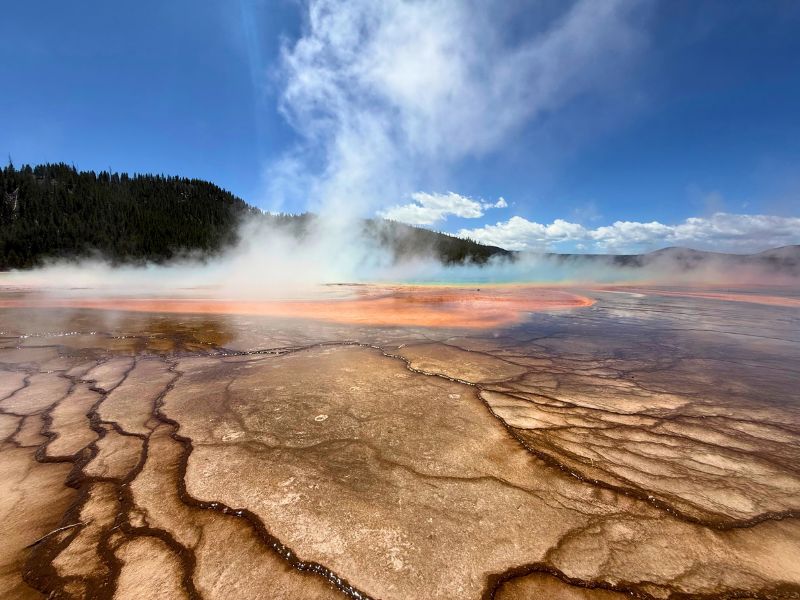
Next, choose additional thermal stops along your route. Grand Prismatic Spring is a natural priority for many first-time visitors. The Midway Geyser Basin boardwalk gets you close to the spring, while the Grand Prismatic Overlook provides the wider view seen in so many photographs. The overlook begins at the Fairy Falls Trailhead, which is a separate parking area. If your schedule is tight, choose the view you care about most instead of assuming both will be quick stops.
You might also visit another nearby basin, but resist the urge to add every thermal boardwalk to the same day. You will enjoy the features more if you have time to look at them.
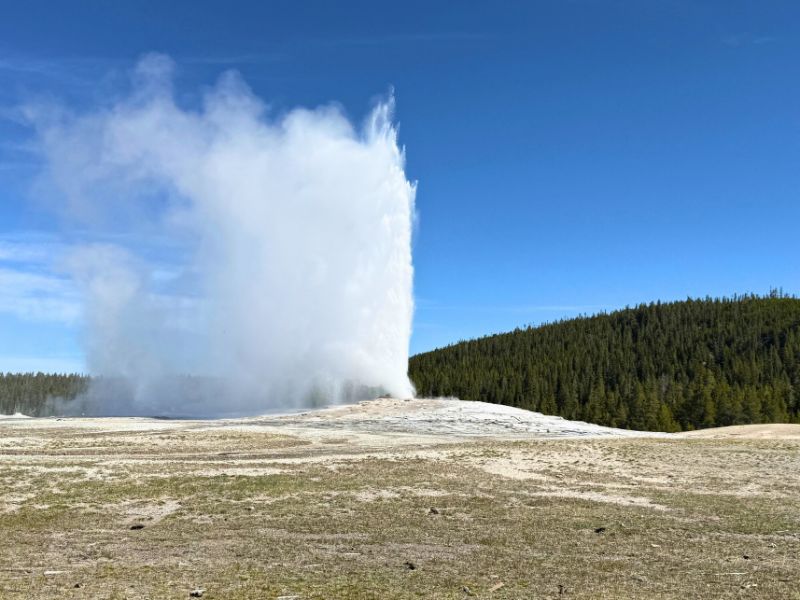
Day 2: Grand Canyon of the Yellowstone and One Nearby Area
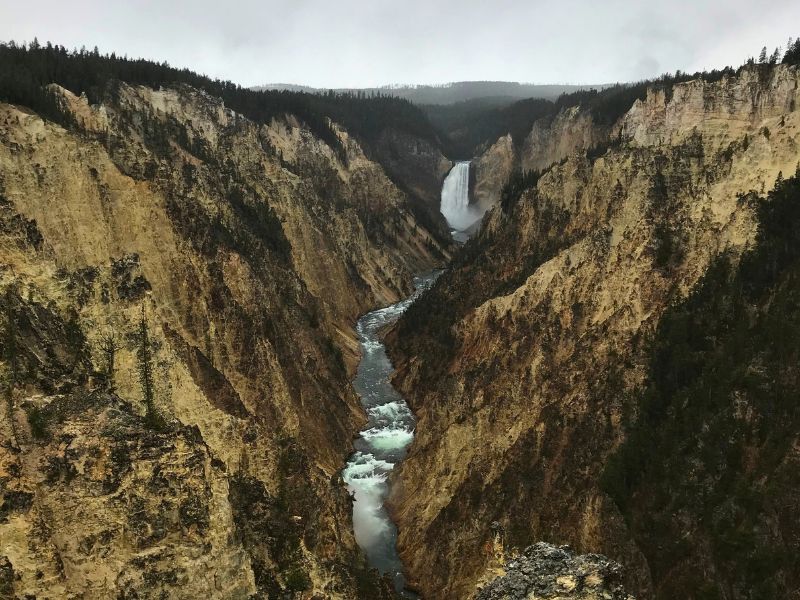
Give the Grand Canyon of the Yellowstone more than a drive-by. Visit several viewpoints, see the waterfalls from different angles, and take a walk if time and conditions allow. The canyon deserves a substantial part of the day.
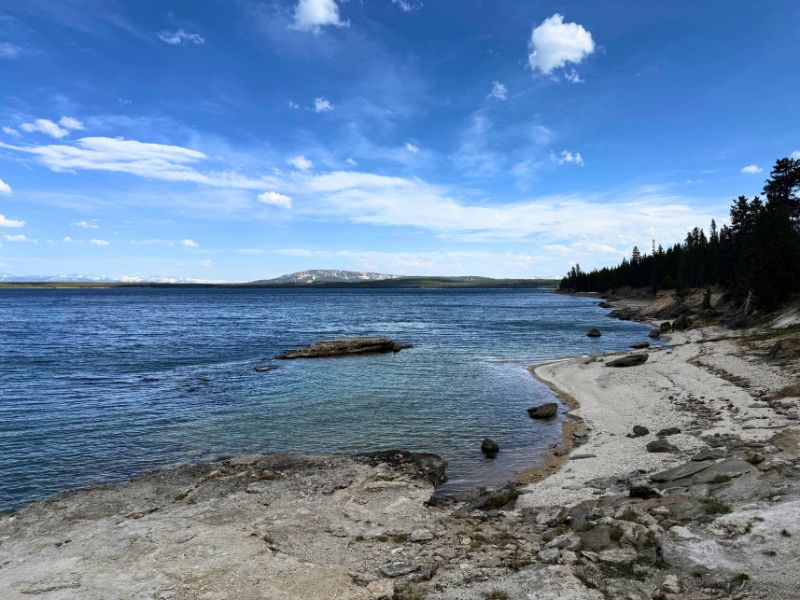
Afterward, choose one additional area that makes sense for your route. Norris Geyser Basin gives you another very different thermal landscape. Hayden Valley can be a good choice if you want a slower wildlife drive. Yellowstone Lake works if you are heading south or east. Trying to fit all three after the canyon turns the day into a race.
What would I leave out? On this two-day plan, I would usually save Mammoth Hot Springs and Lamar Valley for another trip. You can rearrange the itinerary if wildlife is a higher priority than thermal features, but make that trade consciously.
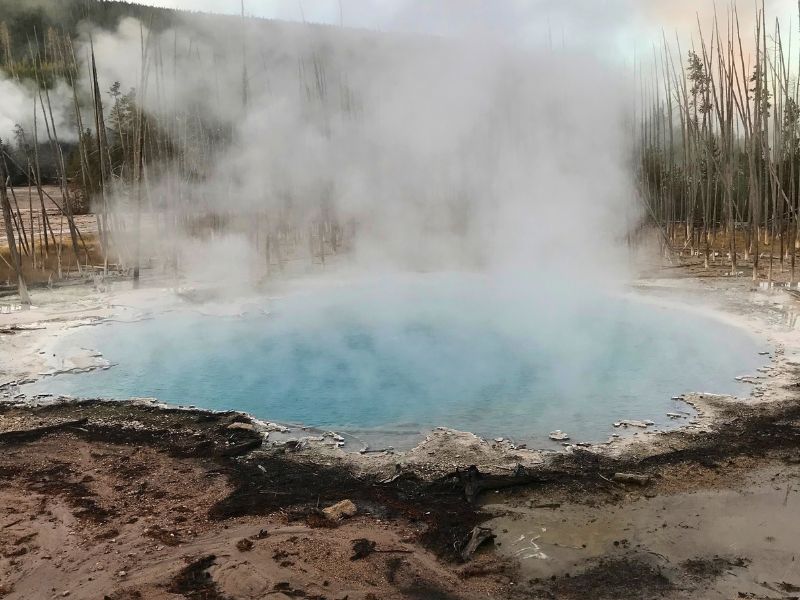
Why I Recommend Three to Four Days for a First Visit
I recommend three to four full days for a first Yellowstone trip. That gives you time to experience the park’s very different landscapes without making every day a race between distant attractions.
I often tell people to divide Yellowstone into four rough quadrants and, ideally, spend a day in each one. It’s a useful way to plan your drives and avoid unnecessary backtracking:
- Southwest: Geyser Country – Old Faithful, Grand Prismatic Spring, and many of Yellowstone’s best-known geyser basins. Plan plenty of time for boardwalk walks and possible eruption waits.
- Northwest: Mammoth and Norris – The terraces at Mammoth Hot Springs and the dramatic thermal features at Norris Geyser Basin, with scenic drives between them.
- Northeast: Lamar Valley – Yellowstone’s premier wildlife-watching region, with wide valleys, mountain scenery, and the route toward the Northeast Entrance. Go slowly and bring binoculars.
- Southeast: Canyon, Hayden Valley, and Lake – Waterfalls and overlooks at the Grand Canyon of the Yellowstone, wildlife viewing in Hayden Valley, and the shores of Yellowstone Lake. This is a large region, so it can easily fill more than one day.
These are planning regions, not exact geographic boundaries. Where you stay and which entrance you use will affect the most sensible order.
A Three-Day Yellowstone Itinerary
With three full days, you’ll need to combine two regions or give one of them a shorter visit. I would start with this framework:
Day 1: Old Faithful and the western geyser basins. See Old Faithful, walk part of the Upper Geyser Basin, and visit Grand Prismatic Spring or other stops along your route.
Day 2: The Grand Canyon of the Yellowstone and the central park. Spend real time at the canyon and waterfalls. Add Norris, Hayden Valley, or the lake area according to your interests and where you will sleep.
Day 3: Mammoth Hot Springs and Lamar Valley. Explore the terraces at Mammoth, then allow a generous block of time for the northern drive and wildlife watching. Animals are never guaranteed, and this day is more rewarding when you are willing to slow down.
This is a framework of trip to Yellowstone that gives you a taste of all four regions and might need to be mortified based on where you are staying and your interests. A southern entrance trip might put the northern day last. A stay near Gardiner might reverse the whole order.
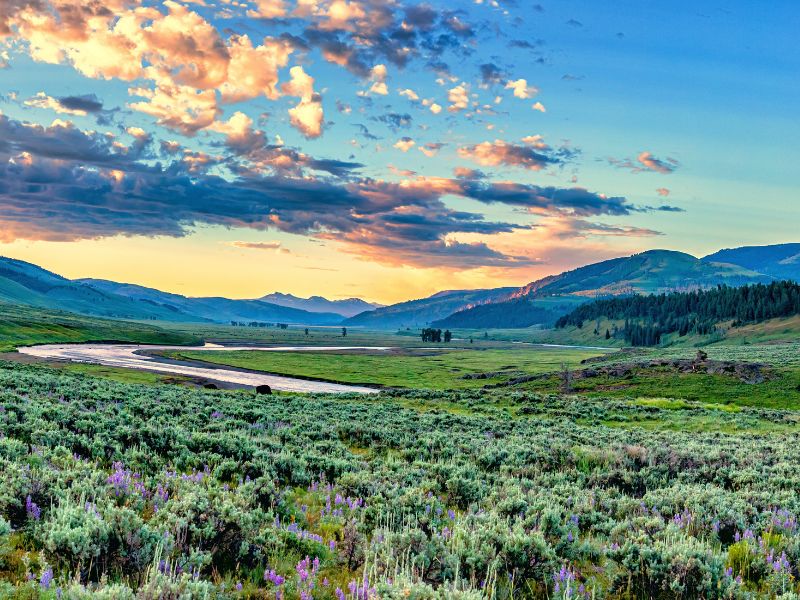
What a Fourth Day Adds
I wA fourth day lets you give each region its own day. You can linger at Norris instead of squeezing it into another drive, spend more time watching wildlife in Lamar Valley, and explore the canyon and lake area without rushing.
It also gives you flexibility when weather, roadwork, parking, or a bison crossing changes your plans. You can enjoy an unexpected stop without feeling as though you have lost the rest of your itinerary.
When Should You Spend Five to Seven or More Days in Yellowstone?
Four days gives you roughly one day in each of the park’s four planning regions. A fifth day lets you return to the region that interests you most or explore a part of it that did not fit the first time. After that, the question becomes less about covering Yellowstone and more about how you want to experience it.
With five days, use four days to explore the southwest, northwest, northeast, and southeast regions. Spend your extra day on a longer hike, a second wildlife outing in Lamar Valley, more geyser watching around Old Faithful, or additional time at the canyon and Yellowstone Lake. You can also keep that day flexible and decide where to return once you know what you enjoyed most.
With six or seven days, you can give some regions two days instead of one. Yellowstone’s southeast region is an easy place to do that: the canyon, Hayden Valley, and lake area offer very different experiences. You might also spend one day exploring the geyser basins and another waiting for predicted eruptions or hiking nearby. In the northeast, an extra morning or evening gives you another chance to watch wildlife without rushing to your next stop.
A longer stay also makes it easier to build your days around the best times for what you want to do. You can hike during part of the day, watch wildlife in the morning or evening, and return to a thermal area when you have time to linger. If you plan to cover all four regions, consider whether splitting your lodging between two areas would save you repeated drives.
With more than a week, I would stop thinking in terms of a must-see checklist. Revisit a favorite valley, spend a full day on a trail, or explore an area you drove past earlier. The same place can feel entirely different with a change in weather, light, or wildlife activity.
I would not tell every first-time visitor that they need a week in Yellowstone. But if you love hiking, photography, wildlife watching, or geyser gazing, you will have no trouble filling it.
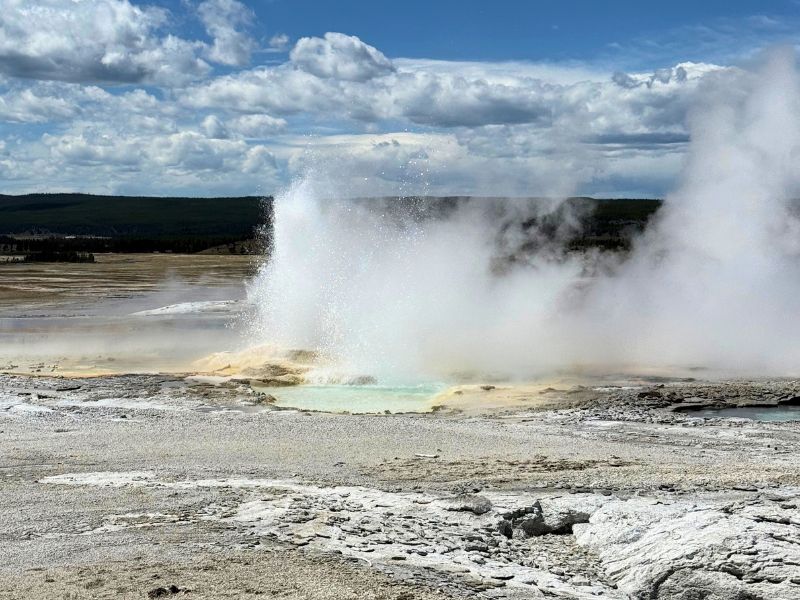
What Changes How Many Days You Need?
Where You Stay
Your lodging location can make a three-day trip feel either comfortable or rushed. Staying outside one entrance for every night may be convenient, but reaching distant areas can involve long drives in both directions. On a longer trip, splitting your stay between two parts of the park or nearby gateway communities may reduce backtracking.
Before you book, map each day’s first and last stop from your actual lodging, not just from the nearest entrance. Lodging and campgrounds often fill well ahead of a trip, so settle this part of your plan early. Yellowstone currently does not require a vehicle reservation to enter, but accommodations are a separate matter.
Time of Year and Road Access
A summer itinerary assumes roads are open that may be closed to regular vehicles in winter or during parts of spring and fall. Facilities also operate on different seasonal schedules. A four-day visit in April can cover a very different set of places from four days in July.
Check Yellowstone’s road status, operating dates, and weather shortly before departure. Leave extra flexibility in shoulder seasons, when a change in conditions may affect your route. The day-by-day examples above are intended for a trip when those routes are accessible.
Check out my Best National Parks to Visit by Month (Your Ultimate Year-Round Guide)
Hiking and Mobility
You can see many of Yellowstone’s famous sights from roads, overlooks, and shorter walks. If that is the trip you want, three or four days may feel generous. If you want several half-day or full-day hikes, add time rather than squeezing them between long drives.
The right pace also depends on who is traveling with you. Allow time to rest, enjoy visitor centers, and move comfortably between stops. Check the length, grade, and current condition of individual trails and boardwalks rather than assuming every short route will feel the same.
Wildlife Watching
There is a difference between seeing wildlife as you drive past and planning time to look for it. If you are especially interested in wolves, bears, bison, or birds, add a morning or evening in an area you want to watch. Bring binoculars and expect to spend time waiting. No itinerary can guarantee a sighting.
Wildlife also affects your driving time even if watching it is not your goal. Give animals space, use established pullouts, and do not stop in the travel lane to take photos.
Geyser Gazing
Seeing Old Faithful erupt once and watching multiple geysers are two very different plans. Eruptions do not happen on an exact schedule, and some prediction windows are much wider than others. If you want to spend time around Castle, Grand, Riverside, or other geysers, leave a substantial open block in your day instead of assigning each one a brief stop.
Check the NPS geyser predictions when available, and use them as a planning aid rather than a guarantee. The NPS App also provides predictions and downloadable park information.
Crowds and Driving Time
A route that looks easy on a screen may involve parking delays, slower traffic, roadwork, and unexpected stops. The National Park Service notes that summer visitors should prepare for lines at entrances and construction areas as well as congestion around roadside wildlife.
If you travel at a busy time, add breathing room rather than trying to compensate by driving from dawn until dark every day. An early start helps, but a realistic itinerary helps more.
How Many Days Do You Need for Yellowstone and Grand Teton?
For a first trip to both parks, I would plan at least five to six full sightseeing days total: three to four in Yellowstone and two in Grand Teton. Add time if you want long hikes, boat outings, repeated wildlife viewing, or slower mornings in either park.
With only three or four full days for both, you will need to be selective. One option is to give Yellowstone two days and Grand Teton one or two days, recognizing that you will miss much of Yellowstone. If this is a trip you may never repeat, I would try to find more time rather than turn both parks into drive-through stops.
The parks are connected by the John D. Rockefeller, Jr. Memorial Parkway, but that does not mean you should count a transfer day as a full sightseeing day in each. Map the route from your last Yellowstone stop to your Grand Teton lodging.
My Recommendation for Your Trip
How many days do you need in Yellowstone ultimately depends on what you want to do, but three to four full days is my recommendation for most first-time visitors.
If you have one day: Go. Choose a single area and enjoy it instead of spending the entire day chasing landmarks.
If you have two days: Spend one day with the geysers and another at the canyon plus one nearby area. Swap those priorities if wildlife matters most to you.
If this is your first trip and you can choose your dates: Book three to four full Yellowstone days. I would choose four if your budget and schedule allow.
If you want longer hikes, dedicated wildlife watching, or serious geyser gazing: Plan five or more days. Seven or more makes sense when you want a slower, deeper Yellowstone trip.
The most useful advice from my group was simple: give Yellowstone more time than you think it needs. You do not have to see everything on your first visit. A good trip leaves enough room to stop when something remarkable happens along the way.
How many days did you spend in Yellowstone, and would you choose the same amount of time again? Tell me in the comments.
Frequently Asked Questions
Is two days enough for Yellowstone?
Yes, if you choose priorities. Two full days can cover major geyser areas and the Grand Canyon of the Yellowstone, with time for one nearby area. It will not be enough for an unhurried visit to every major region.
Is three days enough for Yellowstone?
Three full days is a good first visit if you group stops by area. You can plan separate days for the geyser basins, canyon and central park, and northern park. Four days provides more room for hiking and delays.
Can you see Yellowstone in one day?
You can see part of Yellowstone in one day. Focus on one area or a few stops along your route; do not expect to see all the major geysers, canyon viewpoints, and wildlife valleys.
How many nights should I book for four full days in Yellowstone?
Usually five nights if you want four full park days between arrival and departure. Your travel schedule might let you sightsee on either end, but do not count on it until you know your arrival time and drive to lodging.
Should I stay in one place or move lodging?
One base is simple for a short trip focused on nearby areas. For a longer trip covering both the geyser basins and northern or northeastern Yellowstone, two bases may reduce repeated driving. Compare your actual routes before booking.
Do I need more days if I visit Yellowstone in spring or fall?
You may need more flexibility, but more days will not make a closed road accessible. Check seasonal openings and current conditions first, then build an itinerary around the places you can reach. Weather-related changes can happen quickly.
Plan Your Yellowstone Trip With Your Park People
For most first-time visitors, I recommend three to four full days in Yellowstone, with a day for each region if your schedule allows. If you have less time, choose the places that excite you most and leave room for the unexpected. If you’re still deciding how long to stay or where to base yourself, join my National Park Trip Planning Facebook group. You can ask questions, learn from other travelers’ experiences, and get help turning your Yellowstone wish list into a trip that works for you.
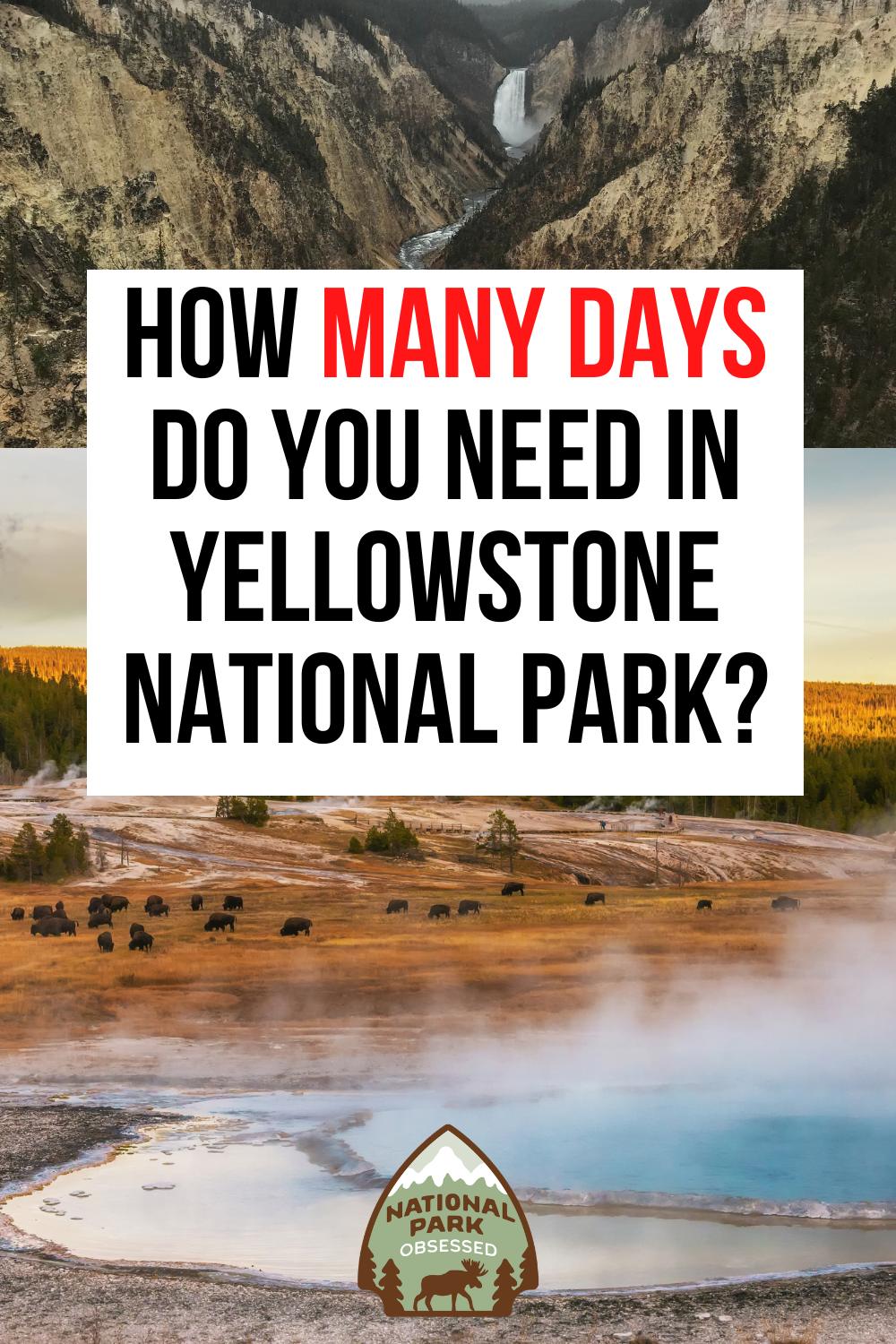
Pin for Later: How Many Days Do You Need in Yellowstone National Park?

Hi, I'm Jennifer!
Welcome to the wonderful world of National Parks. I'm here to help you plan your NEXT amazing adventure through the United States National Parks and beyond. I want the national parks to be accessible to all.
I live in Tennessee, and when I'm home, you can find me hiking in the Smokies and the Cumberland Plateau.
58/63 National Parks
250+/423 National Park Units
Want to know more? Start Here.
Snag one of my National Park Ebooks and Downloadable Itineraries
Talk with an Expert
Share your love of the parks with a shirt, ornaments, hoodies, frames, and more.